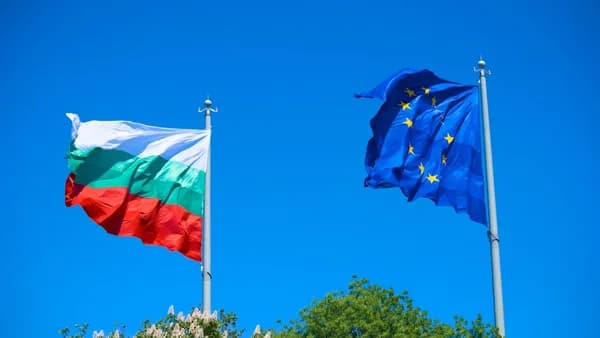
Introduction: The Significance of Bulgaria’s Parliamentary Election
Bulgaria’s latest parliamentary election has sent ripples through both domestic and international political circles, as exit polls indicate a decisive victory for Rumen Radev and his party [Source: Source]. This outcome is more than just a shift in political power; it reflects a nation weary of entrenched corruption and anxious for change. For many Bulgarians, the election was a referendum on decades of misgovernance, with voters seeking new voices and fresh approaches in the hope of a better future [Source: Source]. Radev’s victory is particularly significant given his pro-Russian leanings, raising questions about the country’s future direction within the European Union and NATO. This editorial explores the broader implications of Bulgaria’s election results, considering what they mean for the country’s political landscape, its citizens, and the region as a whole.
Background: Bulgaria’s Political Climate and Voter Discontent
For years, Bulgaria has grappled with widespread corruption, eroding public trust in government institutions and fueling disillusionment among voters [Source: Source]. Scandals involving misuse of EU funds, opaque business dealings, and political favoritism have become regular features of the country’s headlines. This persistent corruption has not only weakened Bulgaria’s democracy but has also contributed to economic stagnation and social inequality.
As frustration reached a boiling point, voters began seeking alternatives to the established parties. This election saw the emergence of new coalitions and independent candidates, promising to tackle corruption head-on and restore integrity to the political process [Source: Source]. The appetite for change was palpable at the polls, with turnout reflecting both hope and deep-seated skepticism. Amid this climate, pro-Russian sentiment has played a notable role. Bulgaria’s historical and cultural ties to Russia, alongside dissatisfaction with Western policies, have made pro-Russian platforms increasingly appealing—particularly to those disenchanted with the status quo. This combination of anti-corruption rhetoric and pro-Russian positioning helped propel Radev’s party to the forefront, signaling a significant realignment in Bulgaria’s political dynamics.
Rumen Radev’s Pro-Russian Stance and Its Implications
Rumen Radev’s political trajectory has been shaped by his background as a former president and his willingness to adopt policies that resonate with Bulgaria’s pro-Russian factions [Source: Source]. Throughout his campaign, Radev emphasized closer relations with Moscow, advocating for greater economic cooperation and cultural exchange. He has consistently criticized Western sanctions against Russia and voiced skepticism about Bulgaria’s role within NATO, positioning himself as a leader willing to challenge the prevailing Euro-Atlantic consensus.
If Radev’s leadership solidifies, Bulgaria’s foreign policy could shift markedly. While the country remains a member of the EU and NATO, Radev’s rhetoric suggests a potential pivot towards balancing these affiliations with stronger ties to Russia. This move would complicate Bulgaria’s relationship with Brussels and Washington, raising concerns about unity within the EU, especially at a time when Eastern European cohesion is vital in the face of Russian aggression in Ukraine.
The geopolitical ramifications extend beyond Bulgaria’s borders. Russia has long sought to exert influence in Eastern Europe, leveraging historical connections and energy dependencies. With Hungary recently distancing itself from Moscow in the wake of Viktor Orban’s electoral setback, Bulgaria presents the Kremlin with a new opportunity to establish a foothold in the region [Source: Source]. Radev’s victory is likely to embolden pro-Russian actors and could inspire similar shifts elsewhere, potentially undermining the EU’s collective stance on Russia.
This scenario places Bulgaria at the crossroads of competing interests. On one hand, there is the desire for national renewal and an end to corruption; on the other, the risk of drifting away from Western alliances in favor of closer ties with a resurgent Russia. The choices made in the coming months will shape Bulgaria’s role in Europe and determine whether it becomes a bridge between East and West or a battleground for geopolitical rivalry.
Comparative Context: Lessons from Hungary’s Political Shift
The Bulgarian election should be viewed in the wider context of Eastern Europe’s evolving political landscape. Hungary, under Viktor Orban, had been the region’s most prominent pro-Russian voice until recent electoral losses prompted a recalibration of its foreign policy [Source: Source]. With Hungary pivoting away from Moscow, Bulgaria now appears poised to fill the vacuum, offering the Kremlin its next best hope for influence within the EU.
This pattern is not unique to Bulgaria or Hungary. Across Eastern Europe, several countries have grappled with balancing domestic discontent, corruption, and external pressures. The rise of pro-Russian parties often coincides with periods of political instability and public frustration, as leaders promise to restore order and challenge Western norms. In Bulgaria, these dynamics have converged at a critical moment, amplifying the significance of Radev’s victory.
The implications are far-reaching. Should Bulgaria deepen its ties with Russia, it could undermine EU and NATO cohesion, weaken sanctions regimes, and embolden other pro-Russian movements. The risk is that Bulgaria becomes a testing ground for the Kremlin’s strategies, with lessons applicable throughout the region. Meanwhile, the EU faces the challenge of managing internal divisions while maintaining a unified stance against Russian aggression.
Potential Challenges and Opportunities Ahead
Radev’s coalition will inherit a country marked by deep public skepticism and high expectations. The promise of tackling corruption must translate into tangible reforms—something previous governments have failed to deliver. Without meaningful progress, public trust will continue to erode, and political instability may persist [Source: Source].
Governance challenges will extend beyond domestic issues. Radev’s foreign policy approach will require careful navigation between Bulgaria’s EU obligations and its renewed Russian ties. Economic opportunities abound if Bulgaria can leverage its strategic position to attract investment and foster innovation. However, the risk of alienating key international partners could jeopardize these prospects.
International actors—including the EU, NATO, and neighboring countries—are likely to respond with a mix of engagement and caution. Increased scrutiny and diplomatic pressure may follow, especially if Bulgaria diverges from established Western policies. At the same time, Bulgaria has the opportunity to redefine its trajectory, addressing both domestic concerns and its role on the European stage.
Conclusion: What Radev’s Victory Means for Bulgaria and Beyond
Rumen Radev’s apparent victory in the Bulgarian parliamentary election marks a pivotal moment for the country and the region [Source: Source]. It reflects both a desire for change and the complexities of navigating a new political landscape shaped by corruption, voter fatigue, and shifting international alliances. As Bulgaria stands at a crossroads, the direction it takes will depend largely on Radev’s ability to deliver reform and balance competing interests.
The stakes are high—not only for Bulgaria’s citizens, but for the broader European community. Vigilance and engagement will be essential, both domestically and internationally, to ensure that Bulgaria’s new government meets its promises and maintains stability. Ultimately, Radev’s leadership will be judged not by rhetoric, but by action. The path forward offers opportunities for renewal, but also risks that must be managed with care and foresight.