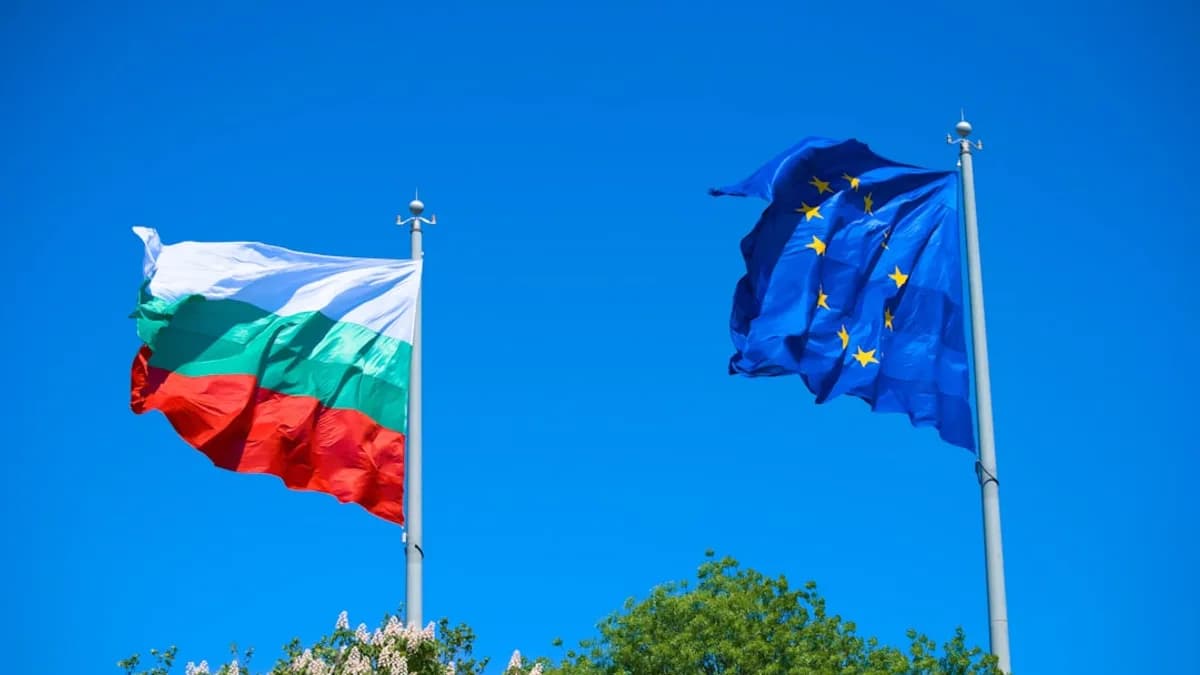
Introduction: Bulgaria's Election Outcome and Its Significance
Bulgaria’s latest parliamentary election has produced a significant shift in the country’s political landscape. According to exit polls, the center-left coalition led by former President Rumen Radev is poised for a decisive victory, marking a dramatic turnaround after years of political instability and public frustration with corruption [Source: Source]. This result signals a potential new direction for Bulgaria, a key European Union and NATO member state. The election has garnered immediate interest both domestically and abroad, with observers closely monitoring the implications for Bulgaria's governance, its relationship with Western allies, and regional dynamics, especially in light of recent political changes in neighboring countries.
Background: Political Climate and Voter Sentiment in Bulgaria
Bulgaria has struggled with political turbulence over the past several years. Chronic allegations of corruption, government dysfunction, and a series of inconclusive elections have left many Bulgarians disillusioned with the political process [Source: Source]. Successive governments have failed to deliver on promises to tackle graft, bolster the rule of law, or improve living standards. This persistent dissatisfaction has fueled widespread voter fatigue and skepticism about the country’s political elite.
Against this backdrop, former President Rumen Radev emerged as a unifying figure with his center-left coalition, positioning himself as an alternative to the entrenched political establishment. Radev’s campaign tapped into popular frustration, promising greater transparency, anti-corruption reforms, and a renewed focus on social welfare. The coalition's message resonated with voters weary of unfulfilled promises and repeated scandals. For many Bulgarians, this election represented not just a vote for new leadership, but also a plea for a more accountable and effective government.
Exit Poll Results: Details and Implications
Exit polls released shortly after voting concluded indicate a strong lead for Radev's party, suggesting the center-left coalition could command a substantial majority in the new parliament [Source: Source]. Preliminary data projects Radev’s alliance securing a clear plurality of seats, far outpacing both the center-right GERB party and other smaller factions. Analysts expect Radev’s coalition to either govern alone or form a stable partnership with ideologically compatible parties.
Compared with previous elections, this outcome marks a significant change in Bulgaria’s political map. The center-right, long dominant in Bulgarian politics, has suffered a marked decline, while anti-corruption and reform-oriented parties have consolidated their support. This shift reflects both a public repudiation of the status quo and growing support for Radev’s promises of change.
The anticipated parliamentary composition could facilitate swift action on key domestic issues, including anti-corruption efforts, judicial reform, and economic modernization. However, questions remain about the coalition's ability to maintain cohesion given the diverse interests within its ranks. The exit poll results also set the stage for potential realignment among opposition parties, who must now adapt to the new political reality.
Geopolitical Impact: Bulgaria’s Shift and Kremlin Relations
Rumen Radev’s known pro-Russian orientation adds a layer of complexity to Bulgaria’s evolving political identity. Throughout his career, Radev has advocated for pragmatic relations with Moscow, often expressing skepticism toward some EU and NATO policies that he perceives as antagonistic to Russian interests [Source: Source]. His party's projected landslide victory is likely to reverberate far beyond Bulgaria’s borders, especially as Europe grapples with the ongoing effects of Russia’s war in Ukraine and shifting alliances within the EU.
The election result comes at a sensitive moment for the region. With Hungary’s Viktor Orbán recently defeated, analysts have suggested that Bulgaria could become the Kremlin’s next best hope for influence within the EU and NATO [Source: Source]. Radev’s ascent may embolden pro-Russian voices within Bulgaria and complicate Western efforts to present a united front against Russian aggression. European officials have already expressed cautious concern about the potential for a cooling of Bulgaria’s traditionally pro-Western stance.
Domestically, Radev has emphasized that Bulgaria’s EU and NATO memberships remain vital to the country’s security and prosperity. However, his pragmatic approach to Moscow could mean a softer line on sanctions, greater energy cooperation, and a more nuanced position on regional security issues. For Western capitals, the challenge will be to engage the new Bulgarian leadership constructively while reaffirming shared commitments to democratic values and transatlantic security.
Moscow, for its part, is likely to welcome the outcome. Russian officials have consistently highlighted Radev’s statements favoring dialogue and cooperation, seeing his leadership as an opportunity to rebuild influence in the Balkans. The Kremlin’s response to the election has been measured but optimistic, reflecting hopes for a thaw in bilateral relations that have been strained in recent years.
Next Steps: Formation of Government and Future Outlook
With exit polls indicating a strong victory for Radev’s coalition, attention now turns to the formal process of government formation. Official results are expected within days, after which coalition negotiations and the appointment of key ministers will follow. Bulgaria’s constitution requires the president to offer the mandate to form a government to the largest party in parliament, a step that Radev’s party is poised to accept.
The new government will face immediate challenges, including meeting high public expectations for reform, navigating complex coalition dynamics, and addressing urgent economic and social issues. Policy priorities are likely to include aggressive anti-corruption measures, judicial independence, and efforts to attract investment and boost growth. Observers also anticipate a recalibration of Bulgaria’s foreign policy, with careful balancing between Western alliances and pragmatic engagement with Russia.
Political stability remains a concern, given Bulgaria’s history of fractious coalitions and public impatience with slow progress. The coming months will be critical in determining whether Radev’s coalition can deliver on its promises and restore public confidence in Bulgaria’s institutions.
Conclusion: The Broader Significance of Bulgaria’s Election Result
Bulgaria’s parliamentary election marks a turning point in the nation’s political journey. The projected victory of Rumen Radev’s center-left coalition is both a repudiation of years of corruption and a mandate for change [Source: Source]. While the result offers hope for reform and renewed public trust, it also introduces new complexities for Bulgaria’s regional and international relationships.
This breaking development will have implications not just for Bulgaria, but for the broader balance of power within the EU and NATO. As the new government forms and sets its agenda, its actions will be closely watched by allies and rivals alike. The coming period promises to be pivotal for Bulgaria’s democracy, its foreign policy, and its role on the European stage. Continued monitoring of these unfolding events will be essential to understanding their full impact.