Why the Mourning of Khamenei by Pakistani Muslims Signals Deep Regional Turmoil
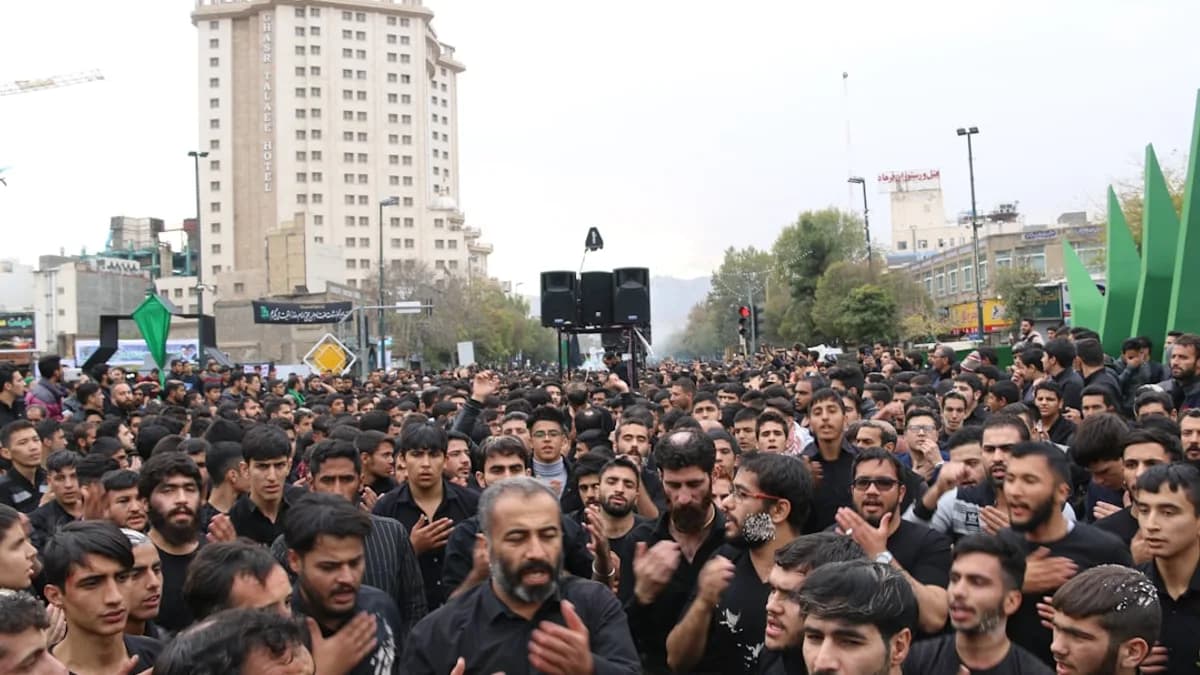
Tens of thousands of Pakistani Muslims poured into the streets, grieving for Iran’s slain Supreme Leader Ayatollah Ali Khamenei—a man who never ruled their country, but whose death sent shockwaves far beyond Iran’s borders. This isn’t just a display of cross-border solidarity or religious kinship; it’s a signal flare of deepening instability across the region. Khamenei’s leadership was the linchpin of Iran’s theocratic power structure, anchoring the axis of Shia influence from Tehran to the mountains of Lebanon and the valleys of Pakistan. His assassination doesn’t just leave a leadership vacuum in Iran—it cracks open questions about succession, loyalty, and the future balance of power in the Middle East and South Asia, as outlined by CryptoBriefing.
This public mourning in Pakistan exposes the region’s interlocked vulnerabilities. Sectarian ties—especially between Shia communities—transcend borders and shape everything from proxy conflicts to diplomatic alliances. The fact that Pakistani crowds mourned Khamenei as one of their own underscores just how tightly the fate of Iran is bound to its neighbors. In a region already rattled by US sanctions, proxy wars, and shifting alliances, the spectacle of this collective grief is not just symbolic. It’s a flashing warning: what happens in Tehran will not stay in Tehran.
How Khamenei’s Death Could Reshape Iran’s Leadership and Regional Power Balance
Khamenei’s death detonates a political crisis in Tehran. He wielded ultimate authority for over three decades, outlasting four US presidents, two Gulf wars, and the Arab Spring. No clear successor commands his mix of religious legitimacy and political ruthlessness. The Assembly of Experts—tasked with choosing Iran’s next Supreme Leader—faces unprecedented pressure from hardliners, reformists, and the powerful Islamic Revolutionary Guard Corps (IRGC). This infighting isn’t an academic exercise; it could trigger realignments in everything from domestic policy crackdowns to foreign intervention.
Foreign policy risks multiplying. Khamenei’s Iran was the region’s most reliable exporter of Shia militancy, from Hezbollah in Lebanon to the Houthis in Yemen and militias in Iraq. His death creates uncertainty about who will bankroll and command these proxies. Will Iran double down, lashing out to prove continuity, or will internal chaos sap its capacity for regional adventurism? Pakistan, which shares a 900-kilometer border with Iran, will feel the tremors first. Islamabad has tried to walk a tightrope: maintaining relations with Tehran while appeasing Saudi Arabia and the US. But a destabilized Iran could spill sectarian violence or refugee flows into Pakistan, or tempt Islamabad to recalibrate its alliances.
The wider Middle East power balance is at stake. Saudi Arabia and Israel—long wary of Khamenei’s expansionist ambitions—might see a moment of opportunity. Recent history suggests leadership transitions in autocratic regimes rarely pass smoothly. After the 1979 Iranian Revolution, Saudi-Iranian rivalry fueled proxy conflicts for decades. The 2020 killing of IRGC commander Qasem Soleimani sparked immediate regional tension and US-Iran brinkmanship. With Khamenei gone, rival powers will scramble to exploit Iran’s moment of weakness—or miscalculation.
The Mourning March in Pakistan as a Reflection of Iran-Pakistan Religious and Political Ties
The outpouring of grief on Pakistani streets isn’t just about shared faith. It’s the result of decades of Iranian outreach to Pakistan’s Shia minority—an estimated 15-20% of Pakistan’s 240 million people. The clerical establishment in Tehran has invested heavily in cross-border religious networks, seminaries, and cultural exchanges. Since the 1979 revolution, Iran has positioned itself as the spiritual center for Shia communities from Karachi to Kabul.
These ties matter politically. Pakistan’s foreign policy has often been shaped by sectarian calculations, balancing ties with Saudi-backed Sunni groups against Iranian influence. After the US withdrawal from Afghanistan, both Iran and Pakistan have jockeyed for influence among Taliban factions and local militias. Public mourning marches like these amplify Iran’s soft power, projecting its reach and reminding Islamabad’s policymakers that a segment of their own population views Tehran as a religious lodestar.
But there’s a risk, too. These displays can fuel sectarian polarization, providing fodder for extremist groups on both sides of the Sunni-Shia divide. Attacks on Shia processions have surged in recent years, and Pakistani authorities routinely fear that foreign entanglements could reignite domestic instability. The mourning for Khamenei is both a measure of Iran’s enduring influence—and a test for Pakistan’s delicate balancing act.
Acknowledging the Counterargument: Could Regional Stability Improve After Khamenei?
There’s an argument that Khamenei’s death could open doors to moderation—maybe even a reset in Iran’s foreign policy. His rule was defined by hardline anti-Western rhetoric, state repression, and a nuclear program that kept the world on edge. Some analysts hope that a new Supreme Leader might prioritize reform, dial down regional proxy wars, or even reengage diplomatically with the US and Europe.
Recent history, though, doesn’t inspire much optimism. The 2013 election of President Hassan Rouhani, a centrist, raised hopes for liberalization and the Iran nuclear deal—but Khamenei quickly reasserted control, and the IRGC’s influence only grew. The risk is that succession will empower the most hardline factions, who see compromise as weakness. Iran’s security apparatus is on high alert, and the IRGC may seize this moment to tighten its grip, as it did after Soleimani’s death in 2020.
Washington and Riyadh might hope for a more pragmatic Iran, but power vacuums in revolutionary states rarely produce doves. The 1989 transition from Khomeini to Khamenei was seamless only because the IRGC and clerical elite moved in lockstep. Today, those factions are more fragmented—and the stakes are higher, with nuclear ambitions, proxy militias, and economic collapse in play. The chance of a peaceful transition exists, but betting on it would be reckless.
Why Global Stakeholders Must Pay Attention to Iran’s Leadership Transition and Regional Mourning
Ignoring Iran’s leadership crisis is a luxury the world can’t afford. The mass mourning in Pakistan is a barometer for how far Iran’s influence reaches—and how quickly instability can ripple across borders. Western policymakers, especially in Washington and Brussels, need to move beyond sanctions and threats. Diplomatic engagement, intelligence sharing, and contingency planning are non-negotiable if the aim is to prevent a new wave of proxy wars or nuclear brinkmanship.
For investors and multinationals, the message is stark: regional volatility is set to spike. Energy markets, supply chains, and security arrangements from the Gulf to South Asia could be redrawn in the coming months. Khamenei’s death is not just Iran’s crisis—it’s everyone’s risk. The world has a narrow window to push for stability before the next shock hits.
Impact Analysis
- The mourning by Pakistani Muslims highlights the strong cross-border religious ties and their influence on regional politics.
- Khamenei’s death creates uncertainty in Iran’s leadership, potentially destabilizing the balance of power across the Middle East and South Asia.
- The public displays of grief signal how Iran’s internal crises could trigger wider repercussions for neighboring countries, raising the risk of increased instability.