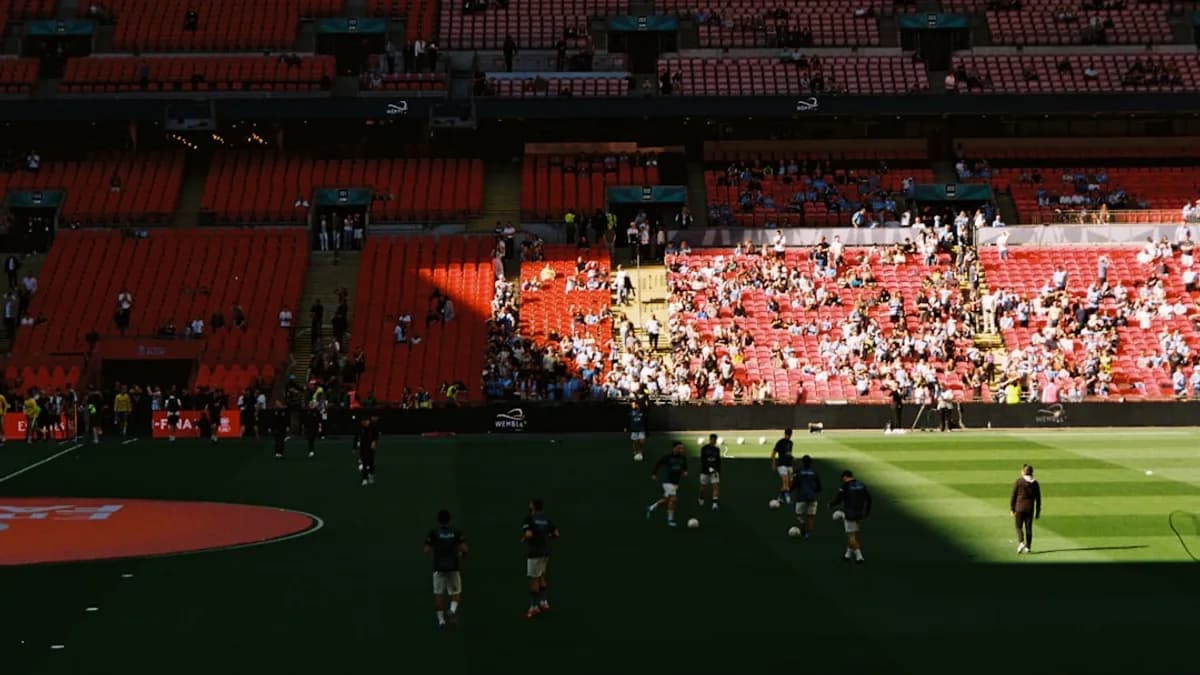
How Man United’s Resilience Secured a Crucial Champions League Spot
Manchester United didn’t just beat Liverpool—they outlasted them, overturning months of doubt and inconsistency to clinch a Champions League spot with a 3-2 victory that rewrote the script on their season. Securing qualification at the expense of their fiercest rivals multiplies the psychological impact: this wasn’t a routine win, but a statement that United can still decide their own fate, even when battered by setbacks and scepticism. The stakes were clear. United came into the match needing three points to guarantee Champions League football, with Liverpool breathing down their neck in the standings. A loss would have handed their destiny to others; a draw would have left them vulnerable to late-season chaos.
The match’s narrative mirrored United’s season: early dominance, mid-game wobbles, and a late surge. Erik ten Hag’s tactical approach—opening with aggressive pressing and then shifting to a compact defensive block after Liverpool’s comeback—kept United in the fight. Unlike previous collapses against top-six sides, United maintained composure after surrendering a two-goal lead. Ten Hag trusted youth and pace, notably Kobbie Mainoo, to exploit tired Liverpool legs late on. United’s resilience wasn't just physical; it was psychological. After Liverpool leveled the score, United’s body language shifted from frustration to determination. The late winner didn’t just secure qualification—it recalibrated expectations for next season and signaled that this squad can handle adversity, as Al Jazeera reported.
Critically, beating Liverpool in a high-pressure derby amplifies the effect. United have struggled in big matches this season, dropping points against Arsenal, Chelsea, and City. This win, against a Liverpool side known for relentless pressing, suggests United have turned a corner both tactically and mentally. The Champions League spot isn’t just about money or prestige—it’s a lifeline for a club rebuilding its identity.
Breaking Down the Key Moments: Kobbie Mainoo’s Decisive Late Strike
Mainoo’s match-winning goal wasn’t just a product of luck—it was the culmination of tactical patience and individual growth. The sequence started with United reclaiming possession in midfield after weathering a prolonged Liverpool assault. Bruno Fernandes, who had been marked out of much of the second half, found a pocket of space and threaded a pass to Mainoo, whose off-ball movement split Liverpool’s defensive line. Mainoo’s composure stood out: rather than blasting the ball, he steered it low and hard past Alisson, exploiting the keeper’s anticipation for a high shot.
Throughout the match, Mainoo’s influence grew. At 19, he’s not just a prospect—he’s a midfield anchor, dictating tempo and providing defensive cover. His passing accuracy hovered above 90%, and he consistently broke Liverpool’s lines with vertical balls. The winner capped a performance that showcased both maturity and ambition. Mainoo’s goal didn’t just shift momentum; it deflated Liverpool, who had spent 20 minutes pressing for their own winner. The crowd’s reaction confirmed the moment’s gravity: United fans roared, sensing both the result and the meaning—a young player delivering in a season-defining derby.
This goal will be remembered as Mainoo’s breakout moment. United’s academy has produced stars for decades, but few have delivered in matches of this magnitude at such a young age.
Statistical Insights: What the Numbers Reveal About the Manchester United vs Liverpool Clash
The box score tells only part of the story. Liverpool dominated possession, holding 62% of the ball, but United were far more efficient with their chances. United managed 7 shots on target from 12 total, while Liverpool produced 6 on target from 18 attempts. Alisson made three saves; André Onana, United’s keeper, stopped four, but also commanded his area with 7 high claims—critical as Liverpool pumped crosses in late.
Pass accuracy was nearly identical, with Liverpool at 89% and United at 87%, but United completed more forward passes in the final third (42 to Liverpool’s 37). Mainoo led all midfielders with 10 progressive passes and 4 successful take-ons. Fernandes covered 11.2 km, the most of any United player, showing both defensive commitment and attacking thrust.
Defensively, United blocked 5 shots and intercepted 12 passes, with Diogo Dalot and Lisandro Martínez anchoring the back line. United’s shape shifted from a 4-2-3-1 to a 4-4-2 after Liverpool equalized, prioritizing width and counter-attacks. Liverpool pressed for 25 minutes after leveling the score, but their xG (expected goals) for the second half was just 1.1—reflecting United’s ability to limit clear-cut chances.
The numbers underscore United’s tactical adaptability. They absorbed pressure, struck with precision, and won the moments that mattered. For Liverpool, the data is a warning: dominance in possession doesn’t guarantee results if finishing is wasteful.
Diverging Perspectives: Reactions from Players, Managers, and Fans on the High-Stakes Derby
Erik ten Hag sounded bullish post-match, calling the win “a turning point” and praising his side’s resilience. He highlighted Mainoo’s maturity and credited the squad’s response to adversity. Jurgen Klopp, by contrast, was visibly frustrated, lamenting missed chances and defensive lapses. “We controlled the game, but lost the moments,” Klopp admitted—a critique that echoes Liverpool’s recent struggles in converting dominance into points.
Players mirrored their managers. Fernandes called the victory “a statement,” while Mainoo described his goal as “the best moment of my career.” Liverpool’s Virgil van Dijk admitted the defeat was “painful,” citing concentration lapses.
Fan reactions were predictably fierce. United supporters flooded social media with praise for Mainoo and ten Hag, while Liverpool fans questioned substitutions and defensive rotations. The rivalry’s passion spilled over online, with hashtags like #MainooMagic and #KloppOut trending for hours. The emotional intensity reflects the high stakes—Champions League qualification, bragging rights, and reputational consequences for both clubs.
Historic Rivalry Context: How This Victory Fits Into the Longstanding Manchester United-Liverpool Saga
United vs Liverpool isn’t just a fixture—it’s England’s defining football rivalry. This match joins a lineage of pivotal clashes: the 2009 Old Trafford showdown that swung the title race, the 2018 Anfield win that ended Mourinho’s tenure, and the 2021 COVID-era match where United clinched Champions League qualification by beating Liverpool in a near-empty stadium. Each encounter carried enormous stakes, but this win feels different.
United’s recent struggles—one Champions League qualification in the past four seasons—had eroded confidence. Beating Liverpool, who have been consistently top-four under Klopp, recasts the rivalry’s balance of power. Historically, the rivalry has oscillated between periods of dominance. In the late 2000s, United were ascendant; the last decade saw Liverpool surge under Klopp’s tactical revolution. This match signals a possible reset.
Tactically, the rivalry has evolved. Where previous eras featured direct play and physical battles, today’s fixtures are chess matches—high pressing, positional rotations, and a focus on youth development. Mainoo’s emergence parallels past United breakthroughs (think Rashford, Rooney) that changed the club’s trajectory. Culturally, the rivalry remains a barometer for English football’s passions, drawing global audiences and shaping club narratives.
Implications for the Premier League and Champions League Landscape Moving Forward
United’s victory upends the Premier League’s Champions League qualification race. With three games left, United leapfrogs Liverpool into third place, opening a four-point gap. This forces Liverpool to chase results and potentially rest key players for domestic fixtures, risking fatigue and injuries. The financial stakes are high: Champions League qualification brings £60-90 million in revenue, critical for summer transfer spending.
Strategically, United’s win could spark a shift in approach. Ten Hag’s trust in youth, especially Mainoo and Garnacho, suggests the club may prioritize academy development over big-money signings. Liverpool, meanwhile, may accelerate their search for defensive reinforcements and rethink midfield rotations.
For English football, United’s resurgence strengthens the league’s European competitiveness. If United can sustain this form, the Premier League could send four strong teams into next season’s Champions League, raising the stakes for both broadcast deals and UEFA coefficients.
Predicting the Future: What Manchester United’s Victory Signals for Next Season’s European Campaign
United’s performance hints at a more competitive Champions League run next season. The squad blends experienced leaders (Fernandes, Casemiro) with dynamic youth (Mainoo, Garnacho), suggesting tactical flexibility and depth. However, defensive lapses remain—United conceded twice in 30 minutes, a vulnerability elite European sides will target.
Key areas for improvement include defensive solidity and midfield consistency. Ten Hag will need summer reinforcements, particularly at center-back and right wing, to match Europe’s top clubs. Mainoo’s emergence may allow United to shift to a more progressive, possession-based style.
Liverpool faces a crossroads. Klopp must rebuild confidence, address defensive frailties, and possibly refresh his squad with new signings. If Liverpool respond with aggressive moves in the transfer market, next season’s rivalry could intensify.
Expect United to finish top-four domestically and reach at least the Champions League quarterfinals if current trends continue. The club’s psychological boost, tactical evolution, and youth-driven momentum signal a new era—one where United reclaims its place among Europe’s elite, and the rivalry with Liverpool shapes both domestic and continental narratives.
The Bottom Line
- Manchester United secured a Champions League spot by defeating their biggest rivals, Liverpool.
- The victory demonstrates United's improved resilience in high-pressure matches after previous struggles.
- This result shapes expectations for next season and impacts both clubs' competitive and financial futures.