Iran’s Execution of Political Prisoners Undermines Global Human Rights Standards
Iran’s recent execution of a political prisoner is more than an isolated act of brutality—it’s a calculated rejection of international human rights standards. By killing dissenters under the guise of legal process, Tehran signals it has little interest in the treaties it has nominally signed or the basic norms that bind states to civilized conduct. The regime’s actions, documented this week by CryptoBriefing, are not just a domestic affair: they erode the legitimacy of Iran’s leadership on the global stage, undermining any pretense of reform or moderation.
Such executions aren’t just a moral outrage—they’re a direct challenge to the international community’s credibility when it comes to defending universal rights. If the world shrugs and moves on, it signals to would-be autocrats everywhere that repression carries no real cost. The moral imperative is clear: silence now means complicity. The only way to prevent normalization of these abuses is for states, institutions, and multilateral bodies to respond with clarity and force. Anything less is an invitation to more killings, more show trials, and deeper impunity.
How Iran’s Human Rights Abuses Exacerbate Regional and Domestic Instability
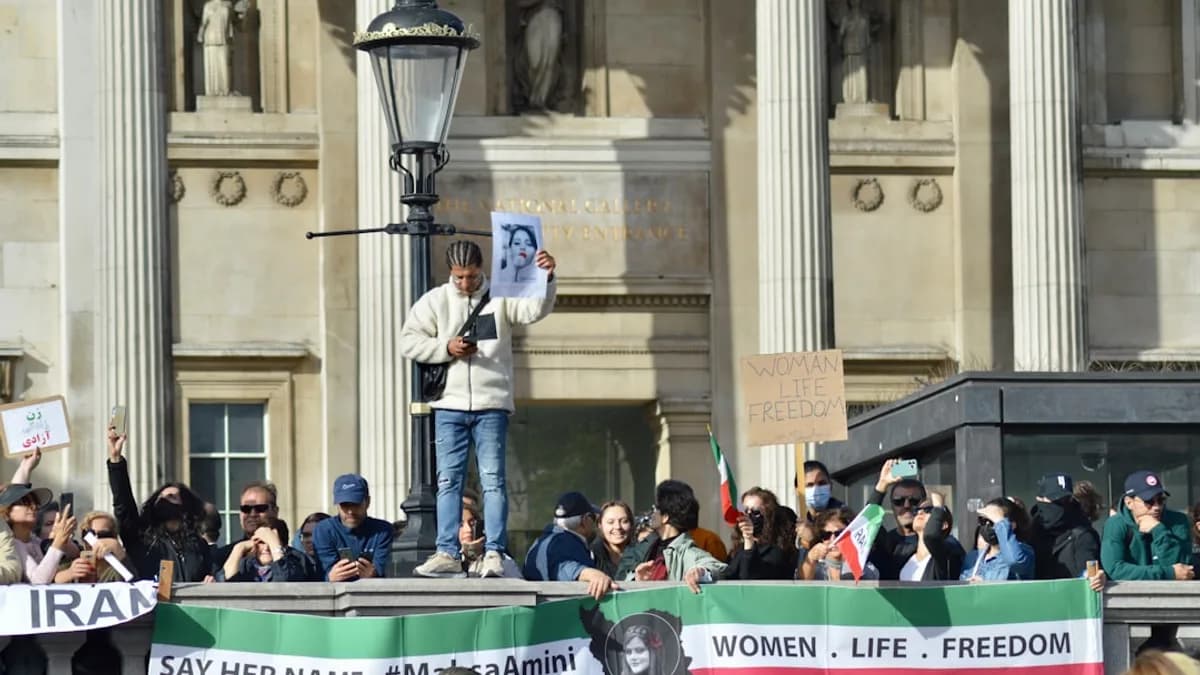
Crushing dissent with executions is a strategy that breeds instability, not order. Every time Iran puts a political prisoner to death, it throws gasoline on the fires of internal unrest. The memory of the 2022 Mahsa Amini protests—when thousands risked their lives for basic freedoms—still haunts the regime. Mass arrests, torture, and now this execution show Tehran’s leadership fears its own people more than any foreign adversary.
The real risk for Iran is not a Western invasion but a slow-burning revolt from within. Over 500 protesters were killed and at least 22,000 detained during the 2022 uprising, according to Amnesty International and local rights monitors. Each new execution hardens opposition, erodes trust in institutions, and drives activists underground—where they become harder to monitor, more radicalized, and less likely to compromise. The regime’s paranoia is not misplaced; it is manufacturing exactly the instability it dreads.
Regionally, Iran’s brutality carries costs too. Its human rights abuses regularly trigger diplomatic crises with Europe and threaten the fragile détente with Gulf neighbors. The 2022 execution of wrestler Navid Afkari sparked worldwide protests and nearly derailed diplomatic talks with several EU states. Every fresh outrage risks new sanctions, travel bans on officials, and further restrictions on Iranian business abroad. In a region already primed for conflict, Iran’s domestic repression is a destabilizer, not a shield.
Economically, the regime’s isolation grows. Foreign direct investment in Iran plunged from $5 billion in 2017 to under $1 billion in 2022, World Bank data show. Human rights crackdowns and the resulting international fallout are a big part of that story. Iran’s own business elites now hedge their bets—keeping capital offshore and lobbying quietly for regime change, or at least for a leadership that won’t make them international pariahs.
International Diplomatic Responses: Current Measures and Their Limitations
The international community has not ignored Iran’s abuses—far from it. The U.S., EU, UK, and Canada have all imposed waves of sanctions targeting Iranian officials and entities tied to rights violations. The UN Human Rights Council set up a fact-finding mission in 2022 to investigate Tehran’s crackdown on protesters. Condemnations rain down after every execution, with statements from Brussels, London, and Washington.
But these measures have failed to stop the bloodshed. Sanctions are often slow, riddled with loopholes, and rarely hit the true centers of power. Iran’s leadership has decades of practice evading restrictions, laundering assets, and weaponizing nationalist sentiment against “foreign interference.” Diplomatic statements, meanwhile, are easily dismissed as hypocrisy—especially when major powers continue to negotiate with Tehran on nuclear issues or trade.
The core problem is the gap between condemnation and consequence. Symbolic actions don’t deter a regime that believes survival is at stake. Serious pressure—trade bans, asset freezes on top officials, and coordinated diplomatic isolation—has been sporadic and fragmented. As long as Tehran calculates that executions are a price worth paying, the current international playbook will keep failing.
Addressing the Counterargument: Sovereignty and Non-Interference Claims
Iran’s leadership routinely invokes sovereignty as a shield for its abuses, insisting that executions of political prisoners are internal matters, dictated by Iranian law and Islamic tradition. This is an old dodge, and it deserves no deference. Sovereignty is not a license for murder. When Iran ratified international covenants on civil and political rights, it accepted that certain standards—like the right to a fair trial and the prohibition on torture—bind all states, not just the weak or the friendly.
Universal human rights are not a menu to pick from. The claim that “outsiders” have no right to criticize is a recipe for impunity. If sovereignty meant never intervening, apartheid South Africa and the Balkans would still be ruled by butchers. Accountability must trump excuses, especially when lives are on the line.
Mobilizing Global Action: Why Stronger International Pressure on Iran Is Crucial Now
The time for polite statements and toothless sanctions has passed. Iran’s regime only responds to pressure that hits where it hurts: access to foreign capital, travel, and prestige. Western governments should freeze the assets of officials directly responsible for rights abuses, deny them visas, and block their families from spending ill-gotten wealth abroad. The EU, UK, and U.S. can coordinate to close loopholes that allow Iranian elites to bypass restrictions.
Support for Iranian human rights defenders must become a diplomatic priority. This means funding legal aid, secure communications, and independent media for civil society inside and outside Iran. When political prisoners risk everything to demand justice, the least the world can do is amplify their voices, document abuses, and guarantee their families safe haven where possible.
Diplomatic coalitions need to put human rights at the top of their Iran agenda—not as an afterthought to nuclear talks or oil deals. Publicly linking progress on trade or technology access to concrete improvements for prisoners and activists is one of the few levers left. The lesson from decades of Iranian crackdowns is clear: impunity breeds escalation. The only question is whether the world is finally prepared to match its outrage with action.
Why It Matters
- Iran's execution of political prisoners signals disregard for international human rights agreements.
- Such actions increase domestic instability by provoking further unrest and protest.
- Global silence or weak response risks normalizing repression and enabling future abuses.