Why Did Tens of Thousands Flock to an Illegal Party at a French Military Site?
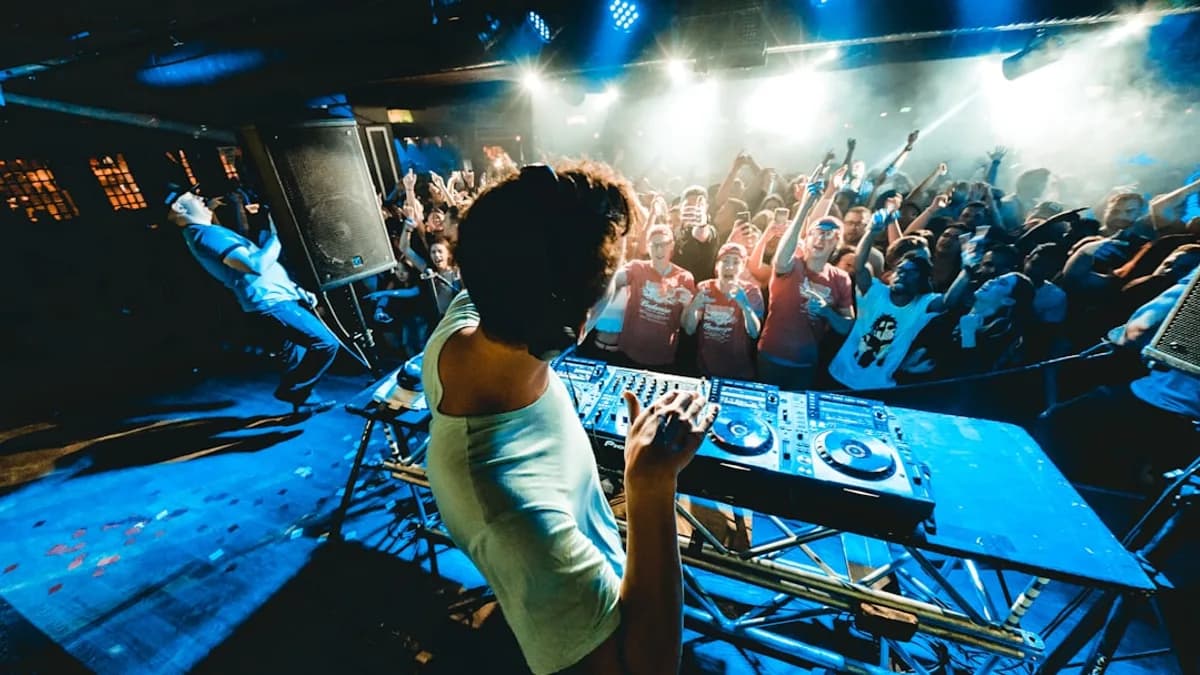
A crowd nearly the size of a small city descended on a military firing range outside Bourges, drawn not by a headline act or pricey tickets, but by the promise of a “free party” — a term that has come to define a certain strain of underground rave culture in France and across Europe. The outsized turnout, estimated at up to 40,000, stunned authorities and locals alike, but for veterans of the scene, it was business as usual: the scale, the secrecy, and the lawlessness are all part of the appeal, according to Al Jazeera.
Free parties — sometimes called teknivals — have always been more than just music events. They’re a rebellion against commercialized nightlife, gatekeeping, and the constraints of mainstream society. For many, the risk of fines or police intervention adds a thrill absent from licensed festivals. The rave scene in France has roots in the anarchic squat parties of the 1990s, fueled by techno, trance, and drum-and-bass. Today, it attracts a cross-section of Europe’s youth: students squeezed by rising living costs, gig workers, artists, and even professionals seeking escape. With licensed festivals regularly costing €100 or more, the “free” part is literal — but it’s also symbolic, a rejection of the commodification of culture.
Economic pressures amplify this demand. France’s youth unemployment rate hovers around 17%, and inflation has pushed up prices for everything from beer to concert tickets. Social factors matter, too: free parties offer a rare space where identities blur, hierarchies dissolve, and people dance until sunrise without curated Instagram moments or VIP wristbands. The military site itself, with its isolation and forbidden aura, only added to the draw — a stage for temporary liberation, far from surveillance and order.
What Are the Risks and Legal Consequences of Hosting Parties on Military Sites?
Military sites are not just off-limits; they are classified as critical national infrastructure. Unauthorized access, especially for mass gatherings, is a clear violation of French law under Article 413-5 of the Penal Code, which protects sites deemed vital for national security. The risks go far beyond trespassing: firing ranges can be littered with unexploded ordnance, and the terrain itself is often hazardous, with deep pits, barbed wire, and unpredictable access routes.
For organizers, penalties can include steep fines, criminal charges, and even custodial sentences. In 2022, French authorities slapped rave organizers with penalties exceeding €20,000 after a similar event at another military site. Attendees risk fines of up to €150 for trespassing, but charges can escalate if property is damaged or if police are attacked. The legal fallout doesn’t end with the party: authorities routinely track down organizers using social media posts, drone surveillance, and phone metadata, sometimes months after the event.
Safety hazards are not theoretical. In 2017, an illegal rave at a decommissioned British army training ground ended with multiple injuries after partygoers stumbled onto live ammunition. France has seen fatalities at unauthorized events held in quarries and warehouses — sites chosen for their remoteness but not for their safety. The Bourges event’s scale magnifies these risks: thousands of cars, makeshift camps, and amateur sound systems push emergency services to their limits. With military sites, the stakes are higher: a single misstep could trigger a disaster, and any incident risks exposing national security vulnerabilities.
How Did Organizers Manage to Gather Up to 40,000 Ravers at a Remote Military Location?
Pulling off an event of this size without official permits demands a level of logistical sophistication that rivals licensed festivals — but with none of the legal protections. Organizers rely on encrypted messaging apps (Telegram, Signal), burner phones, and coded language to coordinate. Word spreads through trusted networks, often starting with a cryptic flyer or digital invite days before the party. The location is kept secret until the last minute; attendees receive GPS coordinates only hours ahead, minimizing the window for police intervention.
Social media plays a double-edged role. While platforms like Facebook and Instagram are too public for direct coordination, they’re invaluable for post-event documentation and for seeding hype. Underground forums, Discord channels, and WhatsApp groups do the real heavy lifting. In the Bourges case, organizers used a mix of digital channels and old-school whisper networks, with regional “sound system” collectives acting as nodes. These groups — some rooted in the squat scene, others professionalized — mobilize trucks, generators, and DJs in a matter of hours.
The logistics are daunting. Setting up sound systems powerful enough to reach tens of thousands requires access to industrial equipment, often borrowed or anonymously rented. Water, toilets, and medical tents are improvised, if at all. Security is ad hoc: volunteers patrol, but there’s no formal crowd control. Transport coordination is decentralized; carpooling apps, encrypted ride shares, and caravans form spontaneously. The remoteness of the Bourges firing range, over 200 km from Paris and far from public transport, was a feature, not a bug — it screened out casuals and gave organizers time to set up.
Sustaining the party — keeping music running, managing waste, and avoiding police shutdowns — demands constant improvisation. Power failures, busted equipment, and bad weather are routine. Yet the lack of official oversight is precisely what draws the crowd: the event’s anti-structure is both a challenge and an attraction. For many, the unpredictability is the point.
What Were the Immediate Responses from Authorities and Local Communities?
French military and police scrambled to respond as news of the party spread. Local gendarmerie set up roadblocks, but the scale overwhelmed standard protocols. Military personnel, tasked with site security, had to balance intervention with safety; a heavy-handed crackdown could have triggered panic or stampedes. Instead, authorities focused on containment: monitoring access points, dispatching ambulances for medical emergencies, and recording license plates for possible legal follow-up. By Sunday afternoon, cleanup crews were deployed, and officials began cataloging damage, which included torn fencing, littered fields, and reports of minor injuries.
Local residents were blindsided. Bourges, a city of 65,000, saw its infrastructure strained: petrol stations ran dry, supermarkets faced surges in demand, and noise complaints spiked. For some, the party was a nuisance; for others, a spectacle. Small businesses reported a temporary bump in sales, but longer-term concerns revolved around environmental damage and public safety. Parents worried about teenagers drawn to the party, while farmers near the site reported trampled crops and lost livestock.
The broader fallout centers on security: if tens of thousands can breach a restricted military site for a rave, what does that say about vulnerability to more serious threats? French officials have announced a review of perimeter defenses and emergency protocols. The incident has sparked debate in Parliament about balancing civil liberties with the need to protect national infrastructure — a conversation that is likely to intensify as similar events proliferate.
What Does This Event Reveal About the Future of Large-Scale Underground Parties in Europe?
The Bourges rave signals a resurgence of large-scale illegal gatherings, echoing the massive teknivals of the late 1990s and early 2000s. Back then, France saw events topping 30,000 attendees, often in abandoned factories or remote fields. Crackdowns in the 2010s drove the scene deeper underground, but recent years have seen a revival, fueled by post-pandemic pent-up demand and social media’s ability to mobilize crowds at short notice.
Authorities across Europe are playing catch-up. In the UK, the “Criminal Justice Act” of 1994 targeted raves, but organizers adapted by shifting to encrypted comms and pop-up locations. Italy, Spain, and Germany have seen similar cycles: bans, adaptation, and escalation. France’s response has been mixed — sporadic crackdowns, but also attempts at dialogue with sound system collectives. After a 2023 teknival drew 20,000 to a former airbase in the Loire, the government floated a “permit-lite” system, allowing spontaneous events with basic oversight. That proposal stalled, but debate continues.
Policy shifts are inevitable. Some officials push for harsher penalties and surveillance; others advocate harm reduction, with medical services and negotiated access to safer sites. The Bourges party’s sheer scale will likely force a rethink. Case studies like the 2019 “Acid Party” in Berlin, which saw 15,000 ravers and ended peacefully thanks to negotiated police presence, suggest that dialogue can work — but only if both sides see value in compromise.
For the underground party scene, the stakes are clear: bigger events mean more visibility, but also more risk. Organizers face higher legal exposure, but also larger audiences and cultural impact. For authorities, the challenge is balancing security and civil freedoms without provoking backlash or simply pushing the scene further underground.
What Should Readers Watch for as Underground Parties Grow?
The Bourges incident is not an outlier — it’s a signpost. Expect more mass gatherings in unlikely places, with organizers deploying ever-more sophisticated digital tools and authorities scrambling to adapt. Watch for policy changes: France may tighten access to military sites, increase penalties for trespassing, or pilot harm reduction models. Investors in event tech, security, and nightlife should track how underground parties shape demand for surveillance, logistics, and alternative venues.
For those in the music industry or nightlife sector, the lesson is clear: the appetite for unregulated parties is growing, driven by cultural rebellion and economic pressure. Legal festivals will need to rethink pricing and authenticity. Authorities, meanwhile, must prepare for a new wave of decentralized events that defy traditional controls.
Whether you see it as a threat or a symptom of deeper social shifts, the next mega-rave could be closer than you think — and it will test the limits of regulation, infrastructure, and collective imagination.
Impact Analysis
- The massive turnout highlights growing demand for affordable alternatives to mainstream nightlife.
- Rising economic pressures and youth unemployment are fueling underground cultural movements.
- The event’s scale and location challenge authorities and raise questions about public space and regulation.