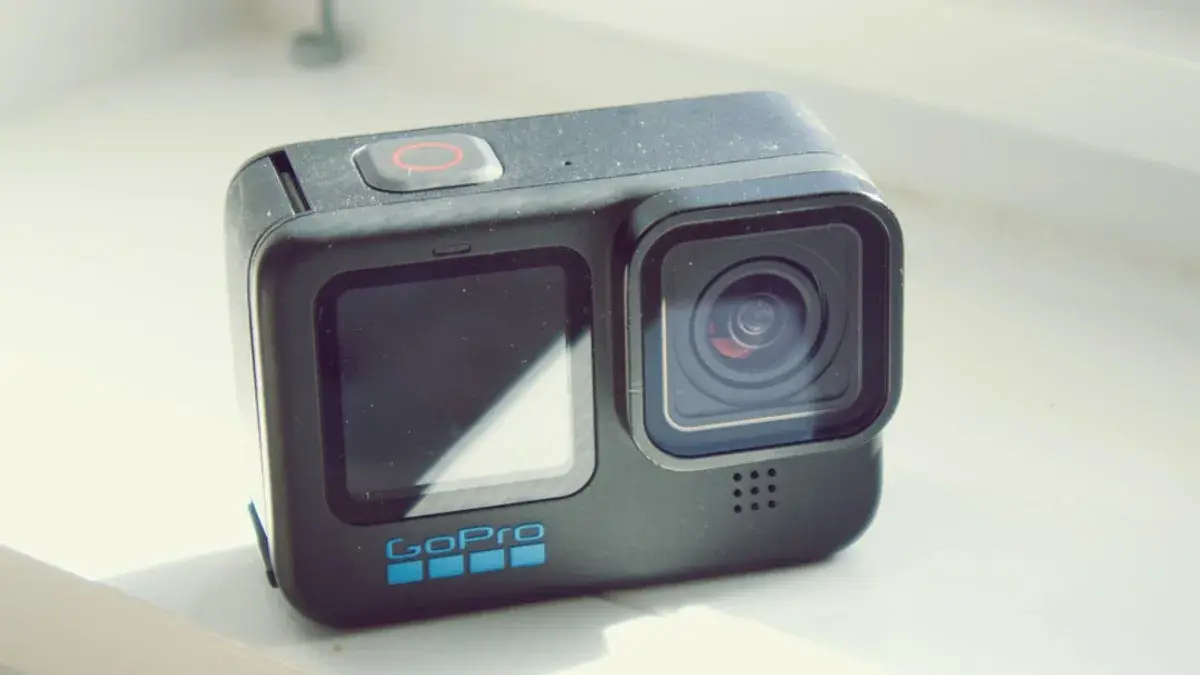
GoPro’s newest filing turns an action-camera slump into a creditor problem: management now says there is “substantial doubt” about the company’s ability to continue operating.
According to Notebookcheck, the warning appeared in GoPro’s amended 2025 annual report and Q1 2026 quarterly report, both published Monday, June 1. Shares fell 8% in premarket trading after the disclosure.
GoPro disclosed “substantial doubt about its ability to continue as a going concern.”
That phrase is accounting language, but the implication is blunt. GoPro is telling investors that its current liquidity, operating losses, and financing constraints may not be enough to carry the company forward without a successful fix. The more serious detail is that auditor PricewaterhouseCoopers added its own explanatory going-concern language to the audit opinion. This is no longer only management warning the market. The auditor is flagging the same risk.
GoPro’s going-concern warning turns a camera brand into a creditor story
The key shift is control. GoPro is not merely trying to sell more cameras or recover from a weak product cycle. It is now trying to keep lenders onside while its filings warn that ordinary continuity is in question.
A going-concern warning does not mean bankruptcy is automatic. It means management sees serious doubt about the company’s ability to keep operating over the relevant forward period unless financing, operating performance, or another remedy improves. When an auditor reinforces that language, the warning carries more weight with lenders, suppliers, customers, and shareholders.
In GoPro’s case, the disclosure is especially sensitive because Notebookcheck reports that the company’s loan agreements contain clauses that treat this kind of warning as a default. That matters more than the headline stock move. A stock can fall and recover. A default clause can hand negotiating power to creditors.
MLXIO analysis: The central question is no longer whether GoPro can regain cultural relevance with athletes and creators. It is whether the company can avoid a financing chain reaction long enough to prove that its hardware business still generates enough cash to stand alone.
The cash collapse shows why lenders may tighten the frame
The reported numbers leave little room for soft interpretation. Revenue fell to $651.5 million in 2025, down nearly 19% from $801.5 million the year before. GoPro still lost $83.3 million. Its cash pile almost halved, dropping from $102.8 million to $49.7 million. Accumulated losses now stand at $775.1 million.
| GoPro metric cited by Notebookcheck | Prior period / year | Latest cited figure | Signal |
|---|---|---|---|
| Revenue | $801.5 million | $651.5 million in 2025 | Sales contraction |
| Net loss | Not provided in source excerpt | $83.3 million loss in 2025 | Losses continued despite smaller revenue base |
| Cash | $102.8 million | $49.7 million | Liquidity nearly halved |
| Accumulated losses | Not provided in source excerpt | $775.1 million | Long-running deficit |
| Premarket share reaction | N/A | Down 8% | Immediate investor repricing |
The source material does not provide operating cash flow, inventory levels, maturity dates, or exact covenant thresholds. Those are critical missing pieces. Without them, investors cannot fully judge whether GoPro faces an urgent cash deadline or a slower liquidity squeeze.
Still, the financing structure described by Notebookcheck explains why the warning is dangerous. GoPro currently has $50 million in financing through arrangements with Farallon Capital Management and Wells Fargo Bank, plus a separate $50 million convertible debenture agreement signed with YA II PN in February 2026.
The problem is linkage. Notebookcheck reports that GoPro’s loan agreements include clauses that can treat the going-concern warning as a default. Because the loans are interlinked, one default could trigger others at the same time. GoPro says it is actively discussing the situation with its lending partners.
That makes this less like a normal weak quarter and more like a covenant-management exercise. Hardware companies can burn cash before a product recovery shows up in reported revenue. Manufacturing commitments, channel obligations, support costs, marketing, and product timing all need funding in advance. If lenders demand tighter terms while cash is already shrinking, management’s room to maneuver narrows quickly.
MAX2 delays made a weak operating base harder to defend
GoPro’s filing points to the MAX2, its 360-degree camera, as part of the problem. Notebookcheck says the product had a troubled, delayed launch in September 2025.
That detail matters because GoPro’s business depends on product cycles. A delayed launch does not just move revenue from one month to another. It can disrupt retail planning, marketing timing, inventory decisions, and customer upgrade behavior. For a company already posting losses, a major product stumble can force financing discussions into the foreground.
The source also says GoPro breached its own loan conditions during the year. In hindsight, that was the early warning. A covenant breach shows the business was already pressing against limits set by creditors before the going-concern language appeared.
MLXIO analysis: The MAX2 issue should not be read as the sole cause of GoPro’s crisis. The numbers point to a broader deterioration: falling revenue, continuing losses, and a sharp cash drawdown. The delayed camera launch appears to have made an already fragile balance sheet harder to stabilize.
The action-camera icon is now boxed in by its own category
GoPro still has brand recognition most hardware companies would envy. Notebookcheck describes it as a company that “essentially invented the consumer action camera market” and became a cultural icon among athletes and content creators. That brand equity is real. It is also not the same as liquidity.
The current filing exposes the gap between cultural relevance and financial resilience. A standalone hardware brand must keep funding design, manufacturing, distribution, support, and marketing while waiting for the next product cycle to convert into cash. If revenue shrinks and losses persist, the brand can remain visible while the financial model weakens underneath.
GoPro’s challenge is sharper because the company is tied closely to one core category. The supplied source does not give enough detail to assess subscription economics, software revenue, accessory margins, or product-line profitability. But the going-concern warning says the current mix is not producing enough confidence for management and auditors to avoid a formal doubt disclosure.
That is the deeper signal. GoPro’s problem is not only that it sold less in 2025. It is that the company now needs creditor cooperation to bridge the next phase. Once lenders become central to the story, strategic flexibility compresses.
Lenders, shareholders, customers, and retailers now want different things
GoPro says it is in active discussions with lending partners. That means lenders sit closest to the next decision point.
For lenders, the priority is preserving recovery value. They may prefer waivers if they believe GoPro can stabilize. They may demand concessions if they think risk has risen. The supplied source does not say lenders have accelerated debt, raised borrowing costs, or forced asset sales. It only says the loan language could trigger defaults and that GoPro is talking with lending partners.
For shareholders, the risk is different. Equity holders sit behind creditors. If GoPro needs waivers, fresh capital, or amended debt terms, existing shareholders may face dilution, reduced upside, or a future in which lenders exert greater influence over corporate choices. The 8% premarket drop shows the market immediately repriced that risk, but the larger issue is whether creditor negotiations reshape the company.
Customers and creators face a more practical uncertainty. GoPro has not announced restructuring plans, according to Notebookcheck. There is no source-backed evidence here that warranties, subscriptions, software updates, or product support have changed. But if liquidity tightens further, those are exactly the continuity signals customers will watch.
Retailers and suppliers also have incentives that may diverge from shareholders. A supplier wants payment certainty. A retailer wants product availability and support continuity. If either group sees rising disruption risk, they may become more cautious. That caution can pressure a hardware company at the moment it most needs commercial confidence.
MLXIO analysis: The risk is circular. A going-concern warning can make counterparties more careful. More caution from counterparties can make recovery harder. GoPro’s task is to stop that loop before it becomes self-reinforcing.
Standalone consumer hardware has little margin for financing shocks
GoPro’s filing is a reminder that strong brand memory does not guarantee durable cash generation. Consumer hardware companies can look healthier from the outside than they are financially because the product is visible, the user base is loyal, and the brand still carries cultural weight.
The balance sheet tells the harsher story. Cash fell from $102.8 million to $49.7 million while revenue dropped and losses continued. A company can absorb one of those pressures for a time. All three together create the kind of disclosure GoPro has now filed.
The creditor angle also changes how investors should read future GoPro updates. Product announcements matter, but lender language may matter more. A new camera can improve sentiment. A waiver, amendment, or capital raise can determine survival runway.
For the broader consumer electronics sector, the lesson is narrow but important: companies without deep platform control or clearly resilient recurring economics have less protection when a product cycle disappoints. They still need to fund the next launch before they know whether demand will be strong enough.
That is where GoPro’s situation becomes useful beyond GoPro. Investors should not wait for a going-concern paragraph to start reading debt terms. The warning often arrives after years of visible stress, but once it appears, the lender timetable can move faster than the product timetable.
GoPro’s next moves are creditor waivers first, strategy second
The near-term scenarios are now constrained by financing reality. GoPro could secure lender waivers, renegotiate debt terms, raise capital, cut costs, sell assets, or pursue a broader restructuring. Notebookcheck says no restructuring plan has been announced.
A credible rescue would likely require more than one step. GoPro needs lender confidence, a clearer route to cash-flow improvement, and proof that recent product execution problems will not repeat. The MAX2 delay gives creditors a concrete reason to question execution. The cash decline gives them a concrete reason to demand protection.
A strategic buyer is also a possible scenario, but the supplied source does not say GoPro is pursuing a sale or has received interest. Any sale thesis should be treated as speculative. The company’s brand, customer base, and category identity may have value to a larger owner, but the current filing does not establish that such a process exists.
The evidence that would strengthen GoPro’s survival case is straightforward: lender waivers without punitive terms, stabilized cash, narrower losses, clearer product timing, and no further covenant trouble. The evidence that would weaken it is just as clear: failed lender talks, additional defaults, deeper cash erosion, or delayed support for future products.
For now, GoPro’s most important product is not a camera. It is a financing agreement that keeps the company operating long enough to prove the brand still has economic power.
Disclaimer: This MLXIO analysis is for informational and educational purposes only. It is not financial, investment, legal, tax, or professional advice. It does not provide buy, sell, hold, price-target, portfolio, or personalized recommendations. Verify information independently and consult qualified professionals before making decisions.
The Bottom Line
- GoPro’s going-concern warning signals serious doubt about its ability to keep operating without a successful financial fix.
- Auditor PricewaterhouseCoopers adding similar language increases pressure from lenders, suppliers, and investors.
- Loan clauses reportedly treating the warning as a default could make GoPro’s liquidity problem more urgent than a normal sales slump.