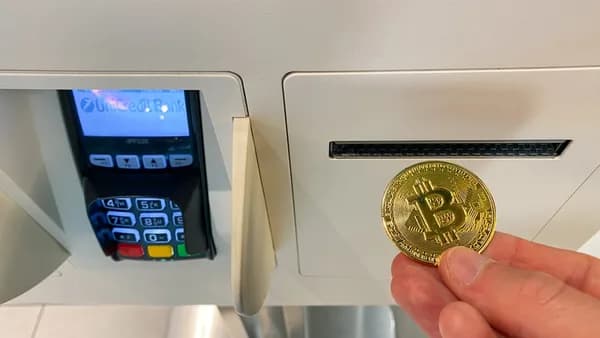
A business built to put bitcoin access inside everyday retail stores is now taking every machine offline: Bitcoin Depot has filed for Chapter 11 bankruptcy and says it will shut down. The Atlanta-based, Nasdaq-listed company once operated 9,276 bitcoin ATMs, making it one of the most visible consumer-facing pieces of crypto infrastructure in North America, according to CoinDesk.
The filing lands in the U.S. Bankruptcy Court for the Southern District of Texas, where Bitcoin Depot said it will wind down operations and sell assets through a court-supervised process. Chapter 11 often gives companies room to keep operating while they restructure. Bitcoin Depot is not presenting this as business-as-usual: CoinDesk reported that its entire ATM network has already been taken offline.
Bitcoin Depot’s Public-Market Bet Ends in a Court-Supervised Wind-Down
Bitcoin Depot went public on Nasdaq in 2023, positioning itself as a large-scale bridge between cash users and crypto markets. At one point last year, it operated 9,276 kiosks across retail locations in the U.S., Canada and Australia, allowing customers to convert cash into bitcoin.
That footprint is now being dismantled.
The company said its Canadian entities are included in the U.S. court-supervised bankruptcy process. Other non-U.S. entities will wind down under the laws of their respective countries.
The collapse also sharpens the contrast between two crypto realities. Bitcoin spot ETF outflows and policy debates may be moving forward, but Bitcoin Depot’s physical cash-to-crypto model buckled under compliance costs, state restrictions, fraud scrutiny and falling revenue.
As MLXIO previously reported in 9,000 Crypto ATMs Go Dark as Bitcoin Depot Folds Fast, the shutdown is not a theoretical restructuring problem for customers. The machines are offline.
Regulators Tightened the Model Bitcoin Depot Needed to Survive
Bitcoin Depot blamed state-level rules and enforcement pressure for making its current business model unsustainable.
“States have imposed increasingly stringent compliance obligations, including new transaction limits, and in some jurisdictions, outright restrictions or bans on BTM operations; and operators have faced increasing litigation and regulatory enforcement,” CEO Alex Holmes said in the company’s press release.
“These developments have materially affected Bitcoin Depot’s business and financial position. Under these circumstances, the Company’s current business model is unsustainable,” he added.
That statement matters because it frames the bankruptcy less as a crypto price story and more as a regulatory compression story. The company is saying the economics of bitcoin ATMs no longer worked once transaction limits, compliance obligations, litigation risk and enforcement pressure intensified.
The pressure was visible before the filing. Bitcoin Depot’s preliminary first-quarter earnings showed a 49% year-over-year revenue drop. The company swung from a $12.2 million profit to a $9.5 million loss over the same period, while gross profit fell 85% to $4.5 million.
Banking Dive reported that Bitcoin Depot disclosed an $80.7 million, or 49.2%, revenue decline in the first quarter of 2026 compared with a year earlier, citing lower transaction volume driven by regulatory impacts and enhanced compliance controls.
Fraud Allegations Turned Bitcoin ATMs Into a Prosecutor Target
The bankruptcy comes as Bitcoin Depot faces a lawsuit from the attorneys general of Massachusetts and Iowa over allegations that the company facilitated crypto scams. Banking Dive reported that the suit alleged Bitcoin Depot played a role in bilking $20 million from hundreds of state residents, most over age 60.
Iowa Attorney General Brenna Bird put the consumer-protection argument bluntly in a statement cited by Banking Dive:
“Con artists are evil and will stop at nothing to steal everything you have,” Bird said. “We already know that they target older Iowans, but now it seems that they even hunt through obituaries to target widows. They convince these older women that they need help, and then send their victims to crypto ATMs. And the crypto ATM companies take a cut of the profits.”
CoinDesk reported that crypto ATM fraud hit a record $389 million in reported losses last year, up 58% from 2024. That number helps explain why state officials have focused on bitcoin ATMs even as other parts of crypto finance gain more mainstream access.
Bitcoin Depot said it had strengthened fraud controls, including enhanced identity verification, customer fraud warnings and lower transaction limits, according to related reporting. The company’s argument is that those same controls, combined with state restrictions and enforcement, weakened transaction volume and profitability.
Before and After: A Cash-to-Bitcoin Network Becomes an Asset Sale
The bankruptcy flips Bitcoin Depot’s story from expansion to salvage.
- Before: 9,276 kiosks at one point last year, with cash-to-bitcoin access across retail locations in the U.S., Canada and Australia.
- After: The network is offline, and the company says it will sell assets through a court-supervised process.
- Before: Public-company access to the bitcoin ATM market through Nasdaq.
- After: Shareholders face a bankruptcy process where asset-sale value and creditor recoveries become central.
- Before: Compliance controls were part of operating the model.
- After: Bitcoin Depot says compliance burdens and restrictions made the model unsustainable.
For shareholders, the filing shifts attention away from growth metrics and toward the bankruptcy estate. Banking Dive reported that Bitcoin Depot’s stock price fell 75% between Friday and Monday, to 75 cents per share.
Analysis: common shareholders in Chapter 11 cases typically sit behind creditors in the recovery order. The source material does not provide Bitcoin Depot’s full capital structure or expected recoveries, so the shareholder outcome cannot be assessed from the filing headline alone. But a wind-down and asset sale is a harsher setup than a standard operating turnaround.
The Industry Lesson Is About Compliance Math, Not Just Crypto Demand
A restructuring adviser quoted by Banking Dive framed the filing as a warning for the broader bitcoin ATM business.
“The traditional model depended on high transaction spreads and limited regulatory scrutiny to offset unusually high compliance, cash logistics, fraud remediation, and retail revenue sharing costs,” Roshan Dharia, CEO of Echo Base Global, said. “That equation is breaking down as states increasingly impose consumer protection standards that compress fees, expand operator liability for scam related activity, and raise expectations around transaction monitoring and reimbursement.”
That is the clearest read-through from Bitcoin Depot’s collapse. The company did not say customers stopped caring about bitcoin. It said the physical kiosk model could not absorb the new rule set.
That split is important. Bitcoin market narratives can still revolve around ETFs, macro positioning and policy signals — the kind of trading context MLXIO tracks in $40B Bitcoin Signal Says the $60K Panic Hit Bottom. Bitcoin Depot’s failure sits somewhere else: consumer cash rails, fraud exposure and state-level operating constraints.
Court Documents Will Show How Much Value Is Left in the Kiosks
The next phase is practical. Bankruptcy filings and asset-sale motions should show what Bitcoin Depot believes its machines, contracts, technology and remaining entities are worth.
Customers and retail locations need operational clarity first: CoinDesk says the network is already offline, so the immediate question is not whether kiosks keep running, but how the shutdown and asset sale are administered.
Investors will watch whether Nasdaq takes any action tied to the bankruptcy filing or listing compliance. The supplied source material does not report any Nasdaq decision.
The key scenario now is whether buyers emerge for pieces of Bitcoin Depot’s network or whether the bankruptcy becomes a narrower liquidation of hardware, software and related assets. Either way, the case will test how much value remains in bitcoin ATM infrastructure when the machines are dark and the old transaction model no longer clears the compliance bar.
Disclaimer: This MLXIO analysis is for informational and educational purposes only. It is not financial, investment, legal, tax, or professional advice. It does not provide buy, sell, hold, price-target, portfolio, or personalized recommendations. Verify information independently and consult qualified professionals before making decisions.
The Bottom Line
- Bitcoin Depot’s bankruptcy removes one of North America’s largest cash-to-bitcoin access networks.
- The collapse highlights pressure on crypto ATM operators from compliance costs, fraud scrutiny and state restrictions.
- The shutdown shows that consumer-facing crypto infrastructure can struggle even as institutional crypto products gain momentum.