Brye’s “Lemons” Hits 100 Million Streams—Produced Entirely on a School iPad
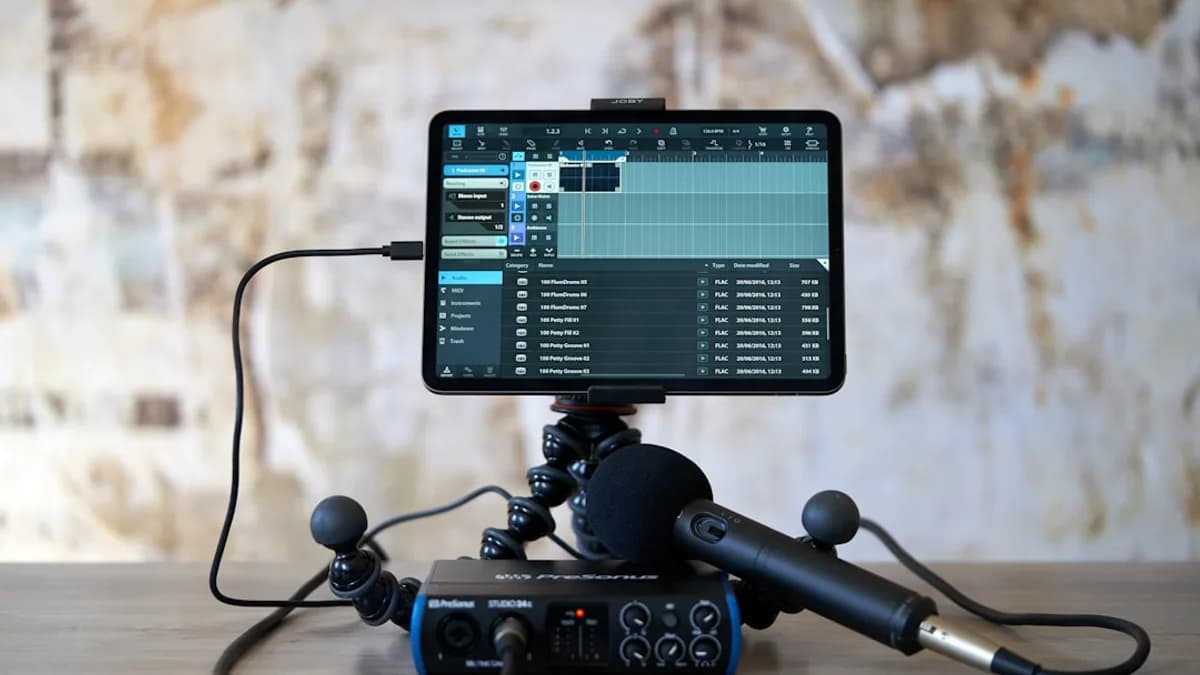
Indie pop artist Brye’s breakout track “Lemons” just crossed 100 million streams, but the backstory is even more arresting: she produced the entire song in GarageBand on a school-issued iPad, using nothing but a cheap plug-in microphone. Brye, whose full name is Bryanna Noelle Sebring, revealed the track’s humble origins in a TikTok video, framing her success as proof that chart-worthy music can come from the most basic tools. Her claim directly echoes Steve Jobs’ 2004 promise that GarageBand would let anyone make professional music without a pro studio, according to 9to5Mac.
This approach undercuts the conventional wisdom that hit songs demand pricey studio time and high-end gear. Instead, Brye’s “Lemons” shows that an idea—and a free app—can be enough.
A DIY Hit That Undercuts the Recording Studio Status Quo
Brye’s public post isn’t just a quirky anecdote. It’s a rebuke to an industry built on the mythology of expensive gear and exclusive access. By producing a viral hit with little more than school hardware and free software, Brye puts the focus back on songwriting and performance—not on vintage compressors or boutique microphones.
This story lands like a callback to Steve Jobs’ GarageBand launch, when Apple pitched the app as a “musical sketchpad” for anyone with a Mac. Brye’s workflow—GarageBand, a basic iPad, and a low-cost mic—delivers on that pitch with mathematical precision. No studio, no session players, no complicated hardware chain.
While the music business has always made room for lo-fi success stories, artists like Brye are redefining what’s possible at scale. The tools are now so accessible that the gap between a classroom and a global hit has all but collapsed. The subtext for aspiring musicians: focus on your craft, not your budget.
Why This Matters for Aspiring Artists and the Music Tech Industry
Brye’s “Lemons” landing nine figures in streams with a setup anyone could replicate is a clarion call for the next wave of artists. If a global audience can be reached from a school iPad, the old gatekeepers and capital requirements look shakier than ever.
From a music tech perspective, this is a validation of the original GarageBand thesis: democratize the means of production, and the hits will follow. Expect user-friendly, affordable apps to get more attention from creators who see Brye’s success as a roadmap, not an exception.
It’s also a signal to the industry side—A&R teams, producers, and labels—that viral hits may now emerge from anywhere, made on hardware that costs less than a set of guitar strings. The implication is clear: don’t dismiss the rough demo or the iPad session file. That’s where the next “Lemons” might be hiding.
What’s Still Unclear
Brye’s revelation leaves some questions unanswered. The TikTok video confirms the production setup and the 100 million stream milestone, but doesn’t detail the timeline of the song’s ascent, the role of TikTok or other social platforms in its breakout, or how the track was mixed and mastered after the initial GarageBand demo. Did she keep the original iPad stems for the final release? Was there additional production or professional polish added later?
We also don’t know how common this “school iPad to viral hit” pipeline has become, or whether Brye’s story is already the norm for Gen Z pop acts. The source doesn’t provide data on how many other artists are following this path.
What to Watch Next
The next inflection point: whether Brye’s GarageBand success becomes a rallying cry for a new generation of DIY artists—or a one-off curiosity. If more musicians point to cheap, accessible tools as the backbone of their hits, expect a flood of GarageBand—and other app-produced—tracks in streaming charts.
For music tech companies, the incentive to double down on simplicity and classroom accessibility is obvious. For aspiring artists, Brye’s viral moment is a green light to ship music with whatever’s at hand.
The bottom line? The gap between a school iPad and 100 million streams just got a lot smaller.
Why It Matters
- Brye’s success proves that professional-quality music can be made with basic, affordable tools.
- The story challenges the music industry’s focus on expensive studios and gear, inspiring new artists.
- It highlights how accessible technology like GarageBand and iPads are reshaping who can break into music.