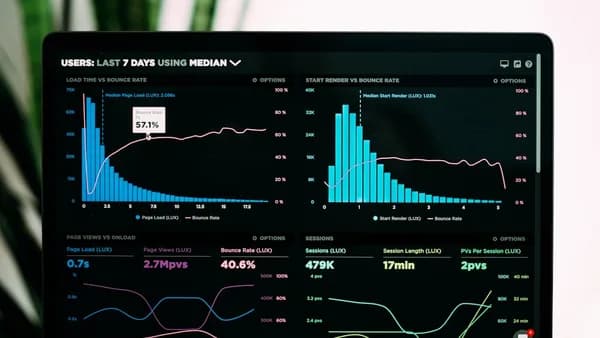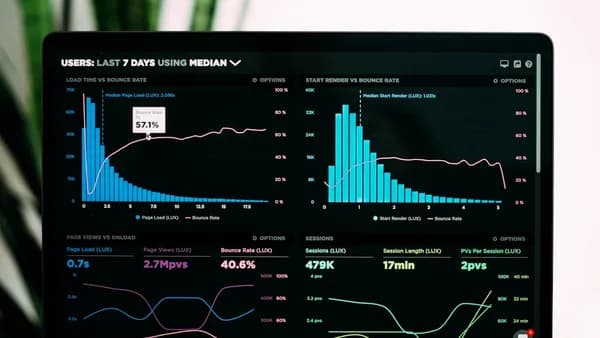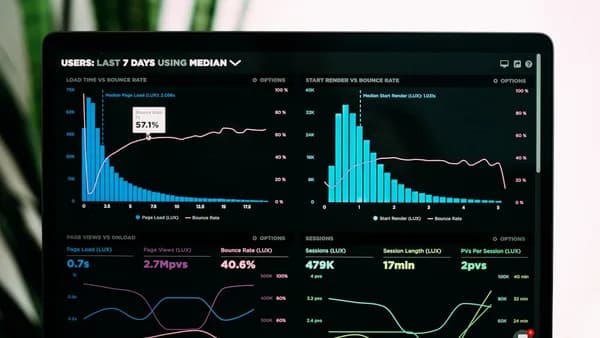
Product analytics platforms have become essential tools for startups aiming to drive growth through data-driven decision-making. This product analytics platforms guide will walk you through the step-by-step process of leveraging these platforms to track user behavior, measure key performance indicators (KPIs), and optimize your product’s growth trajectory. Based on the latest research and platform comparisons for 2026, you’ll learn how to choose, set up, and maximize the impact of your analytics stack—grounded in the real-world features and pricing of today’s leading tools.
Introduction to Product Analytics for Startups
Product analytics platforms are purpose-built to help startups understand exactly how users interact with digital products, such as web apps and mobile applications. While traditional web analytics tools like Google Analytics focus on traffic sources and page views, product analytics platforms dive deeper—tracking every in-app action to reveal what drives adoption, engagement, and retention.
Product analytics software tracks in-app user behavior to improve adoption, retention, and conversion—insights that surveys and basic testing can’t provide.
— Guideflow Blog, 2026
These platforms rely on event-based tracking: every meaningful user action (like clicking a button, completing a form, or using a feature) is recorded as a discrete event. By analyzing these events, startups can uncover friction points, optimize onboarding, and prioritize features that actually matter to their users.
Key leading platforms for 2026 include:
- Amplitude: Excels at behavioral cohort analysis with enterprise-grade data governance.
- Mixpanel: Offers deep funnel and retention tracking with AI-powered insights.
- Heap: Stands out for automatic event capture without manual tagging.
- Pendo: Combines product analytics with in-app guides and NPS surveys.
Startups at every stage are turning to these platforms to achieve one core goal: making smarter, faster decisions based on how users actually use their product.
Key Metrics Every Startup Should Track
To maximize the value of any product analytics platforms guide, it’s essential to focus on metrics proven to drive startup growth. According to the latest industry insights, the following metrics are foundational for digital product teams:
Core Metrics for Growth
- Adoption: Which features are being used, and by how many users?
- Example: Event tracking shows which new releases gain traction.
- Activation: Are new users reaching critical “aha” moments?
- Example: Funnel analysis identifies if users complete onboarding steps.
- Retention: How many users come back after their first visit?
- Example: Retention analysis highlights which behaviors predict stickiness.
- Churn: Where and why do users drop off?
- Example: Session replay reveals points of friction or confusion.
- Conversion: What percentage of users move through key flows (e.g., sign-up to paid)?
- Example: Funnel tracking visualizes step-by-step drop-off.
Top product analytics platforms help teams retain 1.7-1.9x more users than average by identifying and doubling down on sticky behaviors.
Advanced Metrics
- Cohort Analysis: Segment users by signup date, feature usage, or demographics to spot trends.
- Session Duration and Frequency: How often, and for how long, do users engage with your product?
- Feature Adoption: Which features drive the highest engagement or conversion?
- NPS and Feedback Integration: Pairing behavioral data with qualitative feedback (supported by platforms like Pendo).
Choosing the Right Product Analytics Platform
Selecting a product analytics tool isn’t just about picking a popular brand—it’s about matching features, pricing, and integrations to your startup’s stage and specific needs. Here’s what the 2026 research recommends for making an informed choice:
Key Features to Evaluate
- Event Tracking: Ability to capture granular user actions (clicks, signups, purchases).
- Funnel Analysis: Visualize the steps users take toward conversion and where they abandon the process.
- Retention Analysis: Measure user return rates and the behaviors that drive repeat engagement.
- Session Replay: Watch real user sessions to spot confusion and friction.
- User Segmentation: Group users by demographics, behaviors, or time-based cohorts.
- Retroactive Data Capture: Track new events against historical data (noted with Heap’s auto-capture).
- Integration Depth: How well does the platform connect with your existing stack?
Comparison Table: Top Product Analytics Platforms for Startups (2026)
| Product | Key Differentiation | Free Tier | Paid Pricing | G2 Rating |
|---|---|---|---|---|
| Guideflow | Demo engagement analytics for pre-user behavior | Yes | From $40/mo | 5.0/5 |
| Mixpanel | Funnel & retention analysis, AI-powered insights | Yes | Paid plans available | 4.6/5 |
| Amplitude | Behavioral cohort analysis, enterprise-grade | Yes | Custom pricing | 4.5/5 |
| Heap | Auto-capture, retroactive tracking | Yes | Custom pricing | 4.4/5 |
| Pendo | Analytics + in-app guides & NPS surveys (B2B focus) | No | Custom pricing | 4.4/5 |
| PostHog | Open-source, self-hosted, feature flags | Yes | $0/mo to start | 4.4/5 |
| Hotjar | Qualitative insights, heatmaps, surveys | Yes | From $32/mo | 4.3/5 |
Choose based on company stage:
- Mature products: Amplitude or Mixpanel
- Fast-moving, early-stage teams: PostHog, Heap, or Hotjar
Pricing Highlights
- Free Tier: Most top platforms (Mixpanel, Amplitude, Heap, PostHog, Hotjar) offer generous free plans, great for startups.
- Entry Paid Pricing: Starts as low as $32-40/month for Hotjar and Guideflow.
- Custom Pricing: For advanced features (Amplitude, Heap, Pendo), expect to speak with sales.
Setting Up Your Analytics Dashboard
Once you’ve selected a platform, the next step is setting up your analytics environment for actionable insights. Here’s a step-by-step guide, based on common features and best practices from leading tools:
Step 1: Define Core Events
Identify the key user actions you want to track, such as:
- Signups
- Completed onboarding
- Feature usage (e.g., uploading a document, creating a project)
- Subscription upgrades
- Churn/cancellation
For platforms like Heap, setup is simplified through auto-capture—events are logged automatically, reducing engineering effort.
Step 2: Instrument Event Tracking
For most platforms, this involves adding code snippets to your app:
// Example: Track a 'Signup' event in Mixpanel
mixpanel.track('Signup', {
  plan: 'Pro',
  referrer: 'Homepage CTA'
});
Platforms like Heap may require minimal or no manual tagging, capturing all interactions for later analysis.
Step 3: Build Funnels and Cohorts
- Funnels: Map the sequence of steps users take toward conversion.
- Cohorts: Group users by signup date, feature usage, or behavior patterns.
Step 4: Enable Session Replay (if available)
Platforms such as FullStory, Heap, and Hotjar offer session replay—video recordings of user sessions that reveal friction points.
Step 5: Integrate with Other Tools
Connect your product analytics platform to your CRM, email automation, or customer support tools for a 360-degree view.
Interpreting Data to Identify Growth Opportunities
With your dashboard in place, the real power of product analytics platforms emerges: actionable insights for growth.
How to Read and Act on Your Data
- Conversion Drop-Offs: Funnel analysis in Mixpanel or Amplitude reveals where users abandon key flows. Prioritize fixes at the highest-drop-off steps.
- Feature Adoption: Segment by user cohort to see which features drive engagement and retention.
- Retention Drivers: Use behavioral cohort analysis (Amplitude) to identify what separates retained users from churned ones.
- User Feedback Loops: Platforms like Pendo merge behavioral data with NPS surveys, providing context for qualitative feedback.
“Session replay tools like FullStory and Hotjar let you see exactly where users get frustrated or stuck, helping you fix usability issues that block growth.”
Example Growth Opportunity Workflow
- Spot a drop-off: Funnel shows 60% of users abandon at the onboarding stage.
- Replay sessions: Session replay reveals users are confused by a required field.
- Test a fix: Simplify the onboarding form.
- Measure impact: Retention analysis shows a 15% lift in activation.
Case Study: Analytics-Driven Growth Success
To illustrate how startups can leverage product analytics, consider the following composite scenario grounded in platform capabilities:
Startup X launches a new SaaS app and implements Heap for analytics due to its auto-capture feature and free tier. Within weeks, the team notices low retention rates. By analyzing event data and session replays, they discover that most users never complete onboarding.
- Action: The product team redesigns the onboarding flow, making the critical success path clearer.
- Result: Retention improves by 1.8x, matching the upper benchmarks cited for top-performing products.
- Expansion: As Startup X scales, they migrate to Amplitude to leverage advanced cohort analysis and enterprise-grade experimentation.
“By using auto-capture analytics, Startup X identified friction without extensive manual tagging—accelerating their time-to-insight and driving a near-doubling of retention.”
Common Pitfalls and How to Avoid Them
Even with powerful tools, startups often encounter pitfalls when implementing product analytics. Here’s how to sidestep the most common issues:
1. Tracking Too Much or Too Little
- Pitfall: Capturing every possible event creates data overload; tracking too few misses key insights.
- Solution: Start with core events tied to business goals. Platforms like Heap help by capturing everything, but focus your analysis.
2. Poor Data Hygiene
- Pitfall: Inconsistent event naming or properties make insights unreliable.
- Solution: Establish clear event naming conventions and documentation from day one.
3. Ignoring Qualitative Insights
- Pitfall: Relying solely on quantitative data misses the “why” behind user behavior.
- Solution: Pair with qualitative tools (e.g., Hotjar’s surveys or Pendo’s NPS).
4. Neglecting Integration
- Pitfall: Isolated analytics data limits actionable insights.
- Solution: Integrate with your broader stack—CRM, support tools, and marketing automation.
Advanced Tips for Maximizing Analytics Impact
Once you’ve mastered the basics, these advanced techniques will help extract even more value from your product analytics investment:
1. Retroactive Analysis
- Heap’s auto-capture allows you to analyze new questions against historical data, revealing trends you didn’t know to track at first.
2. Behavioral Cohort Targeting
- Use Amplitude or Mixpanel to identify “power user” behaviors and target similar new users with custom onboarding.
3. Experimentation and Feature Flagging
- Platforms like PostHog offer integrated feature flags—test new features on subsets of users and measure impact in real time.
4. Session Replay + Error Monitoring
- LogRocket and FullStory combine session replay with error tracking, helping engineering teams debug issues that impact growth.
5. Privacy and Compliance
- For startups in regulated industries, Countly offers a privacy-focused, self-hosted option with built-in GDPR compliance.
Summary and Next Steps
Product analytics platforms are the backbone of modern, data-driven startup growth. By choosing the right tool for your stage, setting up meaningful event tracking, and continuously interpreting user behavior, you can optimize every aspect of your product—improving adoption, retention, and revenue.
Next steps:
- Identify your must-track metrics (adoption, retention, conversion).
- Evaluate platforms using the comparison table above.
- Set up a free tier on one or more platforms suited to your needs (e.g., Heap for auto-capture, Mixpanel for funnels).
- Instrument core events and start building funnels and cohorts.
- Regularly review and act on your data—don’t let insights go stale.
FAQ: Product Analytics Platforms Guide
Q1: What’s the difference between product analytics and web analytics?
A: Web analytics (e.g., Google Analytics) tracks traffic sources and page views, while product analytics platforms track in-app behavior—such as feature usage, retention, and conversion events—revealing what drives user engagement and growth.
Q2: Which product analytics platform is best for early-stage startups?
A: Fast-moving teams often start with PostHog or Hotjar for their free tiers and ease of setup. Heap is also popular for its auto-capture capabilities.
Q3: Do these tools offer free plans?
A: Yes. Most leading platforms, including Mixpanel, Amplitude, Heap, Hotjar, and PostHog, offer free tiers. Paid plans start from as low as $32-40/month, depending on the tool.
Q4: How do I choose what events to track?
A: Focus on actions tied to your growth goals—signups, key feature usage, and conversion steps. Start small, then expand as you learn what matters most.
Q5: Can I use multiple product analytics platforms together?
A: Yes. Some teams combine platforms to get both quantitative (e.g., Mixpanel) and qualitative (e.g., Hotjar) insights. Integration depth varies by platform.
Q6: What if I need privacy-focused analytics?
A: Countly provides a self-hosted, GDPR-compliant solution for startups with strict privacy requirements.
Bottom Line
The right product analytics platforms guide is one grounded in your growth goals, technical capabilities, and product stage. By leveraging modern tools like Amplitude, Mixpanel, Heap, PostHog, and Hotjar, startups can unlock the behavioral insights that drive real, measurable growth. Start with a free tier, focus on actionable metrics, and prioritize continuous learning—your product’s success will follow.