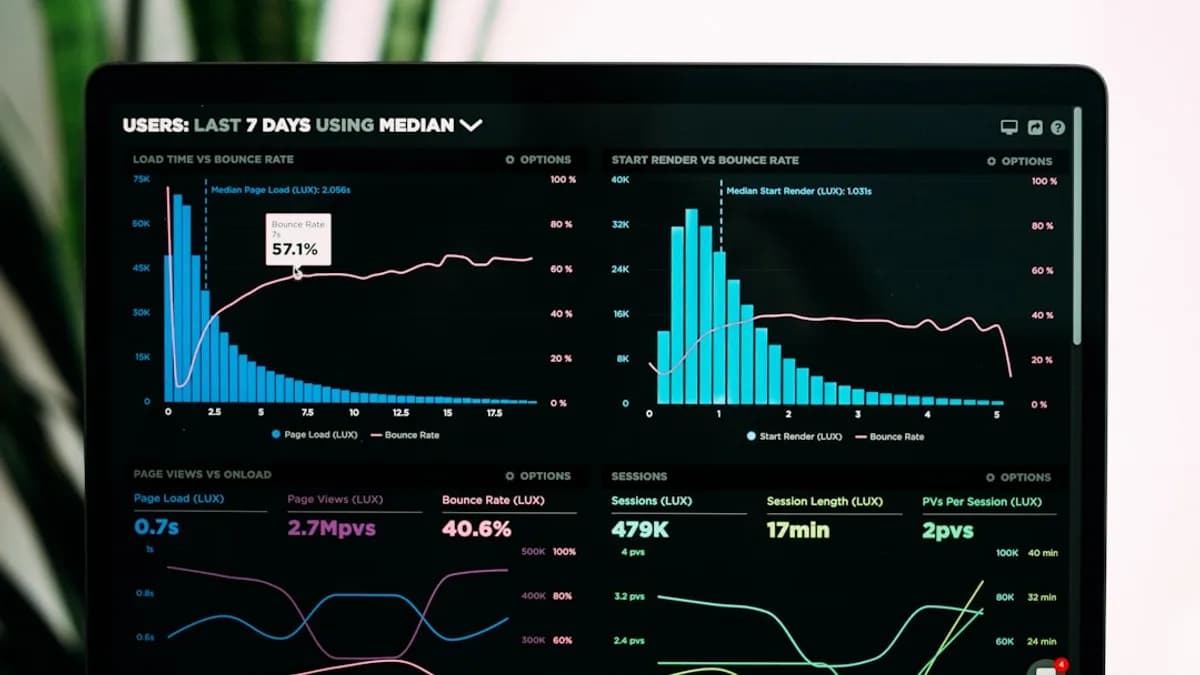
In the competitive landscape of 2026, early-stage startups must make every user interaction count. The choice of product analytics platforms for early-stage startups is now more crucial than ever. With limited resources and an urgent need for rapid, data-driven growth, selecting the right analytics tool can mean the difference between finding product-market fit quickly or spending months building features that miss the mark. This guide offers a comprehensive, research-backed comparison to help founders and product teams choose the best product analytics platform for their unique needs.
Importance of Product Analytics for Early-Stage Startups
Launching a new product is a race against time and budget. Early-stage startups deal with a paradox: more user data than ever, but less time and fewer resources to interpret it. According to Amplitude’s guide to the best analytics tools for startups, the difference between structured product analytics and disconnected data sources often determines whether a team finds product-market fit in months or wastes a year on features nobody uses.
Product analytics platforms for early-stage startups are designed to answer core questions:
- What features drive engagement?
- Where do users drop off?
- Which behaviors predict retention?
Without analytics:
- ❌ Startups guess which features to build next
- ❌ They can’t identify why users churn
- ❌ They struggle to prove traction to investors
With analytics:
- ✅ Product decisions become data-driven
- ✅ User behavior is clearly understood
- ✅ Iteration cycles are faster, and growth is more efficient
“The difference between knowing and guessing often determines whether you find product-market fit or spend months building features nobody uses.”
— Amplitude, 2026
Key Features to Look for in Product Analytics Platforms
Not all analytics tools are created equal. The best product analytics platforms for early-stage startups share several must-have capabilities:
1. Rapid Implementation
- No-Code/Low-Code Setup: Allows product managers to set up tracking and reports without constant engineering support.
- Autocapture: Tools like PostHog provide instant event tracking from the moment you install the snippet, capturing clicks, pageviews, and form submissions out-of-the-box.
2. Behavioral Analytics Depth
- Event Segmentation & Funnels: Track how users move through sign-up, activation, and feature adoption.
- User Journey Mapping: Visualize step-by-step user paths to surface friction points and “aha” moments.
- Retention Cohorts: See which behaviors predict long-term engagement.
3. Experimentation and Session Replay
- A/B Testing & Feature Flags: Platforms like Amplitude and PostHog bundle experimentation tools so you can test changes and measure impact instantly.
- Session Replay: Watch real user sessions to pinpoint UX blockers (PostHog offers 5,000 free replays/month).
4. Integration and Extensibility
- Marketing Tool Integrations: Sync behavioral data with advertising and messaging platforms.
- Data Warehouse Support: Export raw data for advanced analysis as your team grows.
5. Transparent, Startup-Friendly Pricing
- Generous Free Tiers: Essential for keeping costs low in the earliest stages.
- Predictable Upgrades: Understand when and how pricing scales with usage.
Criteria for Comparing Analytics Tools (Pricing, Usability, Integrations)
When evaluating product analytics platforms for early-stage startups, three criteria matter most:
| Criteria | Why It Matters | What to Look For |
|---|---|---|
| Pricing | Startups need predictability and affordability | Free tier volume, pay-as-you-grow, no per-seat fees |
| Usability | Speed to insight is essential for small teams | No-code setup, pre-built dashboards, autocapture |
| Integrations | Smooth data flow across the stack prevents silos | Slack, marketing tools, data warehouse, Segment |
- Implementation Speed: Can non-technical team members get answers quickly?
- Behavioral Depth: Does the tool capture journeys, retention, and advanced segmentation?
- Integration Options: Does it plug into your stack without complicated engineering?
“A tool is only valuable if your team can actually use it to answer questions quickly and consistently. In early-stage environments, speed of insight often matters more than depth of features.”
— QuadraticHQ, 2026
In-Depth Comparison of Top Platforms
Based on the latest research, here’s how the leading product analytics platforms for early-stage startups stack up in 2026:
| Platform | Free Tier | Core Strengths | Best For | Monthly Cost (After Free Tier) |
|---|---|---|---|---|
| Amplitude | 10M actions | Advanced analytics, experiments, unified workflow | Data-driven teams, scalability | $0–$61 (startup tier) |
| PostHog | 1M events, 5K session replays | All-in-one (analytics, replay, flags), open source | Technical teams, privacy, self-hosting | $0–$200 (cloud), $0 (self-hosted) |
| Mixpanel | 100K MTU | Easiest for non-tech teams, mobile analytics | Mobile-first, fast setup | $0–$89 (startup plan) |
| Heap | Not specified (in sources) | Autocapture, retroactive data | Teams needing fast event setup | Not specified |
| Pendo | Not detailed (in sources) | Product adoption, onboarding | SaaS onboarding, feature guides | Not specified |
| Plausible | 30-day trial | Simple, privacy-first web analytics | Traffic/source insights | $9–$19 |
Amplitude
- Unified platform: Combines analytics, experimentation, session replay, and customer data activation.
- Behavioral analytics: Funnels, retention cohorts, user journeys—no SQL required.
- Predictive insights: Identify churn risks, target high-value cohorts.
- Startup-friendly: 10M free actions monthly; scalable to enterprise.
PostHog
- Swiss Army knife: Analytics, session replay, feature flags, A/B testing—all-in-one platform.
- Autocapture: Instant event tracking, with the option to add custom events as you scale.
- Self-hosting: Free if you host (good for privacy/regulatory needs).
- No per-seat pricing: Unlimited team access.
- Cons: Breadth of features means a steeper learning curve; self-hosting requires DevOps skill.
Mixpanel
- Event tracking king: Best for non-technical teams and mobile-first products.
- Fast to implement: <1 hour setup.
- Free tier: Covers 100K monthly tracked users.
- Cons: May need supplementing with other tools for session replay and experimentation.
Heap
- Autocapture focus: Tracks events automatically, enabling retroactive analysis.
- Cons: Pricing and free tier details not confirmed in current sources.
Pendo
- Onboarding & adoption: Known for in-app guides and feature adoption insights, but limited pricing details for early-stage startups at this time.
Plausible
- Web analytics: Fastest way to see traffic and referral sources, sub-1KB script, privacy-first.
- Not a replacement: For in-product behavior, you’ll need a dedicated product analytics tool.
“Instead of stitching together separate tools for product analytics, session replay, feature flags, and A/B testing, PostHog bundles everything into one open-source platform with a free tier generous enough to carry most startups through their first year.”
— Listicler, 2026
Case Studies: How Early-Stage Startups Benefit from These Platforms
PostHog
SaaS startup with 10K MAU
- Deployed self-hosted PostHog (free tier).
- Used session replay to identify UX blockers.
- A/B testing improved conversion rate by 2.3x.
- Total analytics cost: $0
Mixpanel
Mobile app startup with 50K MAU
- Used Mixpanel’s free tier.
- Marketing team independently ran analyses.
- Integrated with Segment for flexibility.
- Total analytics cost: $0
Amplitude
B2C marketplace with 200K MAU
- Started on free tier (10M events).
- Leveraged predictive cohorts for targeting.
- Reduced churn by 15% using behavioral insights.
- Upgraded to paid plan ($400/month) post-Series A.
Scalability and Future-Proofing Your Analytics Setup
A common trap for startups is outgrowing their analytics tool just as their data needs accelerate. The top platforms address this by offering:
- Generous free tiers that cover most pre-Series A usage (e.g., Amplitude’s 10M actions, PostHog’s 1M events + 5K session replays).
- Unified product suites (like Amplitude and PostHog) that minimize tool sprawl and data fragmentation.
- Warehouse-native options (Amplitude) so you can query raw data directly as your team matures.
- Export capabilities (PostHog: “No vendor lock-in, export all data”) so you’re not trapped as your needs evolve.
“You avoid the data inconsistencies and integration work that come from managing multiple point solutions.”
— Amplitude, 2026
Integration with Growth Hacking Tools and Marketing Platforms
Seamless integration across your growth stack is critical. Here’s how the top platforms perform:
| Platform | Integrations Highlighted |
|---|---|
| Amplitude | Slack, advertising platforms, data warehouse |
| Mixpanel | Segment, marketing tools |
| PostHog | Data export, open source plugins |
| Heap | Not specified |
- Amplitude: Behavioral cohorts can be synced to ad platforms for targeted campaigns.
- Mixpanel: Easy integration with Segment and other data tools for flexible pipelines.
- PostHog: Exports data for blending with CRM, revenue, or operational data.
Pros and Cons Summary Table
| Platform | Pros | Cons |
|---|---|---|
| Amplitude | Unified analytics & experimentation, predictive insights, scales up | Advanced features may require analytics expertise as you grow |
| PostHog | All-in-one, self-hosted option, instant autocapture, no per-seat fees | Steeper learning curve, self-hosting needs DevOps |
| Mixpanel | Fast setup, non-technical friendly, best-in-class mobile analytics | Limited experimentation/session replay on free plan, may need other tools |
| Heap | Autocapture, retroactive analysis | Pricing details for startups unclear in 2026 sources |
| Pendo | In-app guides, feature adoption tracking | Startup pricing/features not fully detailed in current research |
| Plausible | Fastest web analytics setup, privacy-first, no cookie consent needed | Purely web analytics; not a replacement for in-product behavior tracking |
“For early-stage products, PostHog’s autocapture is the fastest path to useful data... The free tier includes 1 million product analytics events, 5,000 session replays, and 1 million feature flag requests per month—more than enough for a product with under 10K MAU.”
— Listicler, 2026
Recommendations Based on Startup Size and Industry
Pre-Revenue or Early Revenue (<10K MAU)
- Best All-in-One: PostHog (self-hosted for $0, cloud for $0–$200/month)
- Best for Non-Technical Teams: Mixpanel (free tier, <100K MTU)
- Best for Privacy/Regulated Markets: PostHog (open source, self-hostable)
Scaling Startups (10K–200K MAU)
- Best for Data-Driven Teams: Amplitude (free up to 10M events, scalable to paid)
- Best for Mobile-First: Mixpanel (great mobile analytics, easy integration)
SaaS/Enterprise
- Best for Product-Led Growth: Amplitude (experimentation, advanced segmentation)
- Best for Session Replay + Analytics: PostHog (integrated, unified workflow)
Web-Only Startups
- Best for Traffic Insights: Plausible (simple, privacy-first web analytics)
- Note: Pair with a product analytics tool for in-app behavior.
Conclusion: Choosing the Best Product Analytics Platform for Your Startup
The right product analytics platform for early-stage startups balances speed, depth, and affordability. There’s no universal answer, but the 2026 research points to clear leaders:
- Amplitude is ideal for startups that need powerful, unified analytics and plan to scale quickly.
- PostHog stands out for its all-in-one approach, generous free tier, and self-hosting option—especially for technical teams or those in regulated industries.
- Mixpanel is best for teams seeking quick setup and mobile-centric analytics, especially if technical resources are limited.
- Plausible and Heap add value for web analytics and rapid event tracking but are best as complements, not replacements, for core product analytics.
Ultimately, prioritize tools that:
- Fit your technical resources
- Offer actionable insights out-of-the-box
- Scale with your growth, without surprise costs
“The founders who win aren’t the ones with the most sophisticated data infrastructure—they’re the ones who track the right three metrics and act on them weekly.”
— Listicler, 2026
FAQ: Product Analytics Platforms for Early-Stage Startups
Q: What’s the difference between web analytics and product analytics?
A: Web analytics (like Plausible) tracks traffic and acquisition channels. Product analytics (like Amplitude, Mixpanel, PostHog) tracks in-app user behavior, feature adoption, and retention.
Q: Which analytics metrics should early-stage startups focus on?
A: Activation rate, retention curves, time-to-value (TTV), and core feature adoption are essential in the early stage. Post-PMF, add growth rate, LTV, and viral coefficient.
Q: Is the free tier enough for most early-stage startups?
A: Yes. Amplitude (10M actions), PostHog (1M events, 5K session replays), and Mixpanel (100K MTU) free plans cover typical early-stage needs.
Q: What if my team isn’t technical?
A: Mixpanel offers the fastest setup and is easiest for non-technical users. Amplitude also provides no-code event tracking and templates.
Q: Can I combine multiple tools?
A: Yes. Many startups use a “lean stack” (e.g., PostHog for analytics, Plausible for web, Hotjar for session replay) to get the best of each at low cost.
Q: How do I avoid outgrowing my analytics platform?
A: Choose platforms with scalable pricing, export capabilities, and enterprise features (Amplitude, PostHog). Both support growth from MVP to enterprise.
Bottom Line
In 2026, the best product analytics platforms for early-stage startups empower teams to act on user insights—without draining limited resources. Amplitude, PostHog, and Mixpanel each offer robust free tiers and features designed for fast, actionable analytics. Start with a platform that fits your team’s workflow, focus on the metrics that matter, and build a data-driven culture from day one. Your ability to iterate and learn faster than competitors will be your greatest asset.