Updated July 2026: Refreshed to clarify the role of observability tools, update security standards such as passkeys/WebAuthn and Permissions Policy, add AI-enabled collaboration context, and remove time-sensitive Docker image claims.
Understanding Enterprise Collaboration Platforms
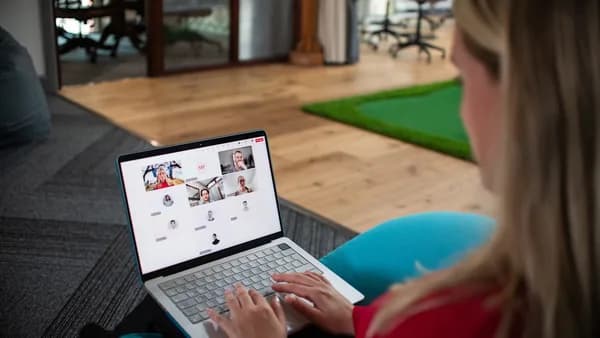
Enterprise collaboration platforms are integrated systems that help teams communicate, coordinate work, share knowledge, and manage projects across remote and hybrid environments. A modern enterprise stack typically includes messaging, video conferencing, document collaboration, workflow automation, identity management, project tracking, and observability.
Common examples include Microsoft 365 and Teams, Google Workspace, Slack, Zoom, Atlassian tools, GitHub/GitLab, ServiceNow, Notion, Asana, Monday.com, and internal portals. Increasingly, these platforms also include AI assistants for search, summarization, meeting notes, content drafting, and workflow recommendations.
Grafana Enterprise can support remote operations, but it should be understood as an observability and monitoring platform rather than a general-purpose collaboration suite. Its enterprise features—such as data source permissions, reporting, alerting, and advanced authentication—make it useful for distributed engineering, security, SRE, and operations teams that need shared visibility into systems.
Key characteristics of enterprise collaboration platforms include:
- Centralized access: Unified entry points for communication, files, dashboards, and workflows.
- Security and compliance: Identity, authentication, audit logs, retention policies, and data governance.
- Extensibility: APIs, plugins, automation hooks, and integrations with business systems.
- Scalability: Support for global teams, contractors, partners, and cross-functional projects.
- Accessibility and inclusion: WCAG-aligned interfaces, captions, localization, and flexible communication modes.
Challenges Faced by Remote Teams in Collaboration
Remote and hybrid work are now standard operating models for many organizations, but collaboration still breaks down when platforms are poorly governed or fragmented.
Common challenges include:
- Communication gaps: Distributed teams can miss context when decisions happen in meetings, private chats, or undocumented threads.
- Tool sprawl: Too many overlapping apps create silos, duplicate work, and inconsistent records.
- Security risks: Remote access, unmanaged devices, third-party integrations, and oversharing increase exposure.
- AI governance concerns: Built-in AI assistants can improve productivity, but they also raise questions about data access, retention, model training, and sensitive information leakage.
- Onboarding friction: New employees struggle when processes, permissions, and documentation are inconsistent.
- Accessibility and language barriers: Global teams need captions, transcripts, translation, keyboard navigation, screen-reader support, and locale-aware workflows.
A strong collaboration strategy is therefore not just about selecting tools. It requires clear rules for where work happens, how decisions are recorded, how access is managed, and how teams continuously improve.
Key Features to Leverage for Remote Work Optimization
To optimize enterprise collaboration platforms for remote teams, prioritize features that improve visibility, security, and day-to-day usability.
| Feature Category | Example Capabilities |
|---|---|
| Real-Time Communication | Chat, video meetings, screen sharing, WebRTC-based calling |
| Async Collaboration | Shared docs, comments, task boards, recorded meetings, summaries |
| Identity and Access Management | SSO, MFA, passkeys/WebAuthn, SCIM provisioning, role-based access |
| Project Management | Issue tracking, Kanban boards, milestones, approvals, retrospectives |
| Workflow Automation | Alerts, routing rules, scheduled reports, no-code/low-code automations |
| Monitoring and Observability | Dashboards, logs, traces, alerts, incident timelines |
| AI Assistance | Meeting summaries, enterprise search, document drafting, task extraction |
| Security and Privacy Controls | DLP, retention policies, audit logs, encryption, eDiscovery |
| Accessibility and Internationalization | WCAG 2.2 alignment, captions, translation, localization |
Step 1: Setting Up User Roles and Permissions
The foundation of a secure collaboration platform is identity-first access control. Remote teams need fast access to the right resources, but that access must be limited, auditable, and easy to revoke.
Configuring User Roles with Grafana Enterprise
For engineering and operations teams, Grafana Enterprise supports granular controls that help distributed teams safely collaborate around operational data:
- Data source permissions: Restrict who can query or view specific data sources.
- Dashboard and folder permissions: Control access by team, role, or function.
- Reporting: Schedule and distribute operational updates to stakeholders.
- Advanced authentication: Integrate with enterprise identity providers for centralized access management.
Example Docker command for local deployment or evaluation:
docker run -d --name=grafana -p 3000:3000 grafana/grafana-enterprise
For production use, pair container deployment with secure configuration, persistent storage, secrets management, TLS, backups, and an enterprise identity provider.
Best Practices for Role Assignment
- Use least privilege: Give users the minimum access required.
- Automate provisioning: Use SSO and SCIM where available to reduce manual errors.
- Separate admin roles: Limit platform administration to trained owners.
- Review access regularly: Audit inactive users, contractors, shared channels, and external guests.
- Log sensitive actions: Track permission changes, exports, file sharing, and admin activity.
Step 2: Integrating Communication and Project Management Tools
Remote teams work best when conversations, tasks, files, and decisions are connected. A message should be traceable to a ticket, document, decision log, dashboard, or customer record where appropriate.
Real-Time Communication: WebRTC
WebRTC remains a core standard for browser-based audio, video, and real-time data communication. It enables collaboration tools to provide calls and meetings without plugins, improving accessibility and reducing support overhead.
Use real-time meetings for complex discussions, conflict resolution, and brainstorming. Use asynchronous channels for updates, documentation, approvals, and work that does not require everyone to be online at the same time.
Project Management Integration
Integrate messaging and meeting tools with systems of record such as Jira, GitHub, GitLab, Azure DevOps, Asana, or ServiceNow. Strong integrations help teams:
- Convert discussions into tasks.
- Link pull requests to issues.
- Surface incidents in chat channels.
- Record decisions in shared documentation.
- Notify stakeholders when milestones, alerts, or approvals change.
Action Steps
- Define which platform is the system of record for tasks, documents, and decisions.
- Standardize naming conventions for channels, projects, files, and dashboards.
- Connect monitoring alerts to incident channels with clear ownership.
- Avoid duplicating the same workflow across multiple tools.
Step 3: Customizing Workflows and Automation
Automation reduces repetitive work and helps remote teams operate consistently across time zones.
Workflow Automation in Grafana Enterprise
Grafana can support remote operations workflows through:
- Scheduled reporting: Send recurring dashboards to stakeholders.
- Alert routing: Notify the right team when thresholds or conditions are met.
- Custom dashboards: Tailor visibility for executives, developers, support, or SRE teams.
- API integrations: Connect observability data with incident management and ticketing systems.
Leveraging Web Standards and AI
Modern platforms increasingly combine standards-based APIs with AI-enabled automation. Useful capabilities include:
- Meeting transcript summaries and action-item extraction.
- Semantic enterprise search across approved repositories.
- Automated ticket creation from alerts or customer requests.
- Translation and captioning for global teams.
- Offline-friendly web experiences using service workers where appropriate.
When enabling AI features, confirm how the vendor handles data retention, training, access boundaries, auditability, and administrator controls.
Step 4: Ensuring Data Security and Compliance
Security and compliance must be designed into the collaboration environment from the start.
Security Standards and Best Practices
Prioritize modern identity and browser security controls:
- Passkeys and WebAuthn: Reduce phishing risk by using cryptographic authentication instead of passwords where supported.
- MFA and conditional access: Require stronger authentication for risky locations, unmanaged devices, or privileged roles.
- Permissions Policy: Formerly known as Feature Policy, this helps control access to browser capabilities such as camera, microphone, geolocation, and other APIs.
- Data loss prevention: Detect and restrict sharing of sensitive data.
- Audit logging and retention: Preserve records needed for compliance, investigations, and governance.
- WCAG 2.2 accessibility alignment: Ensure collaboration tools are usable by employees with disabilities.
Grafana Enterprise Security Options
For operational data, Grafana Enterprise can help with:
- Advanced authentication and SSO integration.
- Granular data source and dashboard permissions.
- Team-based access models.
- Reporting and audit-friendly operational visibility.
Compliance Steps
- Classify data before connecting tools.
- Limit external sharing by default.
- Review third-party app permissions.
- Define retention policies for chat, recordings, documents, and AI-generated summaries.
- Validate accessibility, privacy, and security requirements during procurement.
Step 5: Training and Onboarding Remote Employees
Even the best platform fails if employees do not know how to use it consistently.
Best Practices
- Create a collaboration playbook: Explain where to chat, document, assign work, escalate issues, and record decisions.
- Use role-based onboarding: Tailor training for employees, managers, engineers, support teams, and external partners.
- Teach async norms: Encourage clear subject lines, written context, decision logs, and documented next steps.
- Promote inclusive behavior: Use captions, avoid unnecessary meetings, rotate meeting times, and respect time zones.
- Maintain internal help channels: Provide peer support, office hours, and searchable FAQs.
Training Resources
Useful resources include vendor academies, internal knowledge bases, accessibility training, security awareness modules, and web technology courses such as W3Cx offerings on edX for teams working with web-based tools.
Measuring Collaboration Effectiveness and Productivity
Optimization requires measurement, but metrics should support better work—not surveillance.
Key Metrics and Tools
Track indicators such as:
- Time to onboard new employees.
- Meeting load and percentage of meetings with agendas or notes.
- Task cycle time and blocked-work trends.
- Pull request review time for engineering teams.
- Incident response time and alert noise.
- Search success rates and documentation usage.
- Employee feedback on tool friction and clarity.
Grafana dashboards can help engineering and operations teams monitor platform health, incident trends, system reliability, and alert performance. Collaboration platforms may also provide analytics on adoption, file sharing, meeting patterns, and workflow bottlenecks.
Use metrics transparently and aggregate wherever possible to avoid undermining trust.
Tips for Continuous Improvement and Platform Updates
Collaboration platforms evolve quickly, especially as vendors add AI, automation, compliance, and security features. Treat optimization as an ongoing program.
Continuous Improvement Checklist
- Review releases quarterly: Track changes in collaboration, identity, security, and AI features.
- Audit access and integrations: Remove unused apps, stale guests, inactive accounts, and excessive permissions.
- Refresh governance policies: Update rules for recordings, AI summaries, external sharing, and data retention.
- Collect user feedback: Identify friction in meetings, search, documentation, and handoffs.
- Standardize templates: Use repeatable formats for project plans, decision records, incidents, and retrospectives.
- Test accessibility: Validate captions, keyboard navigation, color contrast, and screen-reader compatibility.
- Revisit vendor risk: Confirm compliance posture, data handling, and security certifications.
FAQ: Optimizing Enterprise Collaboration Platforms for Remote Teams
Q1: What is the most critical feature for remote collaboration?
A1: No single feature is enough. The most important combination is clear communication, reliable project tracking, strong identity controls, and searchable documentation.
Q2: How can I secure collaboration platforms for remote access?
A2: Use SSO, MFA or passkeys/WebAuthn, least-privilege permissions, device policies, audit logs, DLP, and regular access reviews.
Q3: What role does automation play in remote collaboration?
A3: Automation reduces manual handoffs, routes alerts or approvals, creates tasks, distributes reports, and helps teams operate consistently across time zones.
Q4: How should organizations govern AI collaboration features?
A4: Review data access, retention, administrator controls, model training policies, audit logs, and whether AI outputs can expose sensitive information.
Q5: Why is accessibility important for remote teams?
A5: Accessibility ensures all employees can participate effectively. Captions, transcripts, keyboard support, readable design, and WCAG-aligned tools improve collaboration for everyone.
Q6: Is Grafana an enterprise collaboration platform?
A6: Grafana is primarily an observability platform. It supports collaboration for technical teams through dashboards, alerts, reporting, and permissions, but it usually complements—not replaces—communication and project management tools.
Bottom Line
Optimizing enterprise collaboration platforms for remote teams in 2026 requires more than adding another app. Organizations need a governed, secure, accessible, and integrated collaboration stack that supports both real-time and asynchronous work.
Focus on identity-first access, clear systems of record, thoughtful automation, AI governance, observability, and continuous training. With the right platform strategy, remote and hybrid teams can collaborate securely, reduce friction, and maintain productivity regardless of location.