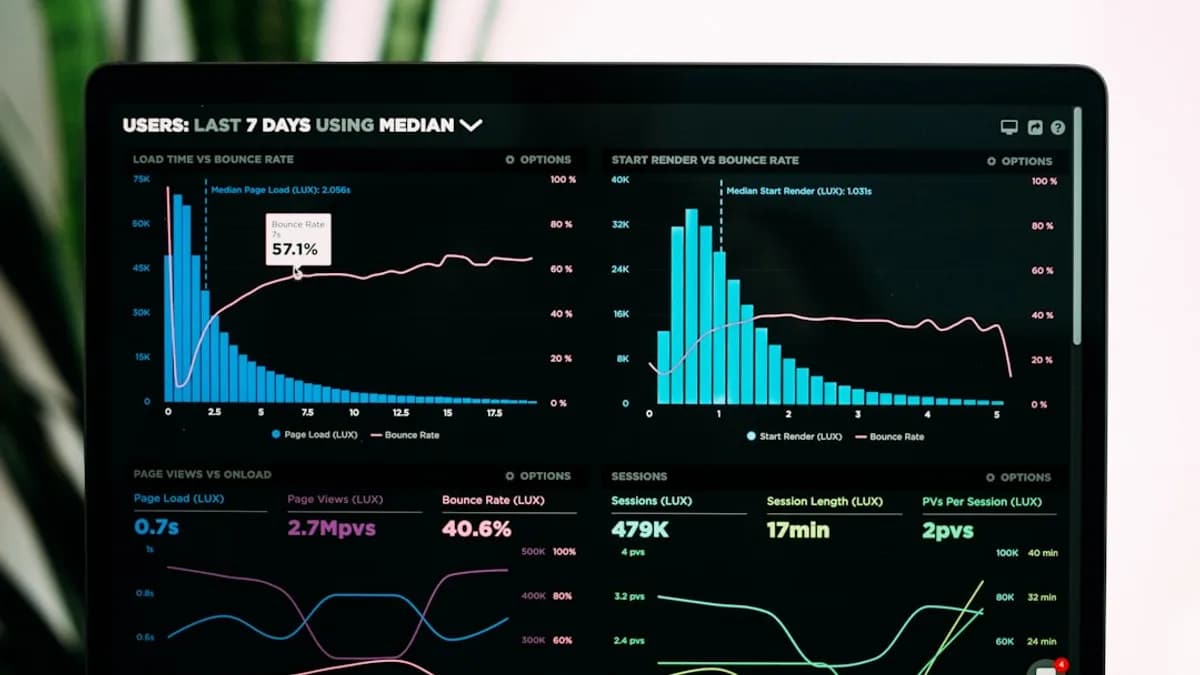
For SaaS startups, selecting the best product analytics platform is a decision that can define your growth trajectory, customer retention, and even day-to-day operations. The landscape is crowded with tools promising actionable insights, but the stakes are high: choose poorly, and you could waste months on unreliable data, fragmented workflows, or runaway costs. This guide draws from hands-on reviews and real-world comparisons of leading analytics platforms in 2026, helping you pinpoint the features, pricing, integrations, and compliance essentials that matter most for SaaS success.
Why Product Analytics Matter for SaaS Startups
The SaaS business model hinges on recurring revenue and continuous user value—far beyond the initial sale. Unlike e-commerce or static websites, where standard analytics (such as Google Analytics) focus on pageviews or sessions, SaaS analytics must measure what happens after a user logs in:
- User retention: Are users coming back, or are they churning?
- Feature adoption: Which features drive engagement, and which are ignored?
- Revenue impact: How do product changes affect monthly recurring revenue (MRR) and churn?
“The biggest mistake software builders make is treating their app like a traditional website... Your business model relies on recurring revenue, which means you have to deliver continuous value. If you fail, the user cancels their subscription.”
— Kevin O’Sullivan, Head of Product Design (Userpilot)
Product analytics platforms enable SaaS startups to:
- Understand user journeys and friction points
- Predict and reduce churn
- Optimize onboarding and activation flows
- Quantify the financial impact of product decisions
In short, without robust product analytics, SaaS startups are flying blind.
Key Features to Look for in Analytics Platforms
Not every analytics platform is built for SaaS—and even among SaaS tools, capabilities vary widely. Based on recent reviews and direct comparisons, here are the must-have features for the best product analytics platform for SaaS:
Core Analytics Capabilities
- Event Tracking: Ability to track every click, page view, and custom event within your app
- Funnel Analysis: Identify where users drop off in onboarding or purchase flows
- Cohort Analysis: Group users by signup date, feature usage, or lifecycle stage to spot retention trends
- User Segmentation: Slice audiences by behavior, geography, plan, or custom properties
- Retention Analysis: Measure stickiness and long-term engagement
Advanced Features
- Session Recording: See exactly how users interact with your product interface (available in tools like Hotjar, PostHog)
- A/B Testing & Experimentation: Run controlled experiments to optimize features (Amplitude, Statsig, PostHog)
- Path Analysis: Visualize user flows before/after key events
- Predictive Analytics: Forecast churn or upsell opportunities (Amplitude)
- Revenue Analytics: Track MRR, LTV, churn, and account expansion (ChartMogul, Chargebee)
Usability & Implementation
- Custom Dashboards: Tailor reporting to your team’s needs
- Low Learning Curve: Quick setup and minimal technical skills required (Userpilot, ChartMogul)
- Mobile Analytics: Support for web and mobile apps
Integration & Automation
- Native Integrations: Connect with CRMs, customer support, data warehouses, and billing systems
- Workflow Automation: Trigger support tickets or engineering tasks from product insights (SigOS)
Data Infrastructure
- Warehouse-Native Options: For advanced teams, deploy analytics directly in Snowflake, BigQuery, or Redshift (Statsig)
- Event Volume Scalability: Handle millions or billions of events without performance drops
Overview of Leading Product Analytics Platforms
To help you compare, here’s a summary of the most recommended SaaS analytics platforms in 2026, as identified by leading industry reviews:
| Platform | Primary Focus | Best For | Free Plan | Pricing (2026) | Learning Curve | Key Standouts |
|---|---|---|---|---|---|---|
| Userpilot | Product analytics + in-app engagement | Product-led companies | No | $299/month+ | Easy | Fast setup, in-app action, low technical barrier |
| Hotjar | User behavior insights (heatmaps, sessions) | UX optimization | Yes | Free–$32/month+ | Easy | Heatmaps, session recordings, basic segmentation |
| Amplitude | Product analytics + experimentation | Enterprise, PLG companies | Yes | Free–Custom | Moderate | A/B testing, advanced cohort/funnel/path analysis |
| Heap | Autocapture product analytics | Mid-market to Enterprise | No | Custom ($3,600+/yr) | Moderate | Auto event tracking, advanced analytics |
| PostHog | Open-source product analytics | Startups, engineering teams | Yes | Free–Custom | High | Open-source, session recording, A/B testing |
| Chargebee | Subscription + revenue analytics | Subscription finance teams | No | Custom | Moderate | Integrates with Stripe, PayPal, revenue focus |
| ChartMogul | Revenue analytics | All sizes | Yes | Free (<$10K MRR)–Custom | Easy | Churn tracking, MRR/ARR metrics |
| SigOS | AI-driven product + revenue analytics | Product managers, B2B SaaS | No | Custom (demo req.) | Moderate–High | Connects product usage + customer feedback; workflow |
| Statsig | Unified product analytics + experimentation | Growth teams, scaleups | Yes | Free (2M events) | Moderate | Experimentation, feature flags, warehouse-native |
“Statsig offers the lowest total cost for analytics events compared to any competitor. The free tier includes 2M events monthly—enough for most early-stage SaaS companies.”
— Statsig Comparison (2026)
Comparing Pricing Models and Scalability
Pricing is a critical consideration, especially for startups. Here’s a direct comparison of available plans and scalability notes from real-world reviews:
| Platform | Free Tier | Paid Plans (2026) | Scalability/Usage Notes |
|---|---|---|---|
| Userpilot | ❌ None | $299/month+ | SMB–Enterprise, easy setup |
| Hotjar | ✅ Basic free plan | $32/month+ | SMB–Mid-market, usage-based pricing |
| Amplitude | ✅ Starter plan | Custom (based on MAU) | Enterprise scale, usage-based |
| Heap | ❌ None | Custom ($3,600/yr+) | Large event volume, technical setup |
| PostHog | ✅ Generous free tier | Usage-based, custom | Startups–Enterprise, open-source option |
| Chargebee | ❌ None | Custom | Subscription billing, revenue analytics |
| ChartMogul | ✅ Free (<$10K MRR) | Custom | Revenue-focused, quick implementation |
| SigOS | ❌ None | Custom, demo required | Enterprise, AI-driven, sales-led pricing |
| Statsig | ✅ 2M events/month | Event-based (50% less than competitors) | Scales to trillions of events, affordable |
Key Pricing Insights:
- Free Tier: Hotjar, Amplitude, PostHog, ChartMogul (for <$10K MRR), and Statsig (2M events/month) all have free options suitable for early-stage startups.
- Usage-Based Pricing: Most modern analytics tools charge based on monthly active users (MAU) or event volume. This allows startups to start small and scale as they grow.
- Custom Pricing: Enterprise-focused tools (Heap, SigOS, Chargebee, ChartMogul for larger MRR) require direct sales engagement for quotes.
“Teams need analytics tools that process billions of events without breaking the budget... provide self-service access without requiring SQL expertise, and integrate seamlessly with existing experimentation and feature management workflows.”
— Statsig Team, 2026
Integration with Existing SaaS Tools
Seamless integration saves time and unlocks richer insights by merging analytics with your subscription, CRM, and support stack. Integration capabilities differ:
| Platform | Native Integrations | Notable Examples |
|---|---|---|
| Userpilot | Amplitude, Mixpanel, Google Analytics, HubSpot | Product analytics + marketing automation |
| Hotjar | Multiple | Website + UX tools |
| Amplitude | Extensive | Growth, marketing, data warehouses |
| Heap | Extensive | Data warehouses, CRMs |
| PostHog | Extensive | Open-source, custom integrations |
| Chargebee | Stripe, PayPal, HubSpot | Subscription billing + CRM |
| ChartMogul | Stripe, Recurly, Chargebee | Revenue data consolidation |
| SigOS | Zendesk, Intercom, Jira, GitHub | Connects product + customer feedback workflows |
| Statsig | Snowflake, BigQuery, Redshift, Databricks | Warehouse-native, SDKs, feature management tools |
Integration Considerations:
- Customer Support: SigOS uniquely connects product usage data with qualitative feedback from support tools (Zendesk, Intercom).
- Data Warehousing: Statsig allows direct deployment in your data warehouse for greater data control.
- Revenue Analytics: Chargebee and ChartMogul specialize in integrating with payment processors for financial tracking.
Data Privacy and Compliance Considerations
Data privacy is top-of-mind, especially for SaaS startups dealing with sensitive customer data or operating in regulated markets.
- SigOS: Strong privacy and security by design, with a policy never to retrain models on customer data. Encryption is standard, and data is not used for model training across customers.
- Statsig: Allows for warehouse-native deployment, meaning all sensitive SaaS data can remain within your own infrastructure for maximum security and compliance.
- Amplitude, Heap, PostHog: Support enterprise-grade security, but deployment options and compliance features vary—custom hosting may be needed for regulated industries.
“A security-first approach includes encryption and a strict policy of never retraining models on customer data, addressing key compliance and data privacy concerns for enterprise clients.”
— SigOS Product Review
Action Point: Always confirm the platform’s GDPR, SOC2, or other certifications relevant to your industry. For highly regulated sectors, prioritize warehouse-native or self-hosted solutions.
Step-by-Step Guide to Evaluating Platforms
To choose the best product analytics platform for SaaS, follow this structured approach:
1. Define Your Analytics Objectives
- What do you need to measure? (e.g., feature adoption, MRR, churn, onboarding drop-off)
- Who will use the data? (product managers, engineers, marketing, finance)
- How technical is your team? (do you need low-code/no-code solutions?)
2. Shortlist Platforms Based on Fit
- Use the comparison tables above to eliminate tools that don’t match your:
- Budget
- Feature requirements
- Integration needs
- Technical capacity
3. Test Free Plans and Demos
- Take advantage of free tiers (Statsig, Hotjar, Amplitude, PostHog, ChartMogul).
- For sales-led tools (SigOS, Heap, Chargebee), request a guided demo.
4. Evaluate Implementation Effort
| Platform | Implementation Time | Technical Expertise Required |
|---|---|---|
| Userpilot | 1 day | Low |
| Hotjar | Quick | Low |
| Amplitude | 1–2 weeks | Medium |
| Heap | Few days | High |
| PostHog | Longer (setup-heavy) | High |
| Chargebee | Few days | Medium |
| ChartMogul | Quick | Low |
| SigOS | Variable | Moderate–High |
| Statsig | Quick (cloud), varies (warehouse-native) | Moderate |
- Assess your capacity for setup and ongoing management.
- Consider time to value—early-stage startups often benefit from tools with fast onboarding.
5. Verify Data Privacy & Compliance
- Confirm hosting options, data residency, and compliance certifications.
6. Pilot and Gather Feedback
- Run a limited proof-of-concept with real users.
- Solicit feedback from all stakeholders.
7. Review Costs as You Scale
- Model costs as your user base and event volume grow.
- Watch for overage charges or feature “paywalls” that can increase TCO (total cost of ownership).
Case Examples of SaaS Startups Using Analytics
1. Bluesky (Statsig)
“Statsig's powerful product analytics enables us to prioritize growth efforts and make better product choices during our exponential growth with a small team.” — Rose Wang, COO, Bluesky
Bluesky leverages Statsig’s unified analytics and experimentation platform to run hundreds of product experiments per quarter, helping them scale rapidly without expanding their analytics engineering team.
2. OpenAI & Notion (Statsig)
Both companies rely on Statsig’s ability to process billions of events daily with 99.99% uptime, proving its scalability for high-growth SaaS environments.
3. Product-Led Growth Teams (Amplitude)
Amplitude’s event-based analytics and built-in experimentation features make it a go-to for SaaS startups focused on product-led growth, enabling rapid iterations and continuous user onboarding optimization.
4. Subscription Finance Teams (ChartMogul, Chargebee)
Finance and operations teams use ChartMogul and Chargebee to monitor MRR, churn, and customer lifetime value, integrating revenue analytics with product insights for better forecasting and strategic planning.
5. B2B SaaS Product Managers (SigOS)
SigOS users benefit from direct workflow automation, where critical issues discovered in analytics are automatically escalated to engineering with revenue impact attached, streamlining prioritization.
Final Tips for Making the Right Choice
- Start with your use case: Not every SaaS startup needs advanced experimentation or AI-driven workflows. Focus on the features that will directly drive your business outcomes.
- Prioritize ease of use: The best analytics platform is one your whole team will actually use.
- Test scalability: Model your costs and system performance for 10x growth.
- Don’t overlook integrations: Choose platforms that fit seamlessly into your tech stack.
- Verify compliance: Especially important for SaaS handling sensitive or regulated data.
- Iterate: Be ready to switch or expand your analytics stack as your company evolves.
FAQ
Q1: What is the most affordable product analytics platform for SaaS startups?
A: According to 2026 reviews, Statsig offers the lowest total cost for analytics events at scale, with a free tier covering 2 million events per month—suitable for most early-stage SaaS companies.
Q2: Which analytics platforms offer the fastest setup?
A: Userpilot, Hotjar, and ChartMogul can be implemented in a day or less. Statsig offers quick cloud setup, though warehouse-native deployments may take longer.
Q3: What’s the difference between product analytics and revenue analytics?
A: Product analytics (e.g., Userpilot, Amplitude, Statsig) focuses on user behavior and feature usage. Revenue analytics (e.g., ChartMogul, Chargebee) tracks subscription metrics like MRR, churn, and LTV.
Q4: Are there free plans for SaaS analytics platforms?
A: Yes, Hotjar, Amplitude, PostHog, ChartMogul (for <$10K MRR), and Statsig (2M events/month) all offer free tiers in 2026.
Q5: Which tools support deep workflow automation?
A: SigOS stands out for automating workflows—creating Jira or Linear tickets with revenue-impact data when critical product issues are detected.
Q6: How important is data privacy in choosing a platform?
A: Extremely important. SigOS and Statsig (warehouse-native option) offer robust privacy controls, ensuring customer data isn’t used for cross-client model training and that sensitive data can stay within your infrastructure.
Bottom Line
Choosing the best product analytics platform for SaaS in 2026 requires aligning your unique business needs with the capabilities, integrations, and pricing models of leading tools. Statsig is a standout for unified analytics, experimentation, and affordability at scale. Amplitude and Userpilot excel in deep behavioral analytics and rapid in-app iteration, while SigOS brings AI-driven, revenue-focused prioritization and workflow automation. For subscription finance, ChartMogul and Chargebee remain top choices. Always verify data privacy, scalability, and integration fit before committing—your analytics stack should empower, not hinder, your SaaS growth journey.