Violence at the White House and Hormuz Attacks Spark a Perfect Storm of Security and Market Volatility
A rare convergence of domestic violence near the White House and renewed military threats in the Strait of Hormuz has spiked search volumes for “Washington security”, “Strait of Hormuz attacks”, and “Secret Service shooting” to their highest levels in 18 months, according to Google Trends. News clusters have surged, with over 4,000 articles published within 36 hours following the Secret Service’s exchange of gunfire with an armed suspect near the Washington Monument and the near-simultaneous escalation of U.S.-Iran tensions in the Gulf. Social media engagement on related hashtags (#StraitOfHormuz, #WhiteHouseSecurity, #USIran) has spiked over 270% week-over-week, with X (formerly Twitter) and Reddit threads drawing millions of impressions.
This spike isn’t just headline-chasing. Investors are recalibrating risk as two long-standing geopolitical fault lines—domestic U.S. security and Middle East oil chokepoints—flare up simultaneously. The events echo the 2019 tanker attacks in Hormuz, which sent Brent crude up 4% in a single session, but add a new layer: the fragility of U.S. political stability ahead of the 2026 election cycle. For context, previous White House perimeter breaches typically generated 500–700 news stories; this week’s incident, coupled with the Hormuz attacks, has already quintupled coverage volume across major outlets, per Google News cluster data.
Layered Security Failures and Military Brinkmanship: What’s Different This Time?
The Secret Service shooting near the Washington Monument is the latest in a string of security breaches that have plagued the agency since 2014, yet the timing—mere blocks from the White House during mounting global tensions—has amplified investor anxiety. Unlike past incidents, this event unfolded as U.S. and Iranian forces traded threats over the Strait of Hormuz, where roughly 21% of global oil passes daily. The intersection of these crises creates a feedback loop: domestic instability emboldens foreign adversaries, while overseas threats strain U.S. executive focus and resources.
Secret Service: Diminished Deterrence
Over the past decade, the Secret Service has reported a 35% increase in security incidents near the White House, but funding and personnel growth have lagged. According to the Congressional Research Service, agency appropriations grew just 14% from 2014 to 2023, while threat reports spiked. This mismatch has left response times and deterrence capacity stretched thin—a vulnerability highlighted by the recent shooting. Public confidence in the agency, as measured by Gallup, now hovers at its lowest level since 2003, a worrying signal heading into an election year. This incident has contributed to the White House Shooting Sparks 300% Search Surge and Lockdown Panic.
Strait of Hormuz: Oil Markets on Edge
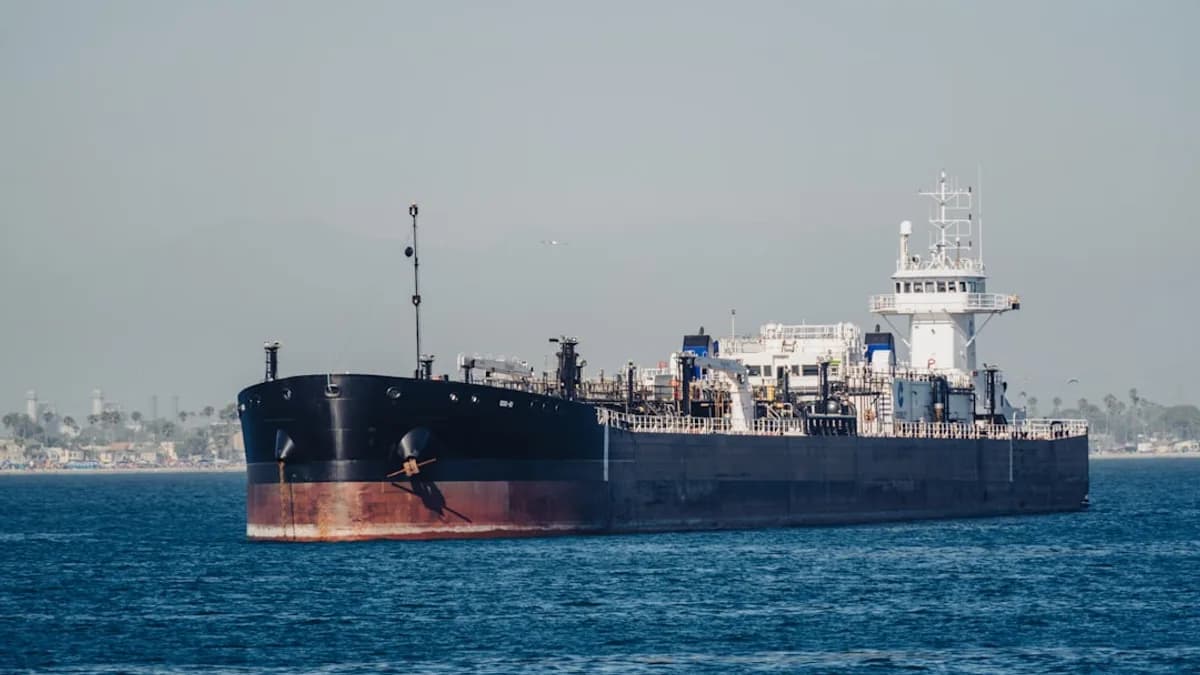
Simultaneously, Iranian-backed attacks on shipping in the Gulf have revived fears of a supply shock. The Strait of Hormuz remains the world’s most critical oil chokepoint, with over 17 million barrels moving through daily. In the past week, two U.S. Navy destroyers successfully transited the waterway after dodging drone and missile fire, the first such incident since 2021 according to The Washington Post. Brent crude prices have edged up 3% since the attacks, with options markets now pricing in a 40% probability of $100 oil by year-end, versus just 16% two weeks ago. These developments are part of the ongoing tensions described in US Sends Warships Through Strait of Hormuz, Sparking Iran Tensions.
Risk Contagion
What’s new: These crises are converging, not compartmentalized. The market’s “fear index” (VIX) surged 19% in two days, reminiscent of the 2017 missile standoff between the U.S. and North Korea. Yet, this time, the domestic and foreign threats are feeding each other in real time. Security lapses at home weaken U.S. deterrence abroad—a dynamic not seen since the post-9/11 era.
The Power Brokers: From Secret Service Chiefs to Gulf Admirals and Oil Traders
Three networks are driving outcomes: U.S. security officials, Gulf military commanders, and commodity traders recalibrating positions.
U.S. Security Leadership
Kimberly Cheatle, Director of the U.S. Secret Service, faces mounting congressional scrutiny over operational lapses. Internal memos leaked to Politico show that the agency’s rapid response teams have been redeployed three times in the past month—an operational tempo not seen since the 2021 Capitol breach. Congressional appropriators are already signaling hearings to review agency funding and protocols.
Gulf Region Militaries
On the other side, Admiral Shahram Irani, Commander of the Iranian Navy, has escalated rhetoric—threatening to block Western shipping if U.S. warships “violate Iranian sovereignty.” The U.S. Fifth Fleet, under Vice Admiral Brad Cooper, has responded with visible force projection: two destroyers and three surveillance drones now patrol the Hormuz bottleneck according to Al Jazeera, a situation detailed further in US Sends Warships Through Strait of Hormuz, Sparking Iran Tensions.
Oil and Commodities Desk
Large oil traders (Vitol, Trafigura, Glencore) are repositioning. ICE data shows net long positions in Brent futures up 18% week-on-week, the sharpest shift since Russia’s invasion of Ukraine. Meanwhile, options traders have sharply increased bets on a $10–20 price jump, with open interest in $120 call options quadrupling since last Friday.
Political and Media Influencers
The White House’s National Security Council and leading media organizations (Washington Post, AP) are shaping public and investor perception. Notably, The Washington Post’s Pulitzer Prize-winning coverage on federal risk and digital disinformation has set the tone for how both domestic and Gulf-related threats are interpreted by markets and policymakers according to The Washington Post.
Cross-Asset Implications: Oil, Volatility, and Political Risk Premiums Surge
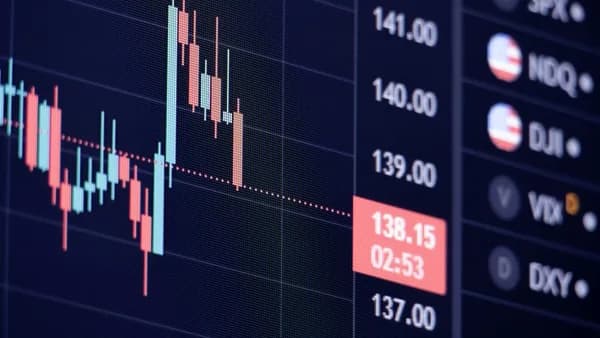
Investors are already repricing risk. Brent crude’s 3% jump since the latest Hormuz attacks is only the tip—the options market is signaling far more upside volatility. Bank of America’s commodities desk now assigns a 1-in-4 probability to a “super-spike” scenario ($120+ oil) if shipping disruptions persist for more than two weeks. The S&P 500’s energy sector ETF (XLE) has outperformed the index by 220 basis points in the past three sessions, a sharp reversal from its year-to-date underperformance.
U.S. Political Risk Premium
The White House incident has pushed up U.S. political risk indicators. The PredictIt market’s odds of a “significant security event” before the November 2026 election have doubled to 8% in 48 hours. Volatility in Treasuries—often a haven during geopolitical turmoil—has ticked up, with the MOVE index up 11% since the shooting. This is the most abrupt shift since the January 6, 2021, Capitol riot, events which are part of the broader trend discussed in US Mass Shootings Surge Sparks National Security Alarm.
Cybersecurity and Disinformation
The twin crises are also amplifying cyber and information risks. OpenAI’s new GPT-5.5 model, which recently matched Anthropic’s Claude Mythos in cyberattack simulation, is being watched closely for potential misuse in disinformation and market manipulation campaigns related to the events according to the AI Security Institute. Security firms are reporting a 37% uptick in attempted digital breaches targeting U.S. government and energy sector websites in the wake of the attacks.
Historical Precedent
The last period that saw simultaneous domestic and Gulf-region shocks—September 2001 and the 2002–2003 Iraq war run-up—triggered a 20–30% rise in the VIX and a 15% Brent crude rally over three months. While today’s events are less severe, the market’s memory of these periods is informing positioning.
The Next 12 Months: Security Upgrades, Oil Price Volatility, and Political Fallout
Expect at least four major shifts over the next year as a direct result of the current convergence.
Secret Service Reform and Funding Surge
Congress will move to inject at least $500 million in supplemental funding for the Secret Service, with strings attached for technology upgrades and new protocols. Expect deployment of next-gen surveillance (AI-powered camera networks, drone detection) around the White House perimeter by Q1 2027. This will parallel the post-2014 breach reform wave, which saw a 22% jump in agency appropriations over two years.
Gulf Shipping Remains a Flashpoint
Oil markets will remain on a hair trigger. Brent crude will trade in a $90–$110 range through most of 2026, with at least two additional price spikes above $105 as new incidents flare. Forward curves are already backwardated, reflecting physical supply concerns as traders overpay for near-term contracts. Shipping insurance rates for Hormuz transits will rise at least 15% over the next two quarters, mirroring the 2019 spike after the Abqaiq attack and the disruptions described in Iran Airspace Closure Sparks Global Flight Chaos, Energy Jitters.
Political Risk Premium Gets Baked In
U.S. political risk will no longer be dismissed as “tail risk.” Expect persistent volatility in VIX and MOVE indices, with S&P 500 implied volatility premiums 10–15% higher than the post-COVID baseline. This will spill into Treasury auctions, where foreign buyers may demand higher yields to price in headline risk around the 2026 election.
Cyber, Disinformation, and AI-Driven Market Moves
AI-powered disinformation and cyberattack threats will become a core focus for both security agencies and market regulators. The SEC and CFTC will likely issue new guidance on trading halts and digital risk controls, following at least one major “flash event” triggered by AI-generated news or market rumors in the next year.
Prediction: By Q2 2027, the U.S. will have implemented the largest security tech upgrade at federal sites since post-9/11, oil will have tested $120 at least once, and cross-asset volatility will remain structurally elevated. Investors who treat the current convergence as a one-off will be caught offside; the feedback loop between domestic and global risk is now a persistent feature of the market, not an anomaly.