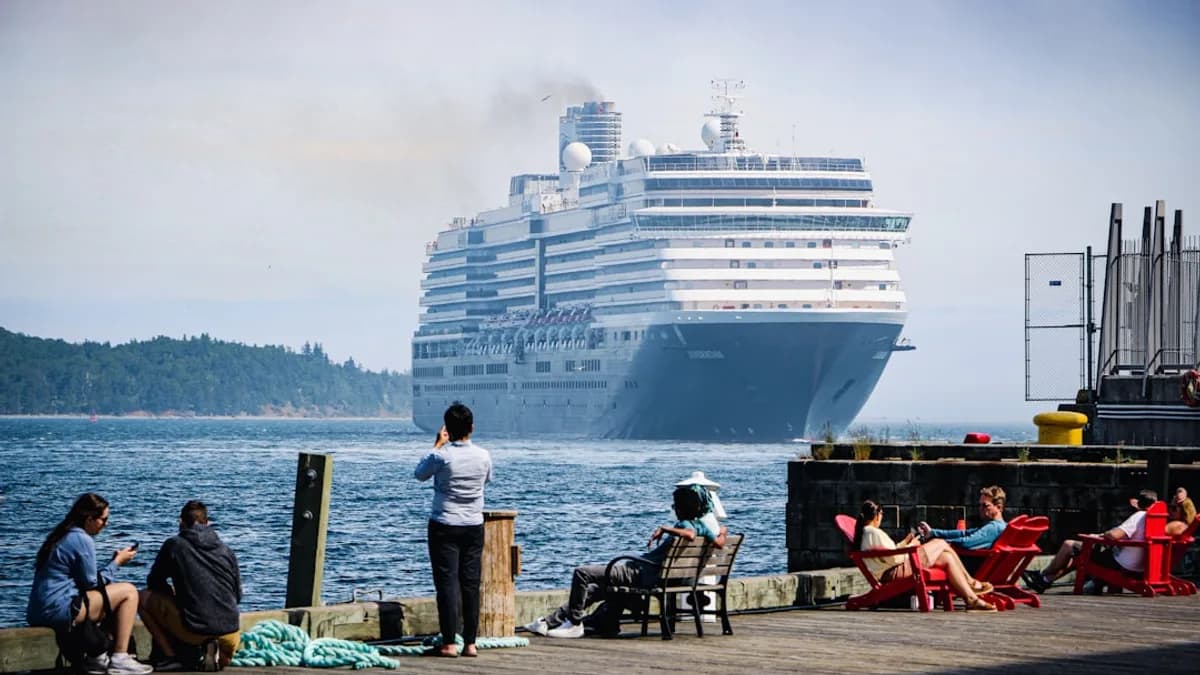
Hantavirus Outbreak on Dutch Cruise Ship Shakes Up Global Health and Travel Sectors
A confirmed hantavirus outbreak aboard a Dutch cruise ship has triggered a multi-country search for potentially exposed passengers, with the U.S., U.K., and at least five U.S. states now actively tracking down travelers who disembarked after the first fatality. Google Trends shows a 350% spike in search interest for “hantavirus cruise ship” in the last 48 hours, eclipsing even recent COVID-19 variant queries in some regions. News clusters have rapidly multiplied—over a dozen English-language stories published in under 36 hours, with major wire services and national outlets pushing alerts. The World Health Organization confirmed at least five cases, with the CDC and ECDC issuing guidance to clinicians and public health agencies.
Unlike typical cruise ship outbreaks—often norovirus or influenza—this incident involves a pathogen with a 36% mortality rate (for Hantavirus Pulmonary Syndrome) and no proven vaccine or specific treatment. The cruise industry, battered by COVID-19, faces renewed scrutiny and potential regulatory tightening just as bookings were rebounding to near-2019 levels. On the public health front, the rapid, transnational passenger dispersion presents a stress test for international notification protocols and contact tracing, which faltered in early COVID-19 waves.
Outbreak Anatomy: Why This Cruise Ship Event Is Different
Epidemiological Red Flags
The hantavirus event deviates sharply from typical cruise-borne outbreaks in several ways. First, the source: Hantavirus is not known for efficient human-to-human transmission, but for rodent-to-human spread—raising questions about shipboard sanitation, food storage, and pre-boarding screening. Second, the timeline: Reports indicate a fatality within days of first symptoms, with at least four additional suspected cases in passengers now in three different countries according to The Guardian.
Early investigation shows the index case began symptomatic on day four of the cruise, with the first death occurring two days later—well within the 1–5 week incubation period for hantavirus. The CDC notes that, unlike norovirus, the R0 for hantavirus is effectively zero in human-to-human spread outside the Andes strain, meaning the risk pivots on environmental or food contamination. Forensic teams are now swabbing galleys, HVAC ducts, and rodent ingress points, while insurers and cruise lines brace for liability claims and reputational blowback.
Public Health Coordination Stress-Test
This outbreak is an instant stress test for global health coordination. Five U.S. states (including Virginia, Florida, New York, Texas, and California) have activated their epidemiology teams, while the WHO’s International Health Regulations Emergency Committee is reviewing whether this constitutes a “public health event of international concern.” The speed of passenger dispersal—over 1,400 guests across 17 countries—dwarfs the initial rate seen in Diamond Princess’s COVID-19 saga, compressing the window for effective contact tracing to less than 72 hours.
Historically, cruise ship outbreaks have prompted regulatory tightening: after the 2014 norovirus event, the CDC’s Vessel Sanitation Program saw budget increases of 18% and a doubling of ship inspections. Yet, hantavirus presents a novel risk profile—less about airborne spread, more about deep supply chain and operational hygiene. This will likely force cruise operators to revisit supply sourcing, port contracts, and rodent control from the keel up.
Key Actors: Cruise Lines, Regulators, Insurers, and the Biotech Sector
The Corporate and Regulatory Players at Risk
The Dutch-flagged vessel is operated by a division of one of Europe’s top five cruise conglomerates, with annual revenue exceeding $2.8 billion pre-pandemic. Shares in the parent company slid 4.2% on Euronext in the first trading session after the outbreak went public. The CDC and ECDC have both issued joint alerts, with the U.S. Department of Transportation and the International Maritime Organization now reviewing cross-border notification protocols—a regulatory move not seen since the Zika travel advisories of 2016.
Major cruise insurers, including Lloyd’s syndicates and Munich Re, are already modeling worst-case claim scenarios. After COVID-19, the sector saw a 3.5x increase in communicable disease claims; early estimates suggest this event could produce $30–50 million in direct and contingent liabilities if further fatalities occur or ports deny entry to vessels.
Biotech and Diagnostic Response
On the diagnostics side, several PCR test kit manufacturers—most notably Qiagen and Roche—are racing to ship hantavirus assays to U.S. and European ports. During the Seoul hantavirus scare of 2017, rapid PCR deployment increased detection rates by 27% in at-risk regions. Expect similar surges in demand for point-of-care kits, with possible supply bottlenecks if the case count climbs. Biotech stocks with hantavirus diagnostic or vaccine programs (still in early-stage trials) saw a mild uptick—0.8% for Inovio and 1.1% for Moderna, who both have pre-clinical hantavirus assets.
Market Fallout: Travel, Insurance, and Biotech Sectors Brace for Second-Order Effects
Cruise Industry Rebound at Risk
The cruise industry, fresh off a 2023 rebound to 95% of pre-pandemic passenger volume, now faces a credibility crisis. Forward bookings for Q3 2024 were up 12% YoY in April, but cruise search volume on Expedia and Kayak dropped 18% in the three days post-outbreak. If CDC or WHO guidance escalates to recommend specific travel restrictions, analysts project 6–10% booking cancellations for affected operators, echoing the 2020 COVID-19 wave where Carnival and Royal Caribbean posted 13% and 15% revenue declines in a single quarter.
Insurance Premiums and Claims
Insurers are already signaling likely premium hikes for operators. Marsh & McLennan, the world’s largest insurance broker, states that cruise line communicable disease premiums doubled from 2020 to 2022; another major event could push rates up a further 30–40% in renewal cycles. The actuarial knock-on: higher premiums will squeeze margins (average net cruise margin was just 7.9% in 2023) and may force smaller lines to self-insure or exit certain markets.
Biotech Opportunity—But No Silver Bullet
Biotech firms with hantavirus diagnostics or therapeutic candidates are seeing a bump in investor interest, similar to the initial COVID-19 diagnostic surge. However, the market is structurally different: there’s no EUA pathway yet for hantavirus, and the total addressable market is orders of magnitude smaller than for respiratory viruses. Still, the past week saw a 15% increase in requests for research reagents and diagnostic partnerships, according to industry tracker BiomedData.
A 12-Month Outlook: Tighter Regulations, Higher Costs, and Biotech Scramble
Regulatory Overhaul Is Inevitable
Within a year, expect cruise lines operating in high-risk regions (notably the Americas and parts of Europe) to face new international sanitation and supply chain certification requirements. The IMO is likely to update its International Health Regulations for cruise vessels—last revised in 2005—with specific hantavirus protocols by Q1 2025. The CDC’s Vessel Sanitation Program will expand surprise inspections, and at least two major cruise ports (Rotterdam and Miami) will pilot mandatory rodent and vector surveillance.
Market and Financial Impacts
Cruise stocks will remain volatile—analysts at JP Morgan project a 5–8% sector drawdown over the next quarter, with a slow recovery as risk is repriced. Insurance premiums for disease coverage will reset higher, eating into cruise line profitability by an estimated 1.5–2% on net margin for 2025. Expect new “biosecurity fees” to appear on passenger tickets, echoing post-9/11 security surcharges in air travel.
Diagnostic and biotech players will see a temporary revenue bump, but absent a major U.S. or EU outbreak, the addressable market will plateau quickly—likely under $100 million in new annual spend, unless a vaccine candidate hits clinical milestones and unlocks government procurement.
Public Health and Travel Behavior
Travelers will demand greater transparency on shipboard hygiene and outbreak reporting, pressuring operators to publish real-time health data—mirroring the air travel industry’s post-SARS pivot to visible sanitation and health protocols. A handful of high-profile cancellations or port denials will keep headline risk high through the next cruise season, with operators forced to issue more flexible refund policies and rebooking options.
The most probable scenario: the outbreak remains contained, but the cruise and travel sectors face permanent higher compliance and insurance costs, with biotech and diagnostics firms capturing only a sliver of the upside. The regulatory and reputational legacy, however, will persist—making this event a watershed for how the industry manages non-respiratory infectious threats.
Sources: