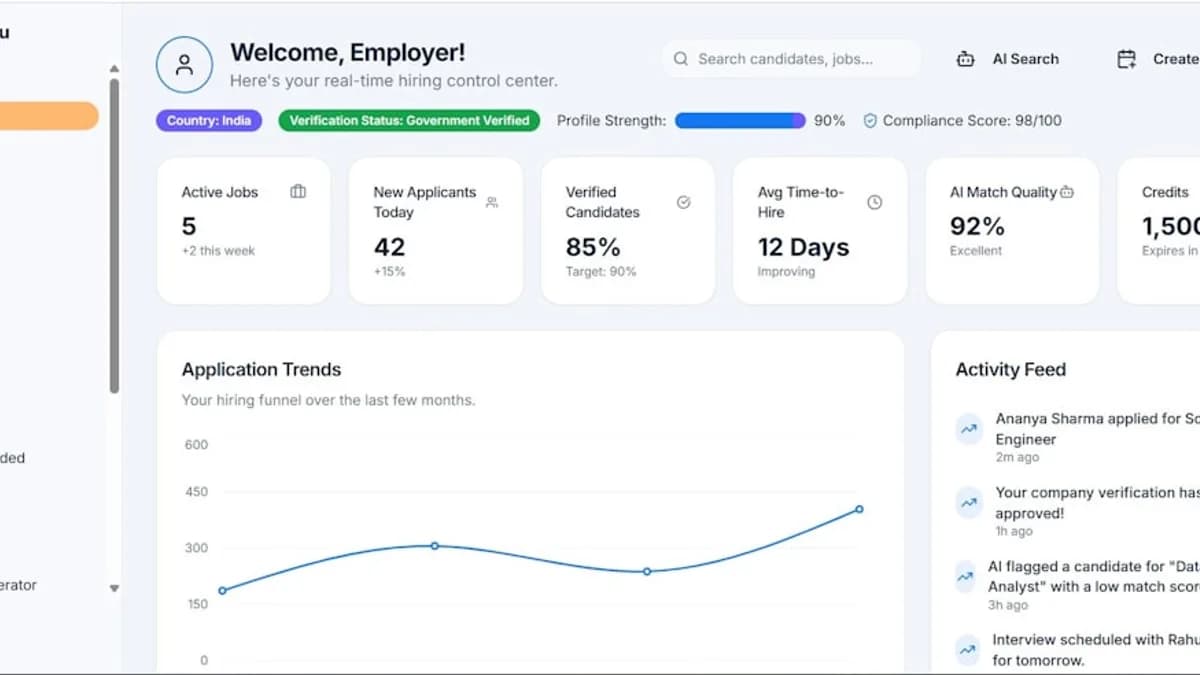
The landscape of HR software in 2026 is dramatically different from previous years. Today’s platforms are strategic hubs, not just administrative tools—streamlining everything from payroll and compliance to recruitment, analytics, and employee engagement. If you’re searching for the features of HR software 2026, this guide will help you navigate the essential capabilities, grounded in the latest research data. Whether you’re a small business or a global enterprise, understanding which features are fundamental is key to improving workforce management and staying compliant.
The Evolving Role of HR Software
HR software in 2026 is no longer a luxury—it’s a necessity for organizations aiming to stay competitive, retain talent, and ensure regulatory compliance. Modern HR systems integrate multiple HR functions into a unified platform, providing a comprehensive view of your workforce and delivering automation that reduces errors and administrative burden (bshsoft.com). The HR tech market is also shaped by AI integration, mergers, and acquisitions, resulting in platforms that span recruitment, onboarding, payroll, analytics, and more (viewpointanalysis.com).
“HR software isn’t just payroll or performance tracking anymore—it’s your first line of defense for protecting employees and your organization.”
— hracuity.com
Core HR Management Features
Core HR management is the foundation of any HR software suite. These features ensure accurate record-keeping, efficient workflows, and support for day-to-day HR operations.
Essential Core HR Features
- Centralized Employee Records: Maintain personal details, employment history, contract documents, and reporting lines in a single location.
- Personnel Administration: Streamline contract management, document tracking, and employment data accuracy.
- Time & Attendance Tracking: Features like biometric check-ins and absence tracking improve reliability and prevent time theft (bshsoft.com).
- Leave Management: Automated leave requests, balance tracking, and approval workflows ensure fair policies and reduce errors.
- Statutory Compliance: Automated compliance tracking, regulatory reporting, and audit-ready documentation minimize legal risks.
| Feature | Description | Source |
|---|---|---|
| Centralized Records | Employee data, contracts, docs, reporting | BSH Soft |
| Time & Attendance | Biometric, rostering, absence, reporting | BSH Soft |
| Leave Management | Automated requests, balances, approvals | BSH Soft |
| Compliance Tracking | Regulatory reporting, audit docs | BSH Soft |
Key insight: “A core HR system holds the employee record…Everything else in the HR technology stack typically connects back to it.”
— viewpointanalysis.com
Employee Self-Service and Engagement Tools
Empowering employees is a major trend in HR software. Self-service portals reduce HR workload, increase transparency, and foster engagement.
Self-Service Features
- Secure Portals: Employees can update personal details, access payslips, and submit requests directly.
- Employee Engagement: Platforms offer recognition programs, feedback gathering, and news feeds to keep employees informed and motivated (ispring.com).
- Mobile Learning: Training modules and organizational charts accessible via mobile apps for flexibility.
| Feature | Platform Example | Benefit |
|---|---|---|
| Employee Self-Service | BambooHR | Reduces HR workload |
| Engagement & Recognition | Bonusly, Vantage Circle | Increases motivation |
| Mobile Learning | iSpring LMS | Flexible training |
“Employee self-service gives employees an opportunity to manage their personal information and requests, which reduces risk for HR teams.”
— hracuity.com
Payroll and Benefits Administration
Payroll and benefits are critical for workforce satisfaction and compliance. Modern HR software ensures accuracy, supports global operations, and automates complex processes.
Payroll & Benefits Features
- Salary Processing & Tax Deductions: Automated payroll systems reduce errors and guarantee timely salary disbursement (bshsoft.com).
- Multi-country Payroll Support: Enables global operations with compliance in different jurisdictions.
- Benefits Management: Custom packages, health insurance tracking, and flexible perks administration boost satisfaction and retention.
| Feature | Example Platform | Description |
|---|---|---|
| Payroll Processing | Deel, Gusto | Automated salary/tax management |
| Multi-country Support | Deel, Workday | Global payroll compliance |
| Benefits Administration | BambooHR, Rippling | Health, perks, flexibility |
Critical warning: “Ensures accuracy, reduces errors, and guarantees timely salary disbursement.”
— bshsoft.com
Recruitment and Onboarding Capabilities
Recruitment and onboarding are increasingly automated and data-driven. AI-powered tools streamline candidate screening and onboarding workflows.
Recruitment & Onboarding Features
- Applicant Tracking Systems (ATS): Manage job postings, screen resumes, communicate with candidates, and track metrics (ispring.com).
- Automated Onboarding: Digital workflows, document management, and compliance tracking reduce manual tasks and improve new hire confidence (hracuity.com).
- AI Integration: Automated candidate screening and conversational assistants are becoming standard, especially following major acquisitions (e.g., Workday’s acquisition of Paradox).
| Feature | Example Platform | Description |
|---|---|---|
| Applicant Tracking | Workable, TalentLyft | Job postings, screening |
| Automated Onboarding | Rippling, iSpring LMS | Digital workflows, compliance |
| AI Recruiting | Workday (Paradox) | Conversational screening |
“The increasing availability of AI-powered features is the defining trend of the 2026 HR technology market.”
— viewpointanalysis.com
Performance Management and Analytics
Performance management tools enable continuous feedback, goal-setting, and data-driven decisions. In-depth analytics are increasingly important for strategic HR.
Performance & Analytics Features
- Performance Reviews: Set goals, provide feedback, and create development plans (ispring.com).
- 360-Degree Assessments: Evaluate employee progress from multiple perspectives.
- Workforce Analytics: Real-time insights, customizable dashboards, and predictive modeling (e.g., attrition prediction) (hracuity.com).
- AI Analytics: Platforms like Workday offer AI-enhanced analytics through recent acquisitions.
| Feature | Example Platform | Description |
|---|---|---|
| Performance Management | Leapsome, BambooHR | Reviews, goal-setting |
| 360-Degree Assessment | iSpring LMS | Multi-perspective feedback |
| Workforce Analytics | Workday, HR Acuity | Real-time, predictive data |
“Provides real-time insights into workforce data so HR teams can make data-backed decisions.”
— hracuity.com
Compliance and Data Security Features
Compliance is non-negotiable in 2026. HR software must automate regulatory requirements and protect sensitive data.
Compliance & Security Features
- Automated Compliance Tracking: Ensures adherence to labor laws and generates audit-ready documentation (bshsoft.com).
- Regulatory Reporting: Platforms support local and international compliance, crucial for multinational organizations (hracuity.com).
- Data Security: Secure portals, role-based access, and structured workflows protect employee information and maintain confidentiality.
| Feature | Example Platform | Description |
|---|---|---|
| Compliance Tracking | Workday, Rippling | Automated, audit-ready docs |
| Regulatory Reporting | Workday, BambooHR | Supports global compliance |
| Data Security | HR Acuity | Case management, confidentiality |
“Minimizes legal risks, ensures adherence to labor laws, and protects the business.”
— bshsoft.com
Mobile Accessibility and User Experience
User experience and mobile access are critical, as remote and hybrid workforces expect convenience and flexibility.
Mobile & UX Features
- Mobile Apps: Platforms like iSpring LMS and BambooHR offer mobile apps for iOS and Android, enabling access to HR functions anywhere (ispring.com).
- Intuitive Interface: User-friendly dashboards, customizable reports, and clear navigation improve adoption.
- Employee Portals: Accessible self-service and engagement tools.
| Feature | Example Platform | Description |
|---|---|---|
| Mobile Apps | iSpring LMS, BambooHR | HR functions on-the-go |
| User-Friendly UI | Workday, Rippling | Intuitive dashboards |
| Employee Portals | BambooHR, Zoho People | Self-service, engagement |
“Mobile learning…makes training more flexible and convenient for employees.”
— ispring.com
Integration with Other Business Systems
Integration capabilities are essential for seamless workflows and consistent data across business units.
Integration Features
- Unified Platforms: Solutions like Workday integrate HR, finance, and planning into one system (hracuity.com).
- API Access: Platforms such as iSpring LMS offer APIs for connecting with other tools.
- Device Management: Rippling automates device provisioning and management for employees, connecting HR with IT (hracuity.com).
| Feature | Example Platform | Description |
|---|---|---|
| Unified Platform | Workday | HR, finance, planning integration |
| API Integration | iSpring LMS | Connects with other tools |
| Device Management | Rippling | Automates IT provisioning |
“Select the right platforms by evaluating features, integrations, scalability and use cases to build an effective HR tech stack.”
— hracuity.com
Future-Proofing Your HR Software Investment
Choosing HR software in 2026 means looking beyond current needs. Scalability, AI enhancements, and vendor stability should inform your decision.
Future-Proofing Considerations
- AI Integration: Platforms are absorbing best-of-breed AI capabilities, reshaping performance management, recruiting, and analytics (viewpointanalysis.com).
- Vendor Stability: Mergers and acquisitions have consolidated many platforms (e.g., SAP’s acquisition of SmartRecruiters, Workday’s acquisition of Paradox and Sana).
- Scalability: Ensure the platform supports organizational growth and global expansion.
- Customizability: Modular options allow you to select only the functionality you need (e.g., Leapsome’s modular approach).
| Consideration | Importance | Example Platforms |
|---|---|---|
| AI Integration | Automation, analytics | Workday, Perceptyx |
| Vendor Stability | Long-term reliability | SAP, Workday, Paychex |
| Scalability | Growth, global operations | Workday, Remote |
| Customizability | Tailored features | Leapsome, Zoho People |
“Larger HCM suites are absorbing best-of-breed capabilities to offer more complete platforms, while private equity and strategic investors continue to see significant value in HR technology at scale.”
— viewpointanalysis.com
FAQ: Features of HR Software 2026
Q1: What are the must-have features in HR software for 2026?
A1: Essential features include centralized employee records, payroll and benefits administration, automated compliance tracking, recruitment and onboarding workflows, performance management, employee self-service portals, and robust analytics (bshsoft.com, hracuity.com).
Q2: How important is AI in HR software in 2026?
A2: AI integration is a defining trend. It enhances candidate screening, performance analytics, and automates repetitive tasks, making platforms more efficient and strategic (viewpointanalysis.com).
Q3: What platforms offer strong mobile and self-service features?
A3: Platforms like iSpring LMS, BambooHR, and Rippling provide mobile apps and employee self-service portals for flexible access and engagement (ispring.com).
Q4: Which HR software is best for global payroll and compliance?
A4: Workday, Deel, and Rippling offer multi-country payroll support and compliance tracking, suitable for multinational organizations (hracuity.com).
Q5: Are integrations with other business systems standard in 2026?
A5: Yes, leading platforms like Workday and iSpring LMS provide APIs and integrations with finance, IT, and other business systems for unified workflows (hracuity.com).
Q6: How do vendors ensure data security and privacy?
A6: Features include secure portals, role-based access controls, structured case management workflows, and audit-ready documentation (bshsoft.com, hracuity.com).
Bottom Line
The features of HR software 2026 are shaped by automation, AI, and strategic integration. Core HR management, self-service, payroll and benefits, recruitment, performance analytics, compliance, mobile accessibility, and seamless integrations are now standard. Organizations should prioritize platforms that deliver robust analytics, global compliance, and flexible user experiences, while keeping an eye on vendor stability and AI enhancements. By focusing on these essential features, businesses can future-proof their HR technology investment and drive greater workforce efficiency, engagement, and compliance.
“Most companies need a mix of tools to cover it all. Selecting the right platforms by evaluating features, integrations, scalability and use cases is critical to building an effective HR tech stack.”
— hracuity.com