Why XSD’s Stellar 1,138% Return Over Ten Years Still Falls Short Amid AI Surge
A 1,138% ten-year return would make most ETF managers blush, but in the age of AI mania, even that outperformance isn’t enough. The SPDR S&P Semiconductor ETF (XSD) has trounced the S&P 500 and nearly all sector ETFs over the past decade, thanks to the relentless growth of the semiconductor industry. Yet, during the AI boom, XSD finds itself lagging behind the iShares Semiconductor ETF (SOXX), whose narrower, AI-focused holdings have turbocharged its returns. This isn’t just a story of percentages — it’s a seismic shift in what drives semiconductor profits.
The semiconductor sector’s tailwinds are undeniable: global chip sales doubled from 2014 to 2023, crossing $500 billion annually. XSD’s equal-weight approach meant all players benefited, from upstart fabless designers to legacy equipment suppliers. But as AI workloads exploded, a handful of chipmakers — Nvidia, AMD, Broadcom — seized disproportionate market share. SOXX, with its concentrated, market-cap-weighted exposure to these juggernauts, has become the go-to for investors chasing the AI wave.
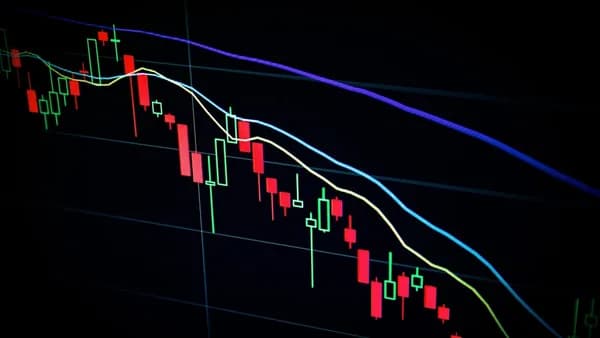
The shift isn’t subtle. SOXX has delivered a sharper uptrend since late 2022, propelled by Nvidia’s meteoric rise — a stock that’s now responsible for nearly a third of SOXX’s returns. XSD, despite its broad gains, couldn’t match that acceleration. For investors, the lesson is clear: in a market defined by AI, diversified semiconductor exposure isn’t enough. Owning the right chipmakers is everything, according to Yahoo Finance.
Crunching the Numbers: Comparing XSD and SOXX Performance Metrics in the AI Era
Look at the numbers side by side: XSD’s ten-year total return sits at 1,138%, with a compounded annual growth rate (CAGR) of roughly 29%. SOXX, meanwhile, posted a 1,380% total return in the same period, with a slightly higher CAGR of 31%. Both ETFs dwarf the S&P 500’s 10-year return (~220%), but SOXX’s recent surge sets it apart. In 2023, SOXX returned 51%; XSD, 44%. Year-to-date in 2024, SOXX has already jumped 22%, while XSD has climbed 16%.
Volatility is another dividing line. XSD’s equal-weight design spreads risk, but SOXX’s heavy concentration in Nvidia and Broadcom means higher single-stock exposure — and bigger swings. SOXX’s standard deviation in the past three years hit 30%, compared to XSD’s 25%. Yet, for investors willing to stomach volatility, SOXX has delivered superior risk-adjusted returns, evidenced by a Sharpe ratio above 1.2 over the past 24 months, versus XSD’s 1.0.
Sector allocations reinforce the divide. SOXX is weighted 85% toward large-cap chipmakers, with Nvidia, Broadcom, and Intel comprising over 45% of the fund. XSD, by contrast, distributes holdings more evenly across 38 companies, including smaller players like Cirrus Logic and Lattice Semiconductor. This strategy helped XSD capture broad industry growth but limited its exposure to AI’s winners.
AI stocks have become the fulcrum. Nvidia’s sales from AI chips more than doubled in 2023 to $30 billion, and its market cap soared past $2 trillion. SOXX’s outsized Nvidia stake turned the ETF into a proxy for AI sentiment — when Nvidia rallies, SOXX outpaces not just XSD, but almost every sector fund on Wall Street. For investors, the message is blunt: the AI boom isn’t lifting all boats equally, and ETF structure matters more than ever.
Diverging Paths: How Fund Composition and Strategy Influence XSD and SOXX Returns
Look under the hood, and the performance gap makes sense. SOXX’s market-cap-weighted approach means its largest holdings get the most capital — Nvidia, Broadcom, and Qualcomm together make up nearly 50% of the fund. These companies have become the backbone of AI infrastructure, with Nvidia alone accounting for nearly 30% of SOXX’s weighting. As AI models demand ever-greater computing power, their margins and growth rates have outpaced legacy semiconductor firms.
XSD’s equal-weighting is a double-edged sword. Every component, from high-fliers to laggards, gets the same slice. This democratizes returns — but in an era when AI chips command premium pricing and explosive revenue growth, it dilutes exposure to the sector’s juggernauts. XSD’s inclusion of companies like Skyworks Solutions or ON Semiconductor means gains are capped by slower-moving segments.
SOXX’s strategy has paid off. Since the start of the AI boom in late 2022, Nvidia’s share price has quadrupled, and Broadcom has doubled. These moves have driven SOXX’s outperformance. XSD, meanwhile, has seen solid but unspectacular gains in its smaller holdings. The ETF’s broader focus includes analog, sensor, and power management chips — areas less directly tied to AI’s exponential demand for compute.
For investors, this is more than academic. AI is reshaping semiconductor profits, and funds that tilt toward the dominant chipmakers have outperformed. The divergence isn’t a fluke; it’s structural.
Investor Perspectives: What Analysts, Fund Managers, and Retail Investors Say About XSD and SOXX
Analysts are blunt: SOXX’s momentum is sustainable so long as AI demand holds up. Morgan Stanley’s semiconductor team points to Nvidia’s pipeline — $80 billion in forward orders as of Q1 2024 — as evidence that the AI gold rush is far from peaking. Fund managers see SOXX as a tactical play: “It’s the purest AI exposure you can get without single-stock risk,” says one ETF strategist.
XSD, meanwhile, is pitched as a value proposition. Managers highlight its exposure to mid-cap and smaller growth names, arguing that AI’s second-order effects — power management, sensors, connectivity — will eventually filter through the broader industry. But there’s skepticism: retail investors on forums like r/StockMarket worry that XSD is “too diluted” to capture the next Nvidia-level surge. Sentiment data from Fidelity shows retail flows favor SOXX by a 2:1 margin since January 2023.
Risk appetite is the dividing line. SOXX attracts investors willing to chase high returns with higher volatility. XSD appeals to those seeking sector diversification and less concentration risk. The current market mood is clear: AI hype trumps diversification, at least for now.
Lessons from History: How Past Semiconductor Cycles Inform Current ETF Performance
Semiconductor booms aren’t new — but their winners change. In the early 2000s, wireless chips sparked a wave that lifted Texas Instruments and Qualcomm. The 2010s saw memory and mobile processors drive Samsung and TSMC. Each cycle produced dominant players whose stocks outpaced broader sector ETFs.
History cautions against assuming broad sector growth will always outperform. During the crypto-mining chip craze (2017-2018), Nvidia surged 110%, but most analog and power chipmakers lagged, dragging down equal-weighted funds like XSD. When demand shifts, concentration pays.
The current AI boom is different in scale and speed. Nvidia’s revenue growth (up 265% year-over-year in Q1 2024) dwarfs anything seen in prior cycles. SOXX’s structure — geared to ride the leaders — mimics the pattern that worked in prior tech run-ups. Investors who chased broad exposure often missed the outsized gains of the cycle’s dominant stocks.
Recurring factors shape these outcomes: technological inflection points, supply chain bottlenecks, and regulatory shifts. The lesson is unambiguous: when the market picks favorites, sector ETFs need to adapt or risk trailing.
What XSD’s Performance Signals for Semiconductor Investors and the Broader Tech Industry
XSD’s decade-long outperformance signals the strength of semiconductors as a growth engine. But its recent lag underscores a new reality: diversification isn’t always a virtue when the market is hyper-focused on a few winners. For portfolio construction, this means traditional sector allocation could miss the AI-driven upside.
Semiconductor investors face tough choices. Broad exposure (XSD) offers shelter from single-stock crashes, but risks underperforming during thematic surges. Concentrated bets (SOXX) bring sharper gains — and sharper corrections. The AI boom has made this trade-off starker. With Nvidia now accounting for more than 30% of SOXX’s returns, the ETF’s fate is tied to a handful of companies.
Industry players face similar crossroads. Chipmakers outside the AI core — analog, sensor, and power — must pivot or risk irrelevance. Suppliers and equipment firms need to align with AI-driven demand or settle for slower growth. The sector’s fragmentation is accelerating, and investors must decide whether to bet on the winners or hedge across the field.
The XSD/SOXX gap is a signal: the tech industry is entering a new era of winner-take-most dynamics. For investors and companies alike, the old rules don’t apply.
Forecasting the Future: Predictions for XSD, SOXX, and the Semiconductor Sector Amid AI Expansion
Expect SOXX to remain volatile but outpace XSD as long as AI adoption accelerates. Nvidia’s roadmap — with next-gen GPUs and custom silicon for hyperscalers — suggests at least two more years of double-digit revenue growth. If AI workloads continue scaling, SOXX could deliver another 30-40% return by the end of 2025. XSD, barring a rotation into smaller chipmakers, will likely trail by 5-10 percentage points annually.
Emerging technologies could shuffle the deck. Custom AI accelerators (from Google, Amazon), photonic chips, and quantum processors are on the horizon. If smaller XSD constituents break through, the ETF could regain lost ground. But for now, the market rewards scale and incumbency.
Investors looking for long-term growth should view SOXX as the high-beta play and XSD as a sector hedge. Tactical allocation — overweighting SOXX during AI booms, rotating to XSD during broader tech recoveries — is backed by historical returns.
The next inflection point? Watch for AI hardware saturation and regulatory pushback on chip exports. If the AI boom cools, SOXX’s concentration could backfire. Until then, the smart money follows the leaders — and SOXX has the inside track.
⚠️ Disclaimer: This article is for informational purposes only and does not constitute financial advice. Always do your own research before making investment decisions.
The Bottom Line
- Even stellar long-term gains can be eclipsed by strategic AI-focused investing.
- ETF structure and weighting play a crucial role in capturing sector growth during technological shifts.
- Investors seeking maximum returns in the AI era must prioritize concentrated exposure to leading chipmakers.