Why Drone Stocks Are Poised to Shape Future Warfare Dominance
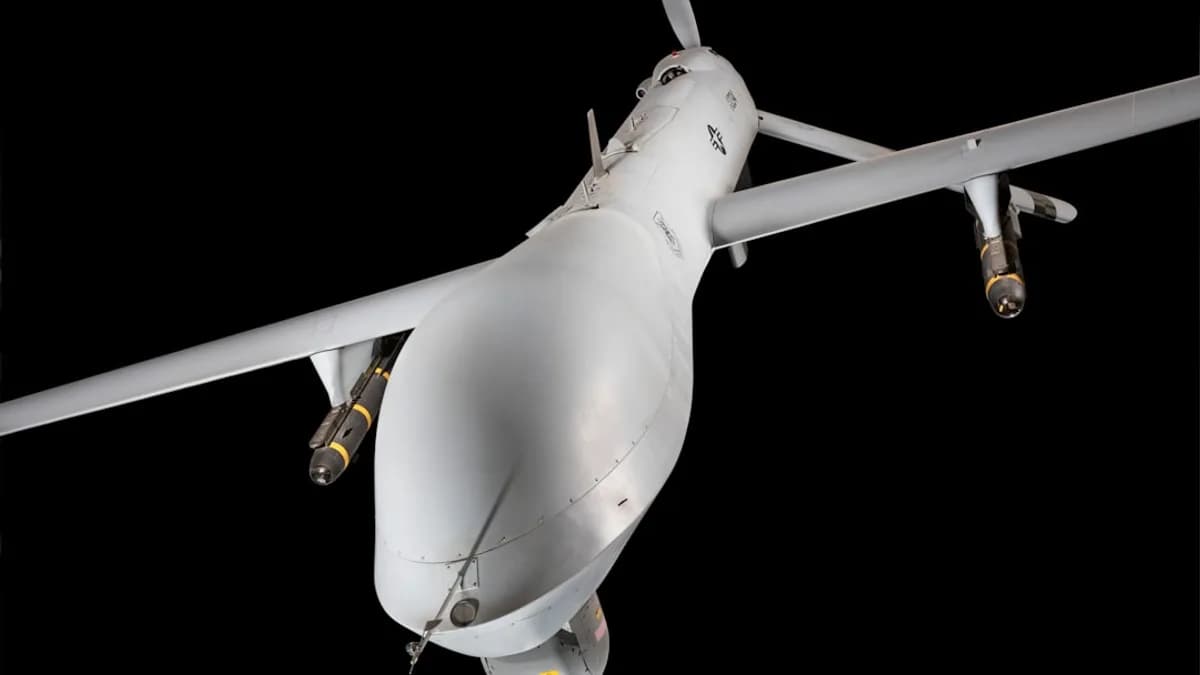
Ukraine’s battlefield has become the world’s proving ground for drones—and Wall Street is watching the footage as closely as any general. From $3,000 off-the-shelf quadcopters to multi-million-dollar loitering munitions, drones are chewing up tanks, rewriting tactics, and shifting defense budgets. Global military drone spending is projected to hit $17 billion by 2028, nearly doubling from 2022. Investors who once chased Lockheed and Raytheon now scan for the next drone king. Three names lead the charge: AeroVironment (AVAV), Kratos Defense & Security Solutions (KTOS), and Ondas Holdings (ONDS), each staking out a unique battlefield niche. The winner won’t just top the defense sector—they’ll shape how wars are fought and won, according to Yahoo Finance.
AeroVironment (AVAV): Leading Innovation in Tactical Drone Solutions
AeroVironment isn’t building heavy bombers; it’s supplying the eyes and stingers for troops on the ground. Over 35,000 AVAV drones—think the Switchblade and Puma—are already in service with U.S. and allied forces. These platforms aren’t just surveillance toys; the Switchblade 600, for example, can loiter for 40 minutes and deliver a precision strike from miles away. The Pentagon keeps writing checks: In fiscal 2023, AVAV bagged $584 million in contracts, up 30% from the prior year. And Ukraine’s voracious demand for loitering munitions has turbocharged orders, with shipments ramping up every quarter.
What sets AVAV apart is relentless R&D. The company plows 10% of revenue back into innovation, churning out software updates and new payloads at a pace defense giants can’t match. The result: a product line that adapts faster than adversaries can counter. Financials reflect that edge—revenue jumped to $653 million in 2023, with operating margins improving 200 basis points. With the U.S. Army’s FTUAS program (aiming to replace the aging RQ-7 Shadow) entering procurement, AVAV is well-positioned for another multi-year contract cycle. In a sector where speed and adaptability are survival traits, AeroVironment’s tactical focus and nimble execution give it a lead that’s hard to shoot down.
Kratos Defense & Security Solutions (KTOS): Powering Advanced Drone Warfare Capabilities
Kratos is gunning for the high end—think autonomous fighter jets, not quadcopters. Its XQ-58A Valkyrie made headlines as one of the world’s first “loyal wingman” drones: a jet-powered, AI-piloted platform that can fly alongside F-35s or go deep into contested airspace alone. In May 2023, the Valkyrie completed its first flight with an artificial intelligence brain, a milestone that pried open new Pentagon budgets. KTOS doesn’t just sell drones; it sells the future of air combat.
Partnerships are key. Kratos is plugged into classified Air Force programs and works with defense primes on swarming technology—hundreds of drones operating in concert, overwhelming enemy defenses. Its target drone business, which simulates enemy aircraft for training, is a cash cow, generating steady revenue north of $200 million annually. But it’s the leap into fully autonomous systems that excites Wall Street: The global drone swarm market could top $9 billion by 2030.
KTOS’s counter-drone efforts deserve attention, too. Its microwave and laser systems are designed to fry enemy drones mid-flight—a vital capability as aerial threats proliferate. While margins lag the pure-play primes (operating income hovers around 5%), Kratos is scaling up: 2023 saw a 16% revenue increase and a record $1.1 billion backlog. If the next war is fought by algorithmic dogfights and swarms, Kratos is already selling the blueprints.
Ondas Holdings (ONDS): Disrupting Military Communications with Drone-Enabled Networks
Drones can’t win wars if they’re flying blind or jammed. Ondas Holdings builds the secure, resilient networks that make drone operations possible on hostile ground. Its FullMAX wireless platform—already in use with critical infrastructure clients—can mesh hundreds of drones into a single, high-throughput network, immune to basic jamming and interference. As military planners scramble to harden comms against Russian and Chinese electronic warfare, ONDS’s industrial-grade protocols are getting a second look.
What makes Ondas a wild card is its bet on integration. The company’s 2022 acquisition of Airobotics brought autonomous drone solutions and airspace data management under one roof. That means ONDS isn’t just selling radios; it’s building the glue that lets fleets of drones communicate, coordinate, and adapt in real time. As the Army and Navy run field trials of autonomous resupply and ISR drones, secure networking is no longer optional—it’s the linchpin.
Financially, Ondas remains a speculative play. 2023 revenue came in at just $12 million, with operating losses typical of a company in scaling mode. But the market potential is explosive: The global military communications market is forecast to reach $39 billion by 2027. With a specialized product and early traction in both defense and critical infrastructure, ONDS could ride the next wave of integrated drone deployments—even if it’s not a household name yet.
Balancing the Risks: Counterarguments on Drone Stock Volatility and Market Challenges
No defense stock is a straight shot to the moon—especially not drone plays. First, volatility is baked in. AVAV, KTOS, and ONDS have all seen 30-50% swings over the past 12 months, whipsawed by shifting budgets and quarterly contract news. Regulatory risk is real: ITAR compliance, export restrictions, and congressional scrutiny can torpedo deals overnight. And while the war in Ukraine has spiked demand, a sudden ceasefire or policy shift could cool the market fast.
Technological churn is another threat. The same agility that lets AVAV or KTOS outpace defense giants leaves them vulnerable to startups or foreign competitors. China is scaling drone exports to Africa and the Middle East, eating into U.S. firms’ addressable market. Valuations aren’t cheap, either—AVAV trades at 35x forward earnings, a premium that assumes flawless execution. The sector’s upside is massive, but investors need to brace for turbulence.
Seizing the Future: Why Investors Should Watch AVAV, KTOS, and ONDS in the Drone Warfare Race
AeroVironment delivers battlefield-proven tools that armies want now. Kratos is betting on the next generation of autonomous airpower and electronic warfare. Ondas is quietly wiring the networks that make drone swarms possible. Each company offers a distinct piece of the future war machine—and each brings different risk and reward profiles.
Investors shouldn’t treat drone stocks like meme bets. Scrutinize contract pipelines, R&D momentum, and the pace of military adoption. The real winners will be those who can iterate as fast as the battlefield changes. Drones are no longer a sideshow—they’re the main act in global defense. Miss this shift, and you’ll miss the biggest transformation in military tech since the dawn of the jet age. Watch AVAV, KTOS, and ONDS—not just for their stock tickers, but for the future they’re building.
⚠️ Disclaimer: This article is for informational purposes only and does not constitute financial advice. Always do your own research before making investment decisions.
The Bottom Line
- Military drone spending is set to nearly double by 2028, reshaping defense priorities.
- AeroVironment's rapid innovation and contract wins underscore its leadership potential in the sector.
- Investors face a pivotal moment as drone stocks become key players in modern warfare.