Why Tesla’s Cybertruck Recall Raises New Questions About EV Manufacturing Quality
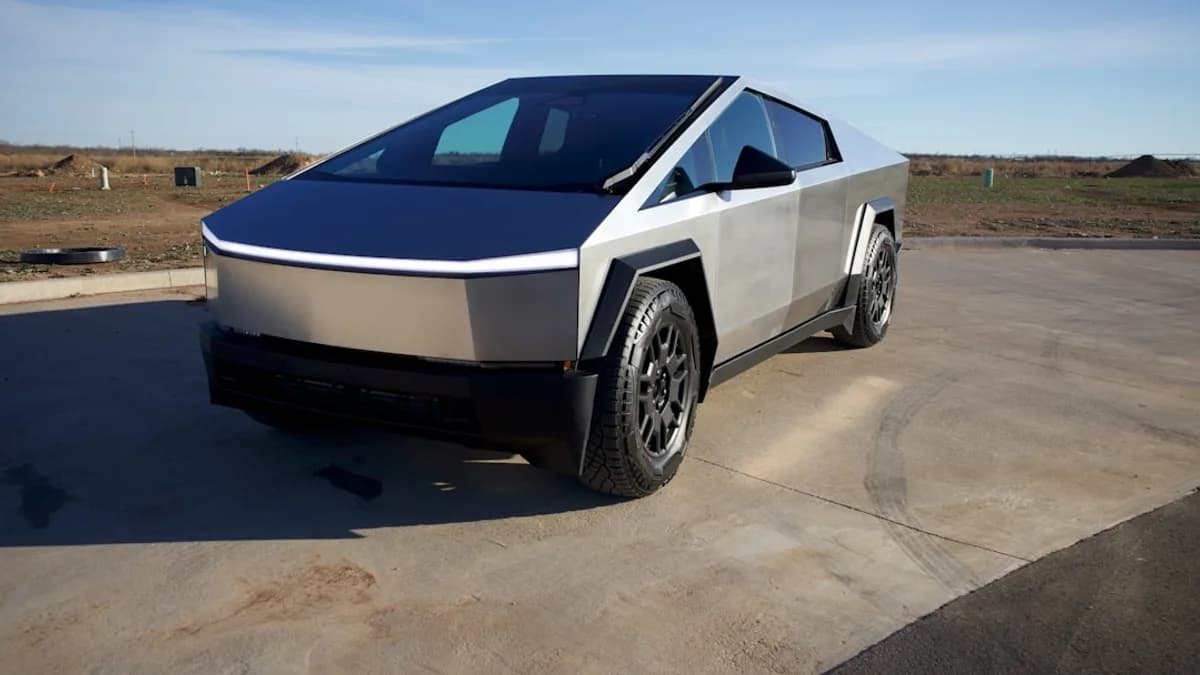
Tesla has recalled every single unit of its RWD Cybertruck Long Range—the company’s most affordable Cybertruck—because the wheels could literally fall off. That’s not hyperbole: the National Highway Traffic Safety Administration (NHTSA) notice specifies that “brake rotor stud holes may crack and allow the stud to separate from the wheel hub,” a failure mode that can lead to catastrophic wheel detachment. The recall was first flagged by MotorTrend and confirmed by The Verge.
For an automaker that built its brand on technical prowess, this is not a software glitch or a superficial trim issue—this is a core mechanical failure in a $70,000 electric truck. Tesla’s reputation for rapid innovation has always walked a tightrope with manufacturing quality. This recall lands like a punch to the gut for anyone who equated “disruption” with reliability.
The consequences are obvious: a wheel flying off at speed can trigger severe crashes. While Tesla says it’s seen no injuries or deaths, the mere potential, especially in a vehicle marketed as rugged and “bulletproof,” is enough to rattle even die-hard fans. Public perception is shaped by worst-case scenarios and vivid headlines, not technical probabilities. For Tesla, the risk isn’t just legal or financial—it’s reputational.
Crunching the Numbers: What the Cybertruck Recall Data Reveals About Tesla’s Production Challenges
The recall covers all 173 units of the RWD Cybertruck Long Range sold to date. That’s a recall rate of 100% for this specific model and configuration, which ships with 18-inch steel wheels. The sample size is small—Tesla only sold 173 of these—but the total sweep makes the flaw impossible to brush off as a rare outlier.
Tesla’s own paperwork identifies three warranty claims that might be linked to the defect. No crashes, no injuries, no deaths. On paper, that’s a relief. But three suspected failures out of 173 trucks is a rate that should set off alarms in any quality assurance department. The real shock is that a structural flaw of this magnitude appeared in every unit, not just a handful.
This is the 11th recall for the Cybertruck line, according to The Verge. That’s an eye-watering pace for a model that only recently hit public roads. While the source doesn’t benchmark against industry averages, this recall cadence underlines a core tension in Tesla’s production philosophy: push for speed and innovation, and sometimes the basics get missed.
Diverse Stakeholder Reactions: How Tesla, Customers, and Regulators Are Responding to the Cybertruck Recall
Tesla’s official response leans on transparency and damage control. The company points out it has “not aware of any collisions, fatalities, or injuries” tied to the defect. It also highlights its proactive recall measures, signaling to regulators and customers that it’s moving swiftly to contain the problem.
From a customer’s standpoint, the recall can’t help but spark anxiety. The Cybertruck was sold as a futuristic, tough workhorse. Now, every owner of the $70,000 RWD model has to wonder if their wheels could detach mid-drive. The recall notice, paired with the admission of three warranty claims, doesn’t just bruise confidence—it cracks it.
Regulators, specifically the NHTSA, are front and center here. Their public notice details the mechanical failure and enforces the recall. Tesla’s response, at least in this instance, appears cooperative and swift. The recall process itself is a stress test of how Tesla interacts with federal oversight, and so far, it’s following the playbook.
Tracing the Cybertruck’s Recall History: What Past Recalls Reveal About Tesla’s Quality Control Evolution
This is the Cybertruck’s 11th recall. The source doesn’t itemize the previous ten, but the sheer number is damning for a vehicle that’s barely out of the gate. Multiple recalls in a new model’s first year are rare, even in the hyper-competitive EV segment.
A pattern emerges: rapid iteration may be coming at the expense of reliability. While Tesla’s software recalls often grab headlines, this latest issue is mechanical—a domain where consumers expect bulletproof basics, not “move fast and break things.” The recurrence of recalls hints at deep-rooted manufacturing or supply chain issues that aren’t being caught before vehicles hit the road.
Compared to legacy automakers or even other EV startups, this recall velocity—11 so far—is striking. It suggests that Tesla’s willingness to ship first and patch later, while effective in software, is running up against the hard limits of mechanical engineering.
What the Cybertruck Recall Means for Electric Vehicle Buyers and the Broader Auto Industry
For EV buyers, especially those considering an electric truck, the recall is a gut check. The Cybertruck isn’t a niche experiment—it’s Tesla’s pitch to mainstream truck owners. The optics of wheels possibly detaching on a “revolutionary” EV throw cold water on the idea that Tesla’s engineering is automatically superior.
Brand loyalty takes years to build and a single recall like this to undermine. While the current recall targets a small batch, the psychological damage ripples outward: if Tesla’s QA can miss something this fundamental, what else is lurking in the next batch?
This recall also widens the aperture for regulatory scrutiny. NHTSA’s involvement and the public posting of the recall notice mean closer oversight. For the broader EV industry, it’s a warning that rapid scaling can’t come at the expense of core safety. Quality assurance and supply chain management will face more pressure—not just in Tesla’s factories, but across the sector.
Predicting Tesla’s Next Moves: How the Company Can Address Recalls to Sustain Growth and Innovation
Tesla’s most immediate priority will be rooting out the supply chain or manufacturing flaw that led to the cracked brake rotor studs. Expect the company to scrutinize its parts vendors and tighten inspection protocols. More automation and real-time defect tracking could follow, if past patterns hold.
On the technology front, Tesla may double down on advanced manufacturing analytics—AI-powered inspection, predictive failure modeling, and real-time quality dashboards. Supplier partnerships will likely face new requirements for documentation and traceability.
How Tesla manages this recall will reverberate. A transparent, rapid fix paired with visible quality improvements could reassure investors and customers. Dragging feet or finger-pointing would do the opposite. For now, the market will watch not just for the recall’s resolution, but for any sign that Tesla is embedding the lessons deeper into its production DNA.
What Remains Unclear and What to Watch
Three questions hang in the air. First, how did the defect slip through initial quality checks for every single RWD Cybertruck Long Range? Second, will similar issues surface in other Cybertruck variants or future batches? Third, is Tesla’s recall process now mature enough to catch and address these problems before they hit customers?
The answers will surface in the weeks ahead. Watch for:
- Updates from NHTSA if the recall scope widens
- Owner reports of post-recall fixes (or new problems)
- Any sign of supply chain reshuffling or new QA initiatives from Tesla
A single recall won’t sink Tesla or the Cybertruck. But if the company can’t prove that its innovation engine can coexist with world-class reliability, it might finally hit a speed bump it can’t just code around.
Impact Analysis
- The recall highlights serious manufacturing quality issues in Tesla's newest and most affordable Cybertruck model.
- A 100% recall rate raises concerns about reliability and safety for Tesla's electric vehicles.
- The incident could damage Tesla's reputation and consumer trust, affecting future sales and brand perception.