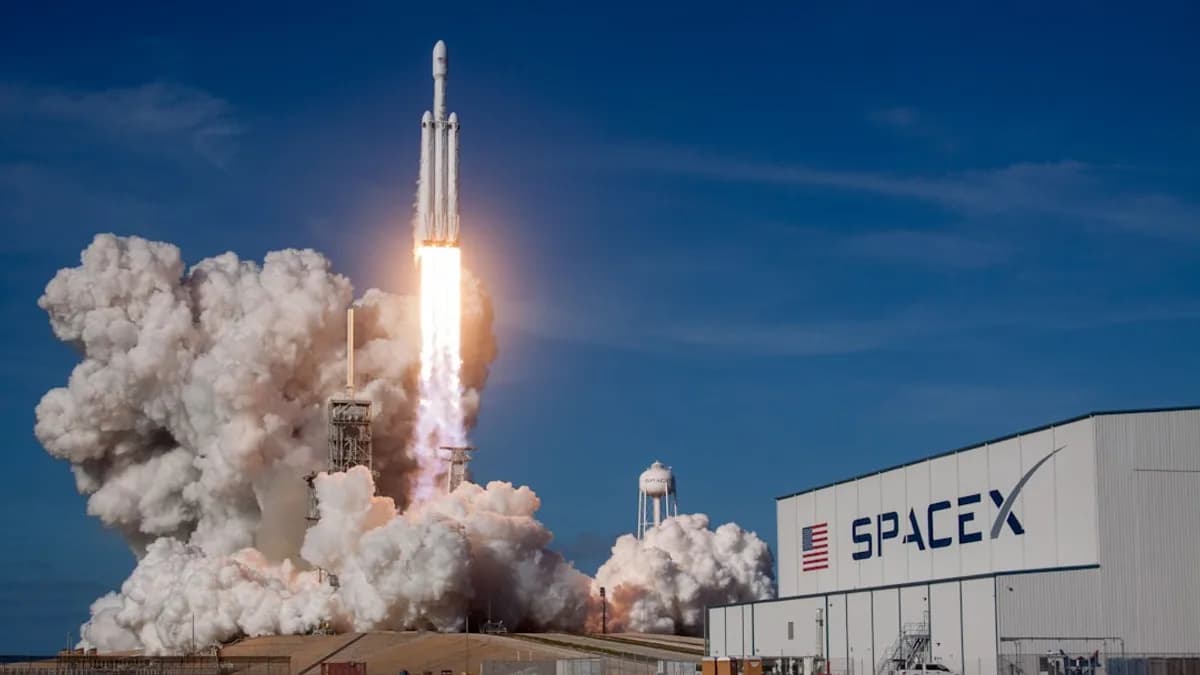
Introduction: Overview of the Recent SpaceX Falcon 9 Launch
In the pre-dawn hours of Tuesday, the Florida sky was illuminated by a spectacular SpaceX Falcon 9 launch, captivating both seasoned skywatchers and casual observers alike. The event was not only remarkable for its brilliance and visibility, but also for the continued public fascination with SpaceX’s ambitious spaceflight schedule and technological milestones. As the rocket soared from Cape Canaveral, it left a bright streak across the sky, prompting widespread local and online discussion. This launch is part of SpaceX’s ongoing push to expand access to space, with the Starlink constellation playing a central role in the company’s vision for global connectivity. The public excitement surrounding these launches underscores SpaceX’s growing impact on both the space industry and popular culture [Source: Source].
Details of the Falcon 9 Launch from Cape Canaveral
The Falcon 9 liftoff occurred early Tuesday morning from Cape Canaveral Space Force Station, marking another successful chapter in SpaceX’s rapid launch cadence. The launch was noteworthy for carrying the 1,000th Starlink satellite of 2026, a significant milestone for the Starlink project, which aims to provide low-Earth orbit internet coverage around the globe [Source: Source]. According to Spaceflight Now, the rocket’s ascent was visible for miles, making the event particularly memorable for those in the region [Source: Source].
Falcon 9, SpaceX’s workhorse rocket, features a reusable first stage that has now been flown numerous times, drastically reducing launch costs and increasing frequency. For this mission, the payload consisted mainly of Starlink satellites, further expanding the constellation that’s already connecting underserved regions worldwide. The rocket’s launch window was carefully selected to optimize orbital insertion and maximize public visibility, with the pre-dawn timing creating dramatic lighting effects as the rocket passed through different atmospheric layers.
This milestone launch highlights SpaceX’s commitment to accelerating the deployment of Starlink satellites, with the company targeting thousands of launches in the coming years to bolster its global broadband network. The 1,000th satellite achievement underscores both the technical prowess and operational reliability of Falcon 9, cementing its role as a cornerstone in modern aerospace [Source: Source].
Public Viewing Experience and Best Locations
Tuesday’s Falcon 9 launch was especially striking for its vivid, luminous trail across the pre-dawn sky. Residents and visitors across Florida reported seeing a bright streak, sparking curiosity and awe. Many wondered if the phenomenon was a comet or meteor, but local media quickly clarified the source: it was the SpaceX rocket, not a celestial event [Source: Source].
Florida Today provided guidance for enthusiasts seeking the best viewing spots, recommending locations along the Space Coast such as parks, beaches, and public observation areas that offer unobstructed views of the launch trajectory [Source: Source]. The timing—just before sunrise—allowed the rocket’s exhaust plume to catch sunlight, creating a dramatic glow that was visible from hundreds of miles away. This optimal timing, combined with clear skies, contributed to the high level of public engagement and social media buzz.
Public reactions ranged from excitement to amazement, with many sharing photos and videos online. The combination of accessibility, spectacle, and scientific significance makes SpaceX launches increasingly popular, drawing crowds to Florida launch sites and inspiring interest in space science nationwide. As WSB-TV emphasized, the phenomenon was not a comet or meteor, but rather a testament to human ingenuity and the growing frequency of commercial spaceflight events [Source: Source].
Upcoming SpaceX Launches and Future Plans
SpaceX’s momentum continues with another Falcon 9 launch planned from Vandenberg Space Force Base on the West Coast, scheduled for the upcoming Tuesday. According to KSBY News, this mission will contribute additional Starlink satellites to the constellation, reinforcing SpaceX’s commitment to ongoing global coverage [Source: Source]. The Vandenberg launch will follow a similar operational pattern, with a carefully timed liftoff to maximize visibility and orbital efficiency.
These rapid-fire launches are part of SpaceX’s broader strategy to deploy thousands of Starlink satellites, aiming to deliver reliable, high-speed internet to remote and underserved areas. The company’s launch schedule is one of the most aggressive in the industry, reflecting its dual focus on technological innovation and operational scale. With each successful mission, SpaceX inches closer to its goal of near-total global connectivity, while maintaining public engagement through visible, accessible launch events.
The upcoming launches from Vandenberg and Cape Canaveral exemplify SpaceX’s ability to operate from multiple sites, increasing flexibility and frequency. As Starlink’s deployment accelerates, the impact on both the commercial space sector and everyday consumers is expected to grow [Source: Source].
Conclusion: The Growing Impact of SpaceX Launches on Public and Space Industry
The recent Falcon 9 launch from Cape Canaveral not only dazzled viewers across Florida but also marked a major milestone in SpaceX’s Starlink program, with the 1,000th satellite for 2026 reaching orbit [Source: Source]. These visible, accessible launches are fueling public interest in space exploration while advancing the practical goal of global satellite internet coverage.
SpaceX’s approach—frequent launches, reusable rockets, and ambitious satellite deployment—continues to reshape the space industry. As the Starlink network expands, so does the promise of affordable, high-speed internet for underserved communities worldwide. With more launches on the horizon from both Florida and California, SpaceX is poised to maintain its leadership in commercial spaceflight, inspiring curiosity and innovation across the globe.
The cultural and scientific impact of such events is profound, making spaceflight a tangible part of everyday life for millions. As the sky lights up with each new launch, the world watches, and the future of connectivity and exploration looks brighter than ever [Source: Source].