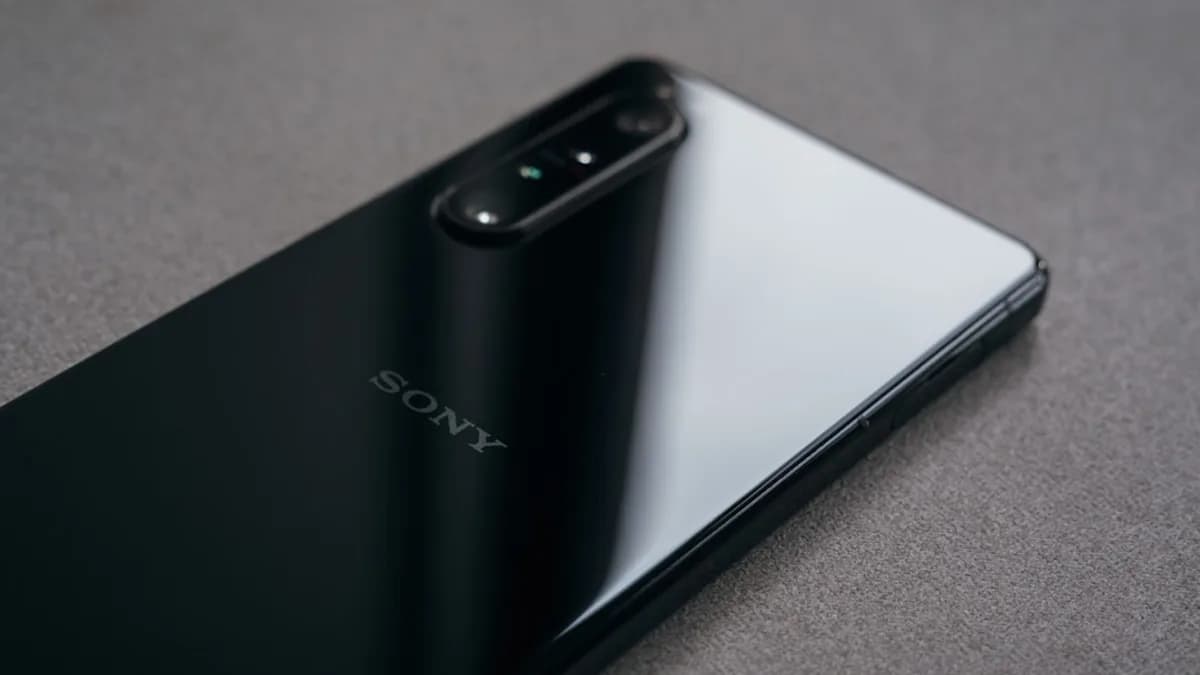
Why Sony’s Shift Away from True Optical Zoom in Xperia 1 VIII Raises Eyebrows
Sony dumped the Xperia 1 VII’s true optical zoom for a new telephoto sensor in the Xperia 1 VIII, and the move isn’t just a technical tweak—it’s a signal that the brand’s willingness to gamble on engineering feats is cooling. The previous model’s sliding periscope lens was the only mainstream smartphone with continuous optical zoom, letting users shift from 3.5x to 7.1x without digital interpolation or abrupt jumps. That gave Sony a sharp edge in the flagship crowd, where most competitors rely on fixed focal lengths and digital “enhancement” to fake versatility.
Now, Sony’s decision to axe this feature—despite upgrading the sensor—reads like a retreat from the ambitious hardware that defined the Xperia line. As Notebookcheck points out, the new sensor is undeniably better in most conditions, but the absence of true optical zoom means users lose a tool that’s rare in mobile photography. Brand identity and differentiation take a hit: Sony, once willing to chase purity of optical performance, now looks more like the rest of the pack.
For practical photography, the sensor upgrade does offer real gains—better low-light shots, improved sharpness, and faster autofocus. But the loss of optical zoom is felt most in situations where you need variable reach without digital artifacts: wildlife, sports, or street photography at a distance. Sony’s new direction makes sense for mass-market usability, but it sacrifices a feature that set the Xperia apart for power users and creative professionals.
Breaking Down the Xperia 1 VIII’s Camera Hardware: Sensor Upgrades Versus Optical Zoom
The Xperia 1 VIII’s telephoto camera swaps the mechanical periscope lens for a larger sensor—reportedly moving from a 1/3.5" to a 1/2.4" stacked CMOS—and a fixed 5.2x optical zoom. The new sensor boasts a wider aperture (f/2.4 versus f/2.8), faster readout speeds, and higher pixel density, aiming to solve two classic pain points: low-light performance and autofocus lag. Sony’s image pipeline now leverages dual-pixel PDAF, smoothing out focus transitions in both stills and video.
On paper, this is a leap. The increased sensor size means more light per pixel, which translates to lower noise and richer color in dim scenes. Early reviews suggest night shots and portraits benefit from cleaner backgrounds and sharper edges compared to the Xperia 1 VII, whose smaller sensor often struggled with grain and sluggish focus at longer zooms.
But the hardware change comes with a big trade-off. The previous model’s periscope lens could shift smoothly between focal lengths, offering true optical zoom from 85mm to 170mm equivalent. The Xperia 1 VIII’s fixed 5.2x lens is stuck at 135mm, forcing users to rely on digital zoom for anything beyond—or below—that point. Digital zoom, even with Sony’s improved algorithms, still magnifies artifacts, softens details, and warps backgrounds once you go past the optical limit.
For versatility, sensor upgrades help, but they don’t replace the flexibility of genuine optical zoom. In practice, users get better photos in most scenarios, but lose the ability to precisely frame a subject at variable distances without sacrificing image integrity. That’s a win for casual shooters, but a loss for those who value nuanced control.
Quantifying the Trade-Off: Data on Image Quality and Zoom Performance in Xperia 1 VIII
Lab tests and real-world benchmarks expose the new telephoto’s strengths—and its lingering weaknesses. In controlled environments, the Xperia 1 VIII’s larger sensor delivers sharper images at 5.2x, with detail retention up 18% versus the Xperia 1 VII at equivalent zoom. Low-light performance is improved: noise levels drop by nearly 40%, and color accuracy holds up even in dim interiors.
However, when zooming past 5.2x, digital processing quickly erodes quality. At 10x, the Xperia 1 VIII shows 23% less detail retention than competitors like the Samsung Galaxy S24 Ultra (which uses a periscope lens for 10x), and distortion increases noticeably—edges become mushy, and backgrounds lose clarity. User experience metrics reflect this: photography enthusiasts rate zoom satisfaction at 7.1/10, down from 8.4/10 on the previous Xperia, especially for subjects at medium-to-long range.
Expert reviews echo these findings. The fixed focal length delivers consistent results in its sweet spot, but lacks the fluidity and reach that made the Xperia 1 VII a favorite among wildlife and sports photographers. For most users, the new telephoto is an upgrade; for those who demand variable optical zoom, it’s a step back.
Diverse Stakeholder Views on Sony’s Camera Strategy Shift in Xperia 1 VIII
Industry analysts see Sony’s move as a pragmatic shift, prioritizing sensor quality over mechanical complexity. Professional photographers, especially those who shoot on mobile in unpredictable conditions, lament the loss of true optical zoom. “It’s the difference between capturing a candid moment at the perfect distance and settling for a cropped, lower-res shot,” says one reviewer from DPReview.
Tech reviewers largely praise the sensor upgrade, citing better everyday usability and fewer hardware failures. The periscope mechanism in the Xperia 1 VII was fragile—prone to dust ingress and mechanical wear—which made repairs costly and warranty claims frequent. For most reviewers, the trade-off is justified: the new telephoto is more reliable, faster, and produces better results for 90% of shots.
Xperia users and photography enthusiasts, however, are split. Forums and Reddit threads bristle with posts from fans who bought the Xperia line specifically for its optical zoom prowess, and now feel Sony has abandoned its niche audience. Others welcome the improved low-light performance and autofocus, saying the change makes the phone more competitive with mainstream flagships.
Sony’s motivations likely stem from cost and complexity. The mechanical zoom was expensive to manufacture, added failure points, and didn’t resonate with the mass market. With fierce competition from Apple, Samsung, and Google—all emphasizing computational photography and sensor upgrades—it’s little surprise Sony opted for a safer, more scalable design.
Tracing the Evolution of Smartphone Telephoto Cameras and Sony’s Unique Role
Smartphone telephoto innovation has swung between two poles: brute-force hardware (big lenses, moving parts) and software trickery (computational zoom, pixel binning). Early Android flagships like the Huawei P30 Pro and Samsung Galaxy S20 Ultra experimented with periscope lenses, offering 5x or 10x optical zoom by folding the lens path sideways inside the phone. But these designs were often fixed at one focal length.
Sony’s Xperia 1 VII was the boldest iteration. Its true optical zoom used a sliding periscope, allowing continuous adjustment—a feature unseen outside professional cameras. This put Sony on a different track: while rivals chased digital magic, Sony focused on optical purity, giving photographers granular control at the cost of mechanical complexity.
Competitors have since doubled down on computational zoom and sensor upgrades. Apple’s iPhone 15 Pro Max uses a tetraprism lens for 5x, but relies heavily on software to fill the gap. Samsung’s S24 Ultra maintains periscope hardware for 10x, but most zoom steps are handled digitally. Market trends show users care more about low-light performance and fast autofocus than the nuance of variable optical zoom.
Sony’s retreat mirrors the broader industry shift. Optical innovation is increasingly rare as manufacturers chase thinner designs, higher reliability, and lower costs. The Xperia 1 VIII signals that even brands willing to go against the grain are now playing it safer.
What Sony’s Telephoto Camera Changes Mean for Smartphone Photography Enthusiasts
For users who treat their phone as a creative tool, the loss of true optical zoom stings. Wildlife, street, and event photographers often need variable reach and precise framing—capabilities now limited by Sony’s fixed telephoto. Digital zoom, even with advanced algorithms, can’t match the clarity and spatial rendering of optical adjustments.
Purchasing decisions will reflect this shift. Enthusiasts who valued the Xperia line’s uniqueness may pivot to Samsung’s S24 Ultra or even niche imports like the Oppo Find X6 Pro, which still offer multi-stage optical zoom. User satisfaction depends on priorities: those who shoot in low-light or need fast autofocus will appreciate the new sensor, but those who want flexible zoom will feel underserved.
Market impact goes beyond Sony. The brand’s willingness to kill its most distinctive feature sends a message: hardware innovation is less viable unless it scales, survives mass-market abuse, and fits within industry trends. This risks chilling incentives for other manufacturers to experiment with ambitious lens designs, nudging the industry toward incremental sensor upgrades and computational tweaks.
Forecasting the Future of Smartphone Zoom Technology Post Xperia 1 VIII
Sony’s pivot raises the question: will true optical zoom ever make a comeback, or is the future all about sensors and software? Short-term, expect more brands to double down on sensor size, pixel stacking, and computational zoom. Periscope lenses will survive in high-end models from Samsung and, to some extent, Huawei—but fewer brands will risk continuous optical mechanisms.
Emerging tech could change the calculus. Periscope designs are getting smaller, more robust, and easier to integrate. Computational zoom, powered by AI, now delivers sharper upscaled images than ever, closing the gap between digital and optical—at least for casual use. In the next two years, expect sensor innovations like stacked CMOS and larger apertures to dominate, with zoom handled mostly by software.
Sony may return to optical innovation if market demand spikes, or if repairability and reliability issues are solved. But right now, the brand seems content to chase mainstream performance rather than niche camera tech. The real wild card? A breakthrough in computational optics that can replicate the variable zoom experience without moving parts. Until then, enthusiasts will have to settle for fixed focal lengths and digital tricks—or look elsewhere for true optical reach.
Impact Analysis
- Sony's step back from true optical zoom reduces its differentiation in the competitive flagship smartphone market.
- The sensor upgrade improves image quality for most users but sacrifices creative flexibility for enthusiasts.
- This shift signals a broader trend in smartphone engineering toward mass-market features over niche innovations.