Introduction: Sony’s Bold Entry into the High-End Gaming Monitor Market
Sony has thrown down the gauntlet in the competitive world of gaming gear with its recent announcement of the INZONE M10S II gaming monitor and the H6 Air headset. These new products are explicitly designed for hardcore eSports gamers, often referred to as the "uber sweats"—players who chase every possible performance edge and demand nothing less than perfection from their equipment. The move marks a significant shift for Sony, a brand historically known for its PlayStation consoles and premium consumer electronics, but not necessarily for cutting-edge PC gaming peripherals [Source: Source].
This announcement comes at a time when the gaming hardware market is fiercely contested by established names like ASUS, Alienware, and Razer. By targeting the most competitive segment of gamers, Sony is signaling its intent to not only compete, but potentially redefine the standards of high-performance gaming gear. In this opinion piece, we’ll explore whether Sony’s ambitious strategy is a game-changer or simply a bid to outdo the competition in a market already saturated with powerful options.
Sony’s INZONE M10S II: A Technical Marvel for the ‘Uber Sweats’
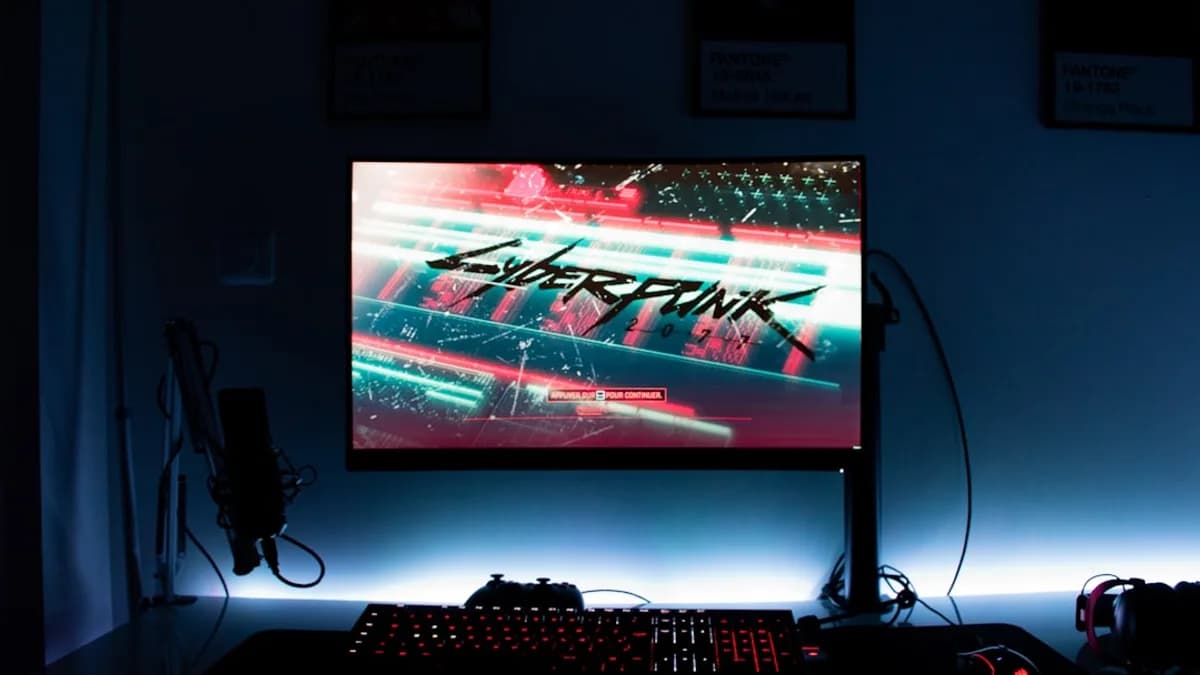
The centerpiece of Sony’s new lineup is the INZONE M10S II gaming monitor—a 27-inch OLED display boasting QHD resolution and an eye-watering 720 Hz dual-mode refresh rate. This level of refresh rate is virtually unprecedented in consumer-grade monitors, and it’s clearly aimed at the upper echelon of eSports professionals who demand ultra-fast response times and fluid visuals [Source: Source].
For competitive gamers, every millisecond counts. A higher refresh rate can mean the difference between seeing an opponent before they see you, and the 720 Hz specification stands as a statement to Sony’s commitment to eliminating motion blur and input lag. In theory, this could give pro players a tangible advantage, especially in games where reaction speed is paramount. However, the question remains: are there enough games and GPUs capable of pushing frame rates this high, and can the human eye even perceive differences beyond 240 Hz or 360 Hz? Scientific studies suggest diminishing returns past a certain threshold, but for the "uber sweats," every edge counts—even if it’s only psychological.
Sony's decision to use OLED technology further sets the M10S II apart. OLED panels deliver deep blacks, vibrant colors, and exceptional contrast, making them ideal for visually rich games and cinematic experiences. Unlike traditional LCDs, OLEDs offer near-instant pixel response times, which complements the high refresh rate by minimizing ghosting and blur. However, OLED screens can suffer from image retention (burn-in) if static elements remain on the screen for extended periods—an issue that’s particularly relevant in gaming, where HUDs and menus are often displayed for long durations.
Sony appears to be betting that the benefits outweigh the risks, especially for gamers who prize visual fidelity and responsiveness above all else. The M10S II’s dual-mode refresh rate also suggests flexibility, allowing users to toggle between high performance and potentially more power-efficient settings, which may alleviate some concerns about longevity and practicality.
The INZONE H6 Air Headset: Elevating Audio Experience for Gamers
Sony’s INZONE H6 Air headset is equally ambitious, featuring an open-back design that promises an immersive spatial audio experience. Open-back headphones are typically favored by audiophiles for their natural soundstage and ability to accurately position audio cues—a significant advantage in competitive gaming where situational awareness is crucial [Source: Source].
The headset’s design aims to deliver clarity and depth, allowing players to pinpoint footsteps, gunshots, or environmental sounds with greater precision. This is especially valuable in games like Counter-Strike or Valorant, where audio can be the difference between winning and losing. However, open-back headphones also let ambient noise in, which can be a double-edged sword. While this enhances immersion and reduces ear fatigue, it’s less ideal in noisy environments or for gamers who require isolation.
Sony’s H6 Air seems best suited for dedicated gamers with access to quiet, controlled spaces—such as eSports professionals or enthusiasts who’ve invested in optimal setups. For those in shared or loud environments, the open-back design may be less practical, though the audio quality could still tempt those seeking the best possible experience.
Importantly, the H6 Air headset pairs seamlessly with the M10S II monitor, reinforcing Sony’s vision of a cohesive, high-end gaming ecosystem. By integrating hardware designed to maximize both visual and auditory performance, Sony hopes to entice gamers who view their gear as an extension of their skills.
Sony’s Strategic Positioning in the Competitive Gaming Gear Market
Sony’s entry into the premium gaming gear segment is a calculated move, targeting a niche but highly influential subset of the gaming community. Brands like ASUS, Alienware, and Razer have long dominated the space, offering a range of monitors and headsets tailored to gamers’ needs. For Sony to break in, it must offer something genuinely unique—and the M10S II’s 720 Hz refresh rate is certainly a bold differentiator [Source: Source].
The focus on ‘uber sweats’ is both smart and risky. On one hand, catering to the most competitive gamers can create powerful word-of-mouth marketing, as products endorsed by eSports professionals often trickle down to mainstream audiences. Hardcore players are trendsetters, and their adoption of Sony gear could elevate the brand’s credibility in the PC gaming world.
On the other hand, this narrow targeting may limit Sony’s appeal. The average gamer may balk at the price or question the necessity of such extreme specs, especially if their hardware or gaming habits don’t require it. There’s also the risk that Sony’s reputation as a console-first company may hinder its acceptance among PC enthusiasts, who can be fiercely loyal to established brands.
Sony's move also signals a possible shift in its broader hardware strategy. By leveraging its engineering prowess and brand recognition, Sony could begin to shape industry standards, pushing competitors to innovate further. If successful, this could spark a new wave of high-performance gear, benefiting consumers with more choices and better technology.
Ultimately, Sony’s gamble hinges on its ability to convince both professionals and aspirational gamers that its products are not just luxurious, but essential. The coming months will reveal whether the M10S II and H6 Air can carve out a lasting niche—or simply become impressive footnotes in gaming hardware history.
Opinion: Is Sony’s High-End Gaming Gear a Game-Changer or Overkill?
Sony’s approach is undoubtedly ambitious, but is it truly a game-changer—or just overkill? The 720 Hz refresh rate is a headline-grabber, but its practical value is debatable. While eSports professionals may appreciate the theoretical gains, most games and graphics cards can’t reliably deliver frame rates that would fully utilize such a monitor. Moreover, scientific evidence suggests that human perception of motion smoothness plateaus around 240 Hz, with only marginal improvements at higher rates. As such, the 720 Hz feature may be more about marketing bravado than meaningful gameplay enhancement.
The OLED panel, however, is a legitimate leap forward for gaming monitors. Its superior image quality and fast response times provide tangible benefits, especially for visually intensive titles. Yet, the risk of burn-in and the premium price tag could make it a tough sell for all but the most dedicated gamers.
The H6 Air headset’s open-back design is similarly polarizing. It offers a richer, more immersive sound, but trades off noise isolation—making it less practical for many gaming scenarios. Still, for those who value audio fidelity and play in quiet environments, it’s a compelling option.
Sony’s high-end gear may push competitors to innovate, raising the bar for what gamers expect from their equipment. However, the focus on extreme specs risks alienating mainstream users who neither need nor can afford such features. The challenge will be for Sony to translate its innovations into real-world benefits, rather than merely chasing numbers.
There’s also a broader question about the direction of gaming hardware. Is the industry moving towards ever-higher specs for their own sake, or are these advances genuinely improving the gaming experience? Sony’s new lineup will test this balance, and the response from gamers will determine whether the trend continues or recalibrates toward practicality.
Conclusion: The Future of Sony’s Gaming Gear and What It Means for Gamers
Sony’s unveiling of the INZONE M10S II monitor and H6 Air headset marks a bold leap into the high-performance gaming gear market. While the extreme specs are sure to attract attention, their real-world impact remains to be seen. If Sony succeeds, it could reshape the industry, setting new standards for monitors and headsets alike. If not, these products may be remembered as impressive experiments that didn’t quite find their audience.
For gamers, the decision to invest in such high-end gear should be guided by personal needs and priorities. Sony’s offerings are tailored for those who demand the best, but most players will need to weigh the practical benefits against the price and their own gaming habits. As the dust settles, Sony’s gamble may either inspire a new wave of innovation—or remind us that there’s a fine line between game-changing and overkill.