Seiko is shrinking the mechanical GMT watch into a more practical field-watch package, and that matters more than another dial-color release.
The new Seiko 5 Sports Field GMT HDB001 and HDB002 add second-time-zone functionality to the revamped Field series with a 39.4mm stainless steel case, Caliber 4R34 automatic movement, and a Japan launch set for August, according to Notebookcheck. There is no confirmed global pricing or availability yet.
That makes this launch a functional repositioning of the 5 Sports Field line. Seiko is not just adding two more references. It is taking the field-watch format — compact, legible, low-drama — and giving it the complication that matters most to travelers and anyone tracking another time zone.
Seiko’s Field GMT Move Turns Travel Functionality Into the Main Feature
The HDB001 and HDB002 join the four Field series watches introduced in May: HDB006, HDB007, HDB008, and HDB009. Those earlier models used a rotating compass bezel. The new GMT versions drop that in favor of a fixed stainless steel 24-hour bezel, giving the watch a clearer job: track a second time zone.
That swap changes the personality of the watch. A compass bezel leans into outdoor-tool imagery. A 24-hour bezel is more practical for daily life, work travel, and international calls.
MLXIO analysis: This is Seiko making the Field series less costume and more utility. The watch still looks like a field watch, but the GMT hand gives it a reason to exist beyond style. That is the more interesting part of the release.
The two references split the new Field GMT format into two variants:
| Model | Positioning | Case diameter | Launch status |
|---|---|---|---|
| HDB001 | Seiko 5 Sports Field GMT variant | 39.4mm | Japan launch expected in August |
| HDB002 | Seiko 5 Sports Field GMT variant | 39.4mm | Japan launch expected in August |
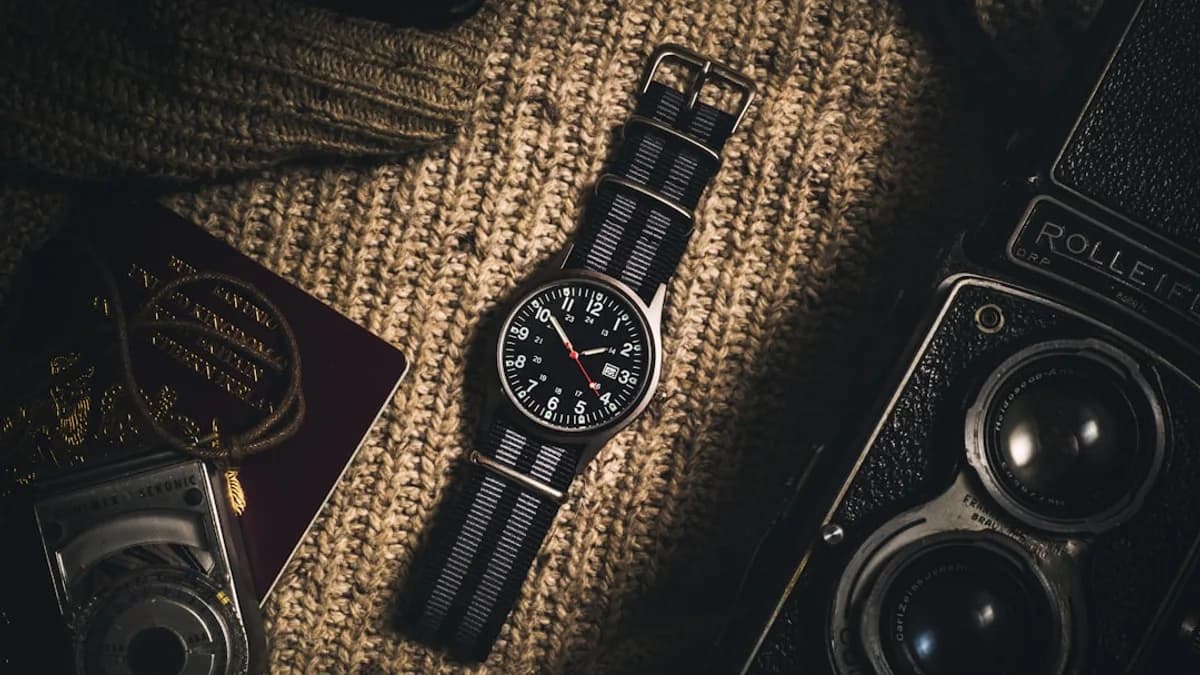
The HDB001 appears to be the more traditional field-watch option. The HDB002 should read cleaner and more casual. Both keep the same basic formula: large Arabic numerals, a compact field-watch case, and a dedicated GMT hand.
The 39.4mm Case Is the Real Specification to Watch
The most important number here may not be the launch timing. It is 39.4mm.
The new GMT models are smaller than the recently launched 41mm HDB006, HDB007, HDB008, and HDB009. That is a meaningful shift for an everyday watch. A travel watch gets worn through airports, meetings, dinners, and weekends. If it is too large or too loud, the complication matters less.
The available specification picture points to utility rather than luxury escalation:
- Movement: Seiko Caliber 4R34 automatic with manual winding
- Functions: GMT 24-hour hand, date display, hacking seconds
- Power reserve: Approximately 41 hours, based on the 4R34 platform
- Crystal: Curved Hardlex
- Water resistance: 100m / 10 ATM
- Bracelet: Stainless steel bracelet
The trade-off is obvious. Buyers get a mechanical GMT complication, wearable dimensions, solid daily water resistance, and Seiko’s familiar automatic platform. They do not get luxury finishing, sapphire crystal, or premium-movement positioning.
That is not a flaw in the concept. It is the concept.
The 4R34 Is a Practical GMT Caliber, Not a Luxury Travel Movement
The 4R34 is the quiet reason these watches exist. It gives Seiko a way to put GMT functionality into an accessible mechanical watch without moving the 5 Sports line out of its identity.
The reported function set points to automatic winding, manual winding, hacking seconds, a date display, and a dedicated 24-hour hand. For context, Seiko’s official SSK023 listing for a related 5 Sports Field GMT reference also lists Caliber 4R34, approximately 41 hours of power reserve, 24 jewels, and 10 bar water resistance. The SSK023 is not one of the new HDB001 or HDB002 models, so those details are useful context for the movement family rather than direct confirmation of every specification on the new references.
The key distinction for buyers is how the GMT works. Based on the stated function set, this is best understood as a caller-style GMT: the 24-hour hand is used to track another time zone. A flyer GMT, by contrast, lets the wearer jump the local hour hand when crossing time zones.
That difference matters. A caller GMT is excellent for tracking home time, office time, or another market. A flyer GMT is more convenient for frequent border-crossing travel. Seiko is giving buyers the former here, not pretending this is a premium travel-watch movement.
The movement positioning also sets expectations. This is not precision-watch territory. It is accessible mechanical-watch practicality. Anyone buying the HDB001 or HDB002 for absolute timekeeping performance is buying the wrong watch.
Seiko Is Rebuilding the Entry-Level Icon Formula One Complication at a Time
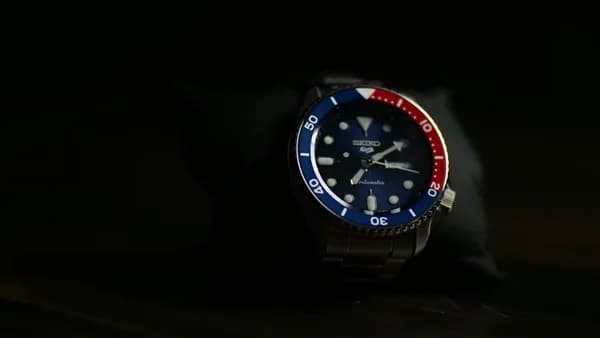
The broader pattern is visible inside Seiko’s own catalog. The 5 Sports line already includes field watches, dive-inspired sports watches, and GMT-equipped models. The Watchology buying guide lists the 2026 Seiko 5 Sports range around $195–$450 USD depending on reference, with 100m water resistance on most models and case sizes spanning 38–43mm.
The HDB001 and HDB002 sit cleanly inside that logic. They do not try to replace the more colorful 5 Sports GMT references. They make the GMT format quieter.
That shift matters because field-watch styling changes the message. A dive-style GMT often feels like a weekend sports watch. A field GMT feels more like a daily instrument: readable, compact, and less performative.
For readers tracking how Japanese watchmakers are treating function and positioning across price tiers, MLXIO has also covered Grand Seiko’s 9SA5-focused watch strategy and Citizen’s smaller Promaster Marine release. The Seiko 5 Sports Field GMT sits in a different lane, but the contrast is useful: this release is about accessible mechanical function, not premium movement theater or high-spec tool-watch escalation.
Buyers Should Treat the Japan Launch as the First Test
The HDB001 and HDB002 are scheduled to launch in Japan this August. Notebookcheck reports that there is no word yet on global pricing and availability.
That uncertainty is important. Japan-first launches can create early collector attention, but the supplied source does not confirm US, UK, or wider market timing. Notebookcheck says it is “safe to assume” the watches will make their way to other markets, but that remains an assumption, not a confirmed rollout.
For buyers, the practical checklist is simple:
- Choose the case first: The 39.4mm diameter is the core appeal.
- Understand the GMT type: This is best suited to tracking another time zone, not rapid local-hour jumping.
- Accept the movement limits: This is accessible mechanical functionality, not luxury-grade regulation.
- Check availability: Import pricing, warranty coverage, and after-sales support may matter if global distribution is delayed.
- Decide if GMT is useful: If not, the simpler Field models may make more sense.
Seiko’s Next Signal Will Be Distribution, Not Another Spec Sheet
The HDB001 and HDB002 already answer the product question: Seiko can put a practical GMT into a compact 5 Sports Field case without blowing up the proportions.
The next question is commercial. If Seiko expands availability beyond Japan, adds more dial colors, or offers strap variations, that would support the idea that the Field GMT is becoming a standing sub-line rather than a limited regional experiment.
If the models remain Japan-only or hard to source, the launch will still be interesting — but narrower. The evidence to watch is not hype. It is distribution, replenishment, and whether Seiko keeps building compact GMT field watches around the 4R34.
Key Takeaways
- Seiko is bringing GMT functionality into a smaller, more practical field-watch format.
- The fixed 24-hour bezel shifts the Field series from outdoor styling toward everyday travel utility.
- Global pricing and availability remain unconfirmed, so buyers outside Japan still have to wait.