Why Precise Location Tracking Matters for Smartphone Users
Samsung’s Galaxy S26, the cost-conscious flagship, won’t let users tap into the most accurate location-tracking features—even as rivals double down on spatial tech. That’s not just a technical detail; it’s a decision with real consequences for navigation, safety, and the services that power daily life, according to Notebookcheck.
Precise location tracking isn’t just about finding your way on Google Maps. It enables ride-sharing to pinpoint pick-up spots, helps lost children or elderly relatives stay safe, and lets apps trigger context-aware features—think “smart unlock” when you walk up to your car. The margin between “on the block” and “at the exact door” is the difference between a smooth experience and frustration.
But accuracy comes at a price: the more granular the tracking, the more data that gets collected. Privacy advocates worry about apps that can follow your every move indoors, not just on the street. Still, for most users, the trade-off is clear: the benefits of seamless navigation, security, and personalized services outweigh the risks—at least when they’re given control.
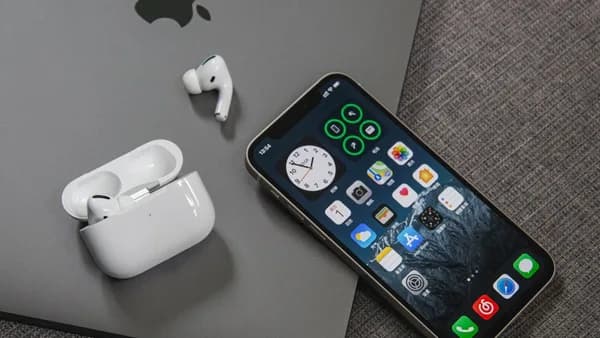
Take Apple’s Find My, which can locate misplaced AirTags within inches using UWB. Or Google’s AR-based indoor navigation, guiding travelers through airports with turn-by-turn instructions. Without precise tracking, these features either fade out or fail outright. In short, location tech has moved beyond “where am I?” to “what’s around me—and what can I do with it?”
What Technologies Enable Precise Location Tracking Beyond GPS on Smartphones
GPS gets you within a few meters outdoors, but it struggles inside shopping malls, airports, or urban canyons. That’s where a cocktail of technologies steps in: Wi-Fi triangulation, Bluetooth, ultra-wideband (UWB), and sensor fusion.
Wi-Fi triangulation works by measuring signal strengths from multiple access points, narrowing down a location to the room or even desk level. Bluetooth, often used for proximity-based pairing, can also help detect nearby devices or objects—think smart home gadgets or fitness trackers. UWB, the newest star, sends rapid pulses across a wide frequency range, allowing phones to measure distances to nearby devices with precision down to centimeters.
Sensor fusion combines data from accelerometers, gyroscopes, magnetometers, and barometers. This enables dead reckoning—tracking movement even when GPS or external signals fade. Together, these technologies turn a phone into a spatial sensor, aware not just of its own location but also the positions of other objects and people in the environment.
The distinction matters. Basic location tracking answers “Where’s the phone?” Precise spatial awareness adds “Where are other devices, doors, or objects relative to the phone?” That’s how AR games overlay virtual creatures in your living room, how smart locks know you’re right outside, and how device-finding apps can point you to the exact couch cushion your earbuds are hiding under.
Samsung’s premium Galaxy models have shipped with UWB since 2020, letting users unlock cars, locate tags, or share files with a directional “point and send” gesture. But not every device gets these perks—especially when cost dictates the feature list.
How Samsung Galaxy S26’s Affordable Model Limits Precise Location Tracking Features
The most affordable Galaxy S26 variant skips UWB altogether, and pares back on advanced sensor integration. While GPS and Wi-Fi triangulation remain standard, the absence of UWB means users lose out on centimeter-level positioning and spatial device discovery. Bluetooth is present, but without UWB, proximity detection is limited to a few meters—and lacks directional awareness.
Samsung’s move isn’t just about shaving pennies off the bill of materials. UWB chips cost roughly $2–$5 per unit, and integrating them requires additional antenna design, certification, and software development. For a model targeting price-sensitive buyers, cutting UWB and advanced sensors can save enough to hit a crucial retail threshold—often under $700.
But the trade-offs run deeper. Without UWB, the S26 can’t support Samsung’s SmartTag+ (which uses AR to visually guide users to lost items), nor can it offer seamless spatial sharing or advanced car unlocking. Indoor navigation—already tricky with just Wi-Fi—becomes unreliable, especially in dense environments. The affordable S26 is left with outdoor-only accuracy and basic device-finding, meaning users miss out on the spatial computing features that define modern flagships.
Samsung’s rationale? Most consumers in the S26's price bracket still rely on basic navigation and don’t expect AR or advanced device-finding. But as spatial tech moves from novelty to necessity, this calculation risks alienating users who see these features as standard, not luxury.
What Are the Practical Implications of Limited Precise Location Tracking on the Galaxy S26
Picture arriving at a stadium and trying to locate your seat with indoor navigation—without UWB, the S26 will point you to the venue, but not the section. Lose your wireless earbuds? Device-finding apps can show a rough location, but won’t guide you to the exact spot. Smart home routines that depend on precise proximity (like unlocking doors only when you’re right outside) become unreliable or impossible.
AR apps—everything from Pokémon Go to home design tools—work best when the phone can map its surroundings in detail. Without sensor fusion and spatial awareness, virtual objects may float awkwardly or misalign, breaking the illusion. Samsung’s SmartTag+ users, for example, will be unable to use AR-based item finding, a feature that rivals like Apple’s AirTag offer for under $30.
For businesses, the difference is stark: retail apps that guide shoppers through aisles, or conference tools that help attendees navigate massive event spaces, rely on fine-grained spatial tech. The S26’s limitations mean these services either degrade or drop off entirely, pushing power users toward pricier models or competitors.
Buyers weighing their options should consider how much they depend on advanced location features. If indoor navigation, AR, or ultra-precise device finding are must-haves, the S26’s affordable variant won’t deliver. For those content with outdoor maps and basic Bluetooth pairing, the trade-off may be acceptable—but they’ll need to know what they’re missing.
How Does Samsung Galaxy S26 Compare to Competitors in Location Tracking Technology
Apple’s iPhone 15, Google’s Pixel 8 Pro, and Xiaomi’s 14 Pro all include UWB in their flagship lines—even at entry-level price points. Apple’s AirTag system relies on UWB to pinpoint lost items with directional arrows, while Google’s Pixel uses UWB for “Nearby Share” and advanced device-finding. Xiaomi touts UWB for smart home integration and seamless spatial control.
Samsung’s decision to skip UWB on the affordable S26 stands out. In 2023, UWB penetration in new smartphones hit roughly 35%, up from just 10% two years prior. As spatial computing and AR features become standard, consumer expectations are rising. The S26’s pared-back location tech risks making it look dated—especially as rivals tout centimeter-level precision as a selling point.
Industry trends suggest spatial features are moving from flagship exclusives to mainstream must-haves. IDC reports that 42% of smartphone buyers now cite device-finding and smart home integration as priorities, up from 28% in 2021. Samsung’s calculus may save costs, but it leaves the S26 vulnerable as spatial awareness becomes a baseline expectation.
What Should Buyers and Industry Watch for Next?
Samsung’s gamble will test whether mainstream users care about spatial tech—or if price trumps precision. Early sales and user reviews will reveal if cutting UWB and advanced sensors stunts adoption, or if most buyers stick with basic features. For those who want the latest AR, device-finding, or indoor navigation, the S26’s affordable model is a compromise, not a competitor.
As spatial computing matures, expect more brands to integrate UWB, sensor fusion, and advanced proximity features as standard—even in mid-tier phones. Buyers should scrutinize spec sheets for “UWB” and “sensor fusion” if they rely on smart home, AR, or device-finding. For Samsung, the S26 is a test: can a flagship cut corners on precision and still win market share, or will spatial awareness decide the next round of smartphone wars?
Impact Analysis
- Samsung’s restriction on precise location tracking limits access to advanced navigation and safety features.
- Competitors offer richer spatial tech, raising concerns about Samsung users missing out on context-aware services.
- This decision highlights ongoing trade-offs between privacy, user experience, and technological innovation.