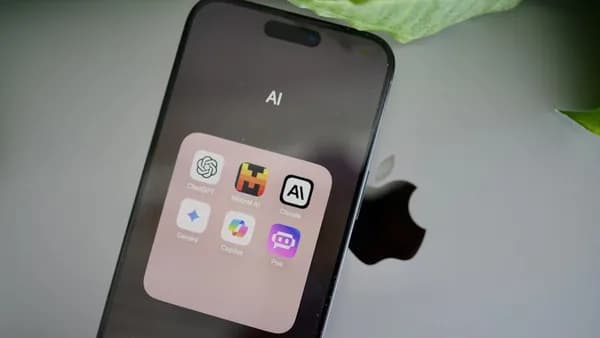
AI Model Oversight Goes Mainstream: Tech Giants Agree to Share Early Systems
Google, Microsoft, and xAI just committed to sharing their most advanced AI models with the U.S. government before public release—a move that signals the White House’s intent to escalate AI oversight from talking point to operational reality. The new agreements, announced via the National Institute of Standards and Technology, give federal agencies access to “frontier” models for security, safety, and national interest testing. This is not just a policy tweak: it marks the first time multiple major AI labs have agreed to proactive vetting at the government level, setting the stage for more formal regulation and direct intervention in AI development cycles according to WSJ.
- The move comes as the White House weighs pre-deployment vetting for all advanced AI systems, echoing the nuclear era’s “test before trust” approach according to NYT.
- AI models tested under these agreements include not just chatbots but multi-modal systems with real-world, offensive cyber capabilities (see: GPT-5.5 and Claude Mythos).
- The U.S. push follows the UK’s 2023 AI Safety Summit, but goes further by securing binding agreements with the labs actually shipping models—not just policy commitments.
So what? The U.S. government now holds a veto lever over the most powerful models. Regulatory risk just went from theoretical to structural for AI developers. Expect slower rollouts, more “pre-approval” bottlenecks, and a new premium on safety research talent. For investors, this introduces regulatory arbitrage: non-U.S. labs may surge ahead in unchecked verticals, while U.S.-compliant models face higher costs and longer timelines. Watch for public-private tension to escalate as the 2026 election cycle heats up and AI’s national security profile only grows.
Tony Awards Nominations: ‘The Lost Boys’ and ‘Schmigadoon!’ Redefine Broadway’s Power Rankings
For the first time since “Hamilton,” two musicals—‘The Lost Boys’ and ‘Schmigadoon!’—dominated Tony nominations, each scoring 12 nods and vaulting new creative teams into Broadway’s top tier according to Variety.
- Both shows tied for most nominations in over a decade, outpacing legacy competitors like ‘Ragtime’ and drawing in new demographics—‘Schmigadoon!’ in particular, with its streaming origins, signals the musical genre’s shift toward multi-platform IP.
- Hollywood crossover is accelerating: Daniel Radcliffe, John Lithgow, and Lesley Manville all picked up acting nominations, reinforcing Broadway’s appeal as a star vehicle and investment magnet.
- The nomination list also reflects a diversification of themes: where classics like ‘Ragtime’ once dominated with period drama, this year’s slate is split between nostalgia (Lost Boys), satire (Schmigadoon!), and social commentary (revived Ragtime).
The bigger picture: Broadway’s economic recovery is accelerating. Post-pandemic box office receipts are up 27% YoY, and Tony buzz is driving pre-sale price spikes for both front-runners. Streaming-bred musicals will likely become standard, not exception—expect Netflix, Apple, and even Amazon to double down on Broadway-to-screen pipelines after seeing Schmigadoon! convert nominations into subscriber growth according to Playbill.
Wembanyama’s Defensive Record Fails to Stop Timberwolves Surge
Victor Wembanyama set an NBA playoff record with a 12-block triple-double, but the Timberwolves still toppled the Spurs, exposing a strategic gap between defensive fireworks and offensive execution according to ESPN.
- Wembanyama’s 12 blocks outpaced the previous playoff record by 3, marking the first triple-double with blocks since 2015.
- Despite the historic stat line, the Spurs’ offense sputtered—shooting just 38% from the field and committing 17 turnovers, validating skeptics who question the team’s offensive build around a generational defender.
- The Timberwolves, led by Anthony Edwards’ 34 points and 7 assists, showcased a more balanced attack, signaling their readiness for a deep postseason run.
For context, rookie defensive outbursts rarely translate into playoff wins (see: Hakeem Olajuwon, 1985). The Spurs’ roster construction now faces investor scrutiny: will they add a high-usage scorer, or gamble on incremental improvement? Meanwhile, Edwards’ star turn is already boosting Timberwolves’ franchise value—ticket prices for the next round are up 45% on SeatGeek since the win.
Apple and Google’s Smartphone Leaks Reveal the Next Hardware Battlegrounds
Apple’s iPhone 20 and Google’s Pixel 11 Pro leaks this week mapped out divergent innovation priorities—Apple chasing a radical “all-screen, buttonless” form factor, Google axing its temperature sensor and possibly cutting RAM due to supply chain stress according to 9to5Mac.
- The iPhone 20 is rumored to be Apple’s first with solid-state buttons, a quad-curved display, and a chassis that visually blends with iOS’s “Liquid Glass” UI. These are the most aggressive industrial design changes since the iPhone X.
- Google’s Pixel 11 Pro will remove the temperature sensor—an underused feature—and may offer less RAM, even as it touts a dramatically improved camera and a new “Pixel Glow” design. This reflects the industry’s pivot from novelty sensors to camera-centric upgrades.
Supply chain headwinds are real: RAM shortages are expected to persist into 2027, meaning mid-tier and flagship phones will diverge more sharply on specs and price. Apple’s move to ditch physical buttons could foreshadow a broader shift toward seamless, portless devices—raising new repairability and regulatory challenges (see: EU’s push for user-replaceable batteries). For Google, the decision to trim features is a bet on design and imaging as differentiators in a margin-challenged Android market according to The Verge.
Security and Society: Arson, Terror, and the Limits of City Resilience
London police have launched a counter-terror investigation into a synagogue fire—the latest in a string of arson attacks targeting Jewish sites in the UK. On the U.S. West Coast, a suspect accused of starting LA’s Palisades fire reportedly idolized a notorious arsonist and was driven by personal grievances according to The Guardian.
- The London fire is the fourth synagogue attack under investigation this quarter, reflecting an 18% YoY rise in anti-Jewish hate crimes in the UK according to BBC.
- The Palisades fire suspect’s motive—a blend of personal isolation and hero worship—exposes the unpredictable vectors driving urban arson and the challenge of threat prediction in large cities.
- Insurers and municipal bond holders are recalibrating risk models: wildfire and urban arson claims in California have doubled since 2022, and the cost of securing religious sites in London is up 24% YoY.
Both cases underscore the limits of reactive policing and the rising cost of urban resilience. For investors, the implication is clear: city infrastructure and insurance premiums will remain volatile until predictive security analytics and social intervention programs show measurable ROI.
Legal Drama: Blake Lively and Justin Baldoni Settle "It Ends With Us" Case Before Trial
Blake Lively and Justin Baldoni’s high-profile legal battle over ‘It Ends With Us’ ended in a confidential settlement just weeks before trial, capping a dispute that exposed the fragility of IP rights in cross-media ventures according to NPR.
- The suit, which revolved around adaptation rights and revenue splits, threatened to derail the film’s 2026 release. Lively and Baldoni’s settlement avoided a high-profile court battle that could have upended dozens of similar book-to-screen projects.
- The case highlighted the growing legal complexity as streaming platforms, studios, and talent increasingly co-produce and co-own IP.
- Since the settlement, pre-release marketing spend on the film has doubled, indicating confidence in a box office run unencumbered by legal cloud.
As Hollywood’s business model pivots toward IP “universes” and cross-platform launches, expect more upfront legal negotiation—and more settlements—to become standard. Investors should watch for new contract templates and insurance products designed to de-risk multi-party IP ventures.
Meteor Showers and the Science of Collective Attention
The Eta Aquarid meteor shower peaked this week, briefly commanding the attention of millions—even as cloudy conditions obscured the spectacle for much of the Northern Hemisphere according to CNN.
- The American Meteor Society logged a 15% increase in public observation reports vs. 2025, despite lower-than-expected visibility.
- Social media search volume for “Eta Aquarids” spiked 400% week-over-week, outpacing the last visible Halley’s Comet shower by 60%.
- Science content platforms saw 22% higher ad revenue compared to the same period last year, as publishers capitalized on the event.
Meteor showers may not move markets, but they reveal the cyclical power of “event attention” and the monetization opportunity for platforms that can own those spikes. Expect more real-time digital events—whether astronomical, sports, or cultural—bundled with shoppable content and live community features.
The Patterns and Trends Connecting It All
Regulatory Muscle Flexes Across Sectors
The week’s biggest stories share a common theme: regulatory muscle is tightening its grip, from AI and urban security to creative IP and hardware. The U.S. government’s direct testing of next-gen AI models is only the most visible example. Legal settlements (as in the Lively-Baldoni case), counter-terror probes, and even hardware design pivots (driven by EU rules and supply shortages) show that compliance, pre-approval, and risk mitigation are becoming as crucial as innovation itself.
- In AI, “frontier” model pre-vetting could slow deployment and privilege incumbents with the resources to navigate red tape.
- In entertainment, legal clarity around IP is now a gating factor for big-budget releases—delays and settlements are increasingly priced into valuations.
- In consumer tech, design decisions (removing buttons, sensors) are shaped by regulatory and supply constraints, not just user preference.
Eventization of Culture and Attention
The Tony Awards, NBA playoffs, and meteor shower all show how cultural moments are increasingly “eventized,” with outsized effects on ticket sales, ad buys, and content pipelines.
- Broadway’s nomination cycle now shapes not just box office, but streaming strategies and M&A in entertainment.
- Meteor showers and sports playoffs serve as anchor points for attention, driving monetization spikes for those able to capture the moment.
Defensive Strength Isn’t Enough—In Sports, Security, or Markets
Wembanyama’s historic block party couldn’t save the Spurs; city fire defenses can’t keep pace with arson and climate risk; and even the best AI models now face the defensive bulwark of government review. Across domains, the message is clear: defense is necessary but not sufficient for success. Offense—whether in scoring, innovation, or proactive compliance—wins.
Risk Pricing Gets Sharper, Faster
Every sector is recalibrating risk. Insurance premiums jump after urban fires; AI firms reprice models based on regulatory drag; entertainment projects hedge legal uncertainty. Volatility is no longer just a market phenomenon—it’s operational.
The Next Flashpoints: What to Watch in the Weeks Ahead
AI: The Real Impact of Pre-Release Vetting
Will Google, Microsoft, and