Updated: This article has been refreshed to clarify the rumor status, tighten the camera-tech explanation, and emphasize that neither Samsung nor Oppo has confirmed these sensor plans.
Samsung’s most ambitious rumored phone camera sensor may land first in an Oppo flagship, not a Galaxy Ultra.
That is the strange tension at the center of a camera leak: Samsung is said to be developing a 200MP HPA sensor with a near-1-inch 1/1.12-inch format and LOFIC technology, but the Oppo Find X10 Ultra — not the Galaxy S27 Ultra — is tipped to use it first, according to Notebookcheck.
The claim comes from tipsters Digital Chat Station and Ice Universe, per the report. They describe Samsung’s upcoming 200MP HPA as potentially one of the strongest main camera sensors headed for smartphones. The Galaxy S27 Ultra, meanwhile, is currently tipped to miss this specific part and instead move to a different 200MP Samsung sensor, the HP6, reportedly sized at 1/1.3 inches.
Why should smartphone buyers care about Samsung’s rumored 200MP HPA camera sensor?
The leak matters because the next real jump in flagship phone cameras may come less from adding megapixels and more from improving how sensors handle light. A 200MP label alone does not guarantee better photos. Sensor size, dynamic range, lens quality, stabilization, autofocus, processing, and video behavior all matter.
What We Know: The rumored Samsung HPA is described as a 200MP main camera sensor with a 1/1.12-inch optical format and LOFIC, short for Lateral Overflow Integration Capacitor. If accurate, that would put it close to the largest sensors used in mainstream flagship phones, though still not quite a full 1-inch-type sensor.
The surprise is the rumored allocation. Samsung Semiconductor may be building the part, but Oppo’s future Find X10 Ultra is the device tipped to get it first. Samsung’s own Galaxy S27 Ultra is instead said to use the 200MP HP6, a smaller 1/1.3-inch sensor.
That split raises an obvious question: if Samsung has a more advanced 200MP sensor in its pipeline, why would its own Galaxy Ultra not use it? The answer could be technical, commercial, or simply that the leak is early and incomplete.
For now, caution is essential. Oppo has not confirmed the Find X10 Ultra’s camera hardware, Samsung has not confirmed the Galaxy S27 Ultra’s camera system, and sensor names or module plans can change before launch.
What is a 200MP 1/1.12-inch sensor, and why is size as important as megapixels?
A 200MP smartphone sensor captures extremely high-resolution image data, but resolution is only one part of the camera equation. A larger sensor gives the imaging system more surface area to collect light, which can help with noise control, low-light performance, dynamic range, and cleaner crops.
That is why the HPA’s rumored 1/1.12-inch size is the key specification. It would be larger than the 1/1.3-inch HP6 sensor reportedly planned for the Galaxy S27 Ultra. On paper, that gives the HPA more room to gather light and preserve detail. In practice, final image quality would still depend heavily on the lens, aperture, image stabilization, processing pipeline, and thermal limits.
Most phones also do not save every shot at full 200MP by default. They usually combine multiple smaller pixels into larger effective pixels, producing brighter lower-resolution photos for everyday use. The full-resolution mode may be used for daylight detail, cropping, or specialized shooting, while binned output handles most casual photos.
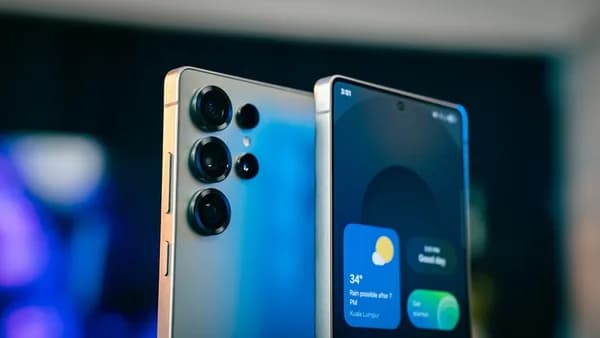
Why It Matters: The rumor points to a broader shift in premium Android cameras. Instead of simply adding more rear cameras, brands are trying to make fewer modules do more. Notebookcheck also reports that the Galaxy S27 Ultra may drop the small 3x camera and lean more heavily on in-sensor zoom, with more emphasis on the main, ultra-wide, and 5x telephoto cameras.
If that happens, the main sensor becomes even more important. It would not just take standard wide photos; it would also carry more of the mid-range zoom workload. MLXIO previously covered a related Galaxy leak in Galaxy S27 Pro Snags 200MP Sensor, Ultra Keeps Zoom Edge, and the same theme applies here: Samsung’s next camera decisions may be about making each module work harder, not simply adding more lenses.
How does LOFIC technology improve HDR and dynamic range in phone cameras?
LOFIC is the most interesting part of the HPA leak. The term stands for Lateral Overflow Integration Capacitor. In simple terms, it gives the sensor extra capacity to handle very bright parts of a scene before they clip into pure white.
That matters because difficult scenes are rarely evenly lit. A phone may need to capture a bright sky, a shadowed face, reflective glass, neon signs, and dark streets in the same frame. If the sensor loses highlight data at capture, software has less real information to recover later.
Traditional HDR often relies on combining multiple exposures. The phone captures different frames — some exposed for highlights, others for shadows — and merges them. That can work well, but it has limits. Motion can create ghosting. Video gives the camera less time to stack frames. Backlit portraits can look artificial if processing pushes faces and skies too hard.
Sensor-level dynamic range attacks the problem earlier. If the HPA can preserve more highlight and shadow data before image processing begins, the camera has better raw material to work with. That could mean fewer blown skies, less harsh HDR tone mapping, and more natural contrast in difficult scenes.
A useful analogy: LOFIC is less like a software filter and more like extra storage inside the sensor for bright-scene information.
Why It Matters: If Samsung’s HPA implementation works as rumored, the biggest gains may show up in video, night scenes, backlit portraits, concerts, city lights, and fast-moving moments. Those are the areas where multi-frame HDR can struggle most.
Why might Oppo get Samsung’s best camera sensor before the Galaxy S27 Ultra?
Samsung’s component business and Samsung’s phone business are separate operations. Samsung can sell a sensor to another manufacturer even if Galaxy phones follow a different camera roadmap. That is the core tension in this leak: Samsung may build the HPA, while Oppo may ship it first.
There are several plausible reasons Samsung Mobile might skip the HPA in the Galaxy S27 Ultra. A 1/1.12-inch sensor can create packaging problems. It may need a larger lens, a thicker camera bump, more power, more heat management, or different stabilization hardware. A sensor that looks better on a spec sheet may not fit a specific phone’s design, cost, or battery targets.
Samsung could also prefer a different sensor tuned around its own image-processing pipeline. The rumored HP6 would still be a high-resolution Samsung-made sensor, just smaller than the reported HPA.
Oppo’s incentive is more obvious. The Find X Ultra line is camera-focused, and a Samsung-made 200MP HPA with LOFIC would be an easy headline feature. Oppo could market it as a major hardware advantage, especially if Samsung’s own Ultra model uses a smaller 200MP sensor.
Still, better hardware does not automatically mean better photos. Lens quality, autofocus, stabilization, color tuning, shutter speed, portrait processing, and video algorithms all shape the final result. A great sensor can be held back by weak optics or overly aggressive processing.
What Is Still Unclear: The leak does not confirm whether Oppo has exclusive access, whether Samsung is reserving HPA supply for select partners, or whether the Galaxy S27 Ultra’s reported HP6 choice is final. It also does not provide aperture, lens design, stabilization specs, autofocus details, video modes, or real sample images.
What would the rumored HPA sensor change in real-world photos and videos?
Consider a person standing at sunset with a bright sky behind them. Many phones face a trade-off: expose for the face and the sky blows out, or expose for the sky and the face becomes too dark. Multi-frame HDR tries to solve this, but movement can make the result uneven.
A large LOFIC-equipped sensor could help at capture. The sky would have a better chance of keeping cloud texture and color, while the face could hold cleaner shadow detail. The final image would need less aggressive software rescue.
The same applies to reflective streets at night, indoor shots against windows, concerts, neon signs, and city scenes with bright displays. These are the situations where flagship cameras often look impressive at a glance but show halos, clipped lights, gray shadows, or unnatural HDR when inspected closely.
Video may be the bigger test. Still photos can rely more heavily on computational tricks. Video has to manage exposure, motion, noise, and highlight control continuously. If LOFIC gives the HPA more usable dynamic range before processing, high-contrast video could look more stable and less prone to sudden exposure shifts.
The limits remain real. Large sensors can complicate close focusing. Bigger camera modules affect phone design. High-resolution sensors need strong processing to avoid mushy detail or artificial sharpening. And HDR can still look unnatural if the phone flattens contrast too much.
For buyers, the practical lesson is simple: do not buy the 200MP label alone. Look for real photo samples, crop tests, video HDR comparisons, shutter speed, portrait consistency, low-light performance, and how the camera handles people in motion.
How should you read Galaxy S27 Ultra and Oppo Find X10 Ultra camera leaks right now?
This leak is specific enough to watch because it includes sensor names, sizes, and product targets: HPA, 200MP, 1/1.12 inches, LOFIC, Oppo Find X10 Ultra, Galaxy S27 Ultra, HP6, 1/1.3 inches, and a possible shift away from a 3x camera.
But specificity is not confirmation. Future phones move through prototypes. Camera modules change. Sensor supply changes. Marketing names change. A feature planned for one device can disappear before launch.
What To Watch: The strongest signals would be repeated claims from reliable camera leakers, camera module photos, firmware references, certification filings, supply-chain reporting, or Samsung Semiconductor publicly announcing the HPA sensor. Commercial confirmation would come from Oppo marketing the Find X10 Ultra around a Samsung 200MP HPA sensor or early hands-on samples showing LOFIC’s real-world effect.
The Galaxy side is just as important. If Samsung keeps the S27 Ultra on a smaller 1/1.3-inch HP6 while selling a larger LOFIC-equipped HPA to Oppo, it would show a deliberate split between Samsung’s sensor ambitions and Galaxy’s product priorities. That would not automatically mean Oppo wins the camera race. It would mean Oppo gets the more exciting hardware claim.
The takeaway: treat the HPA as a potential leap for mobile HDR, not a guaranteed camera crown. If the leak holds, the real test will be whether Oppo can turn Samsung’s sensor into better everyday photos and video than the Galaxy S27 Ultra — especially in the messy scenes where flagship cameras still struggle.
Key Takeaways
- Oppo may get Samsung’s most advanced rumored 200MP sensor before Samsung’s own Galaxy Ultra line.
- The larger 1/1.12-inch HPA sensor could improve light capture and highlight control if the leak is accurate.
- LOFIC could matter more than megapixels by improving dynamic range at the sensor level.
- Neither Oppo nor Samsung has confirmed these camera plans, so the rumor should be treated cautiously.