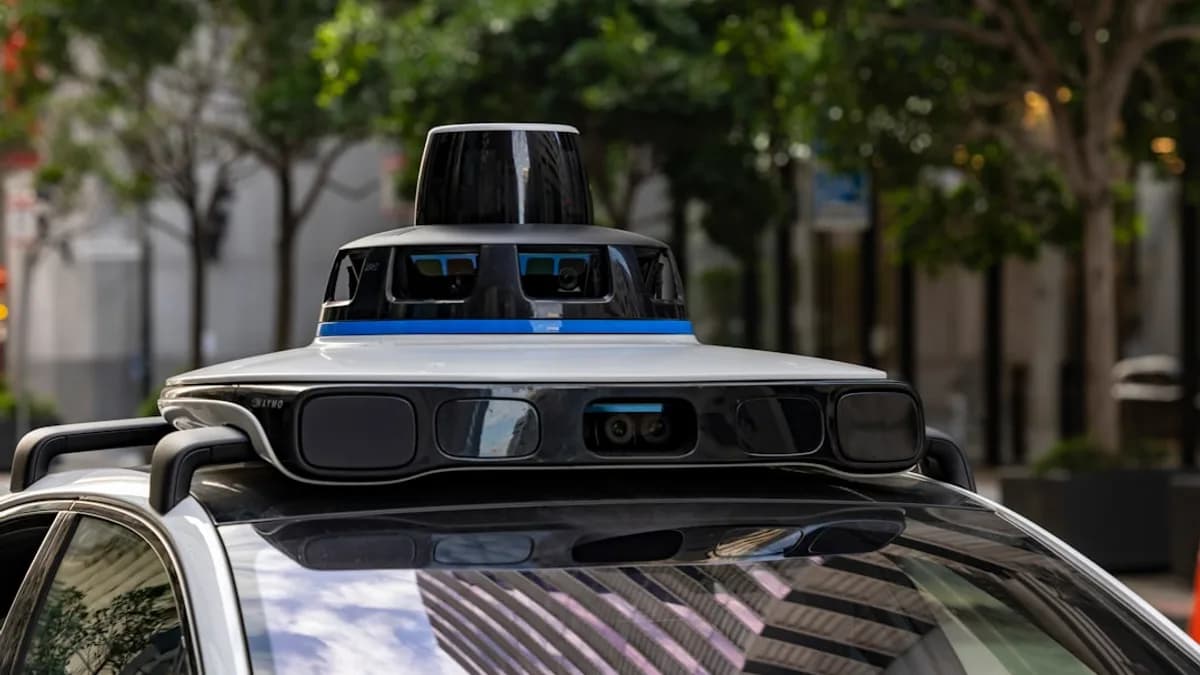
Ouster Unveils Revolutionary Color Lidar Sensor to Transform Vehicle Perception
Ouster just pulled the wraps off a color lidar sensor that promises to upend how machines see the world—by capturing both depth and color image data in a single shot. CEO Angus Pacala calls this the “holy grail” of sensing tech, a claim that’s hard to dispute given how long the industry has chased true colorized 3D perception. Pacala unveiled the new sensor on May 4, touting it as a direct rival—and possible replacement—for traditional cameras in autonomous vehicles, robotics, and security, according to TechCrunch.
The sensor fuses high-resolution color with precise depth, producing point clouds that look more like photographs than the grainy, grayscale maps current lidars spit out. Ouster says its device captures millions of points per second, overlays photorealistic color, and works in a range of lighting conditions—including near-total darkness where cameras fail. The company’s demo showed vivid, colored 3D scans of city streets, pedestrians, and vehicles in challenging scenes that would stymie rival systems.
Ouster claims the new sensor can plug directly into existing AV and robotics stacks, requiring minimal integration headaches. While pricing wasn’t disclosed, Pacala hinted at “cost parity” with current high-end lidars, which typically run $1,000 to $10,000 per unit in volume. With field pilots starting this quarter, Ouster is betting that automakers and robotics firms will see enough value to jump ship from legacy camera-plus-lidar setups.
How Ouster’s Color Lidar Sensor Enhances Autonomous Vehicle Safety and Performance
Traditional autonomous vehicles rely on a patchwork: lidars for depth, cameras for color, and radar for motion. Each system has its flaws—camera-only vehicles struggle in fog or low light, while lidar-only platforms miss color cues critical for reading traffic signals, brake lights, or construction markers. Ouster’s color lidar aims to kill two birds with one sensor, fusing the best of both worlds in real time.
This isn’t a small upgrade. Direct colorized point clouds allow algorithms to recognize objects faster and with more certainty—no more lag from fusing separate camera and lidar data. The result: sharper detection of pedestrians wearing dark clothing at night, accurate reading of traffic cones or signs in confusing urban layouts, and better classification of vehicles and obstacles in split-second decisions. In a sector where false positives and missed objects still trigger multi-million-dollar recalls, that’s a rare edge.
Low-light and night driving are where the sensor flexes most. Traditional RGB cameras often degrade to useless blur after dusk, a key reason why full Level 4 autonomy has remained elusive. Lidar, by design, doesn’t care whether it’s noon or midnight—Ouster’s color lidar takes this further by providing color context even at night, which could help AVs interpret taillights, emergency vehicles, or temporary hazards. That’s a leap for urban delivery robots too, which often operate after hours.
For industrial robotics, warehouse AGVs, and security, the ability to “see” in true color with depth in all conditions could cut incident rates and shrink false alarms. Insurers and regulators, always wary of edge cases, will be watching closely for real-world safety data once these sensors hit the road.
The color lidar approach also promises to simplify sensor suites. Fewer devices mean less wiring, lower power draw, and streamlined compute pipelines. Tesla has long argued that pure camera systems are the future, but Ouster’s gambit suggests that the market may instead consolidate around hybrid sensors—especially if the price matches high-end lidar. Still, technical challenges remain: color accuracy under variable lighting, sensor calibration, and data bandwidth will be new battlegrounds as rivals race to catch up.
Next Steps for Ouster’s Color Lidar: Market Adoption and Industry Implications
Ouster will begin shipping early units to pilot partners this summer, with mass production slated for early 2027. The company is already courting major AV and robotics players—expect announcements of partnerships or pilot deployments with top-five automakers and leading warehouse automation firms in the coming months. These early deals will be crucial: the first real-world crashes or headline-grabbing safety saves will dictate how quickly the industry pivots.
The competitive stakes are high. Velodyne, Hesai, and Luminar have all teased “multimodal” sensors, but none offers full-color point clouds with this level of integration. If Ouster’s sensor proves reliable at scale, rivals will have to accelerate their own R&D or risk losing OEM contracts. The move could also spark a pricing war, compressing margins across the $2 billion automotive lidar market and reshaping procurement decisions for years.
Industry insiders are watching for two signals: whether Ouster can meet automakers’ brutal reliability standards, and how quickly regulators approve the sensor for on-road use. The NHTSA and Euro NCAP will likely scrutinize the color lidar’s performance in real-world edge cases and crash investigations. Meanwhile, AV firms—especially those burned by camera-only failures—may see color lidar as the missing piece for unlocking Level 4 and 5 deployments.
The next six months will be decisive. If Ouster’s pilots show tangible safety gains and smooth integration, expect a wave of sensor suite redesigns and a fresh scramble among AV and robotics leaders. If not, the status quo—bulky, multi-sensor arrays and patchwork software—may linger. The race for the best machine vision is far from over, but color lidar just raised the bar.
Why It Matters
- Ouster's color lidar could simplify and improve perception systems for autonomous vehicles and robotics.
- Combining depth and color in one sensor enhances safety and performance in challenging environments.
- If widely adopted, this technology may reduce reliance on traditional cameras, changing industry standards.