Oura’s confidential IPO filing turns a smart ring company into a public-market test of whether premium health hardware can be valued like recurring software. That question matters most for investors, but it also lands on wearable makers, health-data partners, and customers who have bought into Oura’s promise of passive tracking.
The Finnish company said Thursday that it confidentially submitted a Form S-1 to the U.S. Securities and Exchange Commission ahead of an IPO, according to TechCrunch. Because the filing is confidential, share count, pricing, financial statements, and risk factors remain out of view.
That makes the next phase less about the headline and more about the reveal. Can Oura persuade public investors — as SpaceX’s $1T IPO pitch faces its own scrutiny — that it is not just a device seller waiting for replacement cycles, but a health data and subscription business with durable economics?
Investors Will Look Past the 5.5 Million Rings Sold
Oura has real scale for a category that still sits outside the smartwatch mainstream. At the time of its Series E last September, the company said it had sold 5.5 million rings to date, up from 2.5 million the prior year. That round raised $875 million at an $11 billion valuation, more than double the $5 billion valuation from a prior 2024 round.
Those numbers give Oura a strong IPO story. They do not complete it.
Public investors will want to see the quality of that growth. Unit sales answer one question: has the product found buyers? The S-1 should answer harder ones:
- Revenue mix: How much comes from rings versus subscriptions?
- Margins: How profitable is the hardware after manufacturing, logistics, and support?
- Retention: Do customers keep paying after the initial purchase?
- Cash burn: How much capital is needed to sustain growth?
- Geography: How dependent is Oura on specific markets?
The subscription layer is the part that could reshape the valuation debate. SiliconANGLE reported that paid membership is expected to pass 5 million this quarter, and that the Oura Ring 4 starts at $349, with full access to sleep, recovery, and readiness scores behind a $5.99-a-month subscription.
That model gives Oura a software-style argument. But investors will test whether the subscription is essential, sticky, and expanding — or merely an add-on attached to a premium gadget. Which line in the S-1 will matter more: hardware revenue or recurring membership growth?
Chief Executive Tom Hale told CNBC in November that 2026 sales could come in “close to $2 billion,” though SiliconANGLE reported Oura’s own official guidance for the year is closer to $1.5 billion.
Builders Need Oura to Prove Smart Rings Are More Than Mini Watches
Oura’s product pitch has always been narrower than a smartwatch and more focused than a general fitness band. TechCrunch notes that the ring tracks activity, sleep, and daily “readiness,” among other health metrics. The company has also introduced a proprietary AI model geared toward women’s health, aimed at its growing base of women customers.
That matters because Oura’s IPO story depends on category definition. If smart rings are a distinct layer of health monitoring, Oura can argue it leads a specialized market. If they are treated as just another wearable form factor, bigger device makers have an easier story to tell.
The company’s own positioning points toward software interpretation, not raw sensor collection. “Readiness,” recovery, sleep scoring, and women’s health insights are not just device outputs. They are packaged judgments. That is where Oura can build subscription value — and where scrutiny rises.
For builders across health hardware, the S-1 will be a signal. If Oura shows strong recurring revenue and disciplined costs, it could support more funding for specialized devices. If the numbers look like a hardware business with expensive growth, startups will face a colder read.
Readers tracking adjacent wearables should compare this with the filing cadence around Unnamed Xiaomi Smart Band Hits Global Filings Early, where scale and distribution point to a different playbook than Oura’s premium ring strategy.
Buyers Are Paying for Health Insights, Not Just a Ring
For consumers, Oura’s value is not the metal band. It is the interpretation layer around sleep, recovery, readiness, and daily health signals.
That distinction becomes sharper as Oura moves toward public markets. A public company has to keep expanding revenue. For users, the practical question is whether that growth comes from better features, deeper analytics, international expansion, or more aggressive monetization of the subscription relationship.
The source material does not disclose Oura’s churn, user engagement, or subscription attach rate. Those are the missing numbers that will decide how strong the consumer bond really is. A sold ring is a past transaction. A paid membership is an ongoing vote.
Oura also has use cases beyond individual buyers. SiliconANGLE reported that the U.S. Department of Defense is a customer, academic medical centers use the rings in research studies, and Strava connects Oura data into its app. That gives Oura a broader proof set than consumer wellness alone.
Still, health data raises a sharper burden than ordinary gadget telemetry. MLXIO analysis: as Oura grows, investors will want more monetization from insights, while users and institutional partners will care about consent, data sharing, and trust. The S-1 may not resolve those tensions, but it should show how the company frames them.
Samsung, Apple, and Cheaper Rings Make the Category Harder to Defend
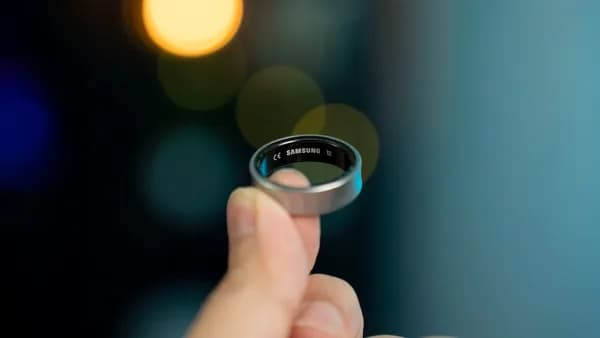
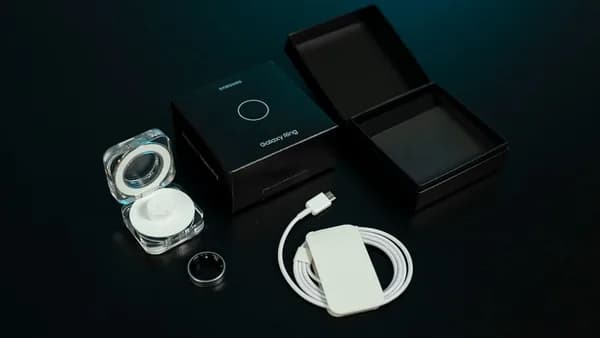
Oura is not entering public markets alone in smart rings. SiliconANGLE reported that Samsung Electronics brought the Galaxy Ring to market in July 2024 at $399, without a subscription requirement. It also cited cheaper rivals including RingConn at $279, India’s Ultrahuman, and Zepp Health, owner of Amazfit. Apple has been awarded smart ring patents but has not shipped a product.
That competitive map creates a clean pressure test.
| Company or product | Source-supported position | IPO relevance for Oura |
|---|---|---|
| Oura | 5.5 million rings sold to date as of last September | Must defend premium pricing and subscription value |
| Samsung Galaxy Ring | Launched July 2024 at $399, no subscription required | Challenges Oura’s paid-membership model |
| RingConn | Cited at $279 | Pressures pricing from below |
| Apple | Has smart ring patents, no shipped product | Represents potential future platform risk |
Oura’s defense cannot rely only on being early. It will need to show that its scores, AI features, research usage, partnerships, brand, and subscription layer create switching costs that cheaper hardware cannot quickly copy.
This is also where broader device context matters. As we covered in 7M Ray-Bans Drag Google Smart Glasses Back From the Dead, consumer hardware tied to AI and ambient data is again attracting attention. Oura’s difference is that it already has a paid health-tracking base; the IPO will test how much that is worth.
The Market Signal Depends on the First Public Numbers
The confidential filing route lets Oura work through SEC review before publishing terms. That is normal enough. But it also means the market is still reacting to fragments: rings sold, last private valuation, reported revenue, reported membership scale, and management’s sales commentary.
MLXIO analysis: the strongest version of the Oura IPO thesis is that hardware opened the customer relationship, while subscriptions and AI health insights deepen it. The weakest version is that Oura remains dependent on device sales in a category where larger electronics companies and lower-priced rivals can squeeze differentiation.
Evidence that would strengthen the thesis:
- Subscriptions growing faster than hardware sales.
- Retention strong enough to support recurring revenue claims.
- Margins improving as software contributes more.
- International growth without heavy cash burn.
- AI health features that increase paid engagement.
Evidence that would weaken it:
- Hardware still dominating revenue.
- Membership churn undermining recurring revenue quality.
- Inventory or acquisition costs eating into growth.
- Competition forcing price cuts or reducing subscription appeal.
Oura’s IPO may not decide the future of wearables. It will, however, give investors a rare public look at whether a focused health device can become a durable data business. The S-1 will tell us whether the ring is the product — or just the entry point.
The Bottom Line
- Oura’s IPO will test whether investors value premium wearables as hardware businesses or subscription-driven health platforms.
- The confidential filing leaves key details like revenue mix, margins, retention, and cash burn unknown.
- Public-market scrutiny could influence how other health-data and wearable companies position themselves.