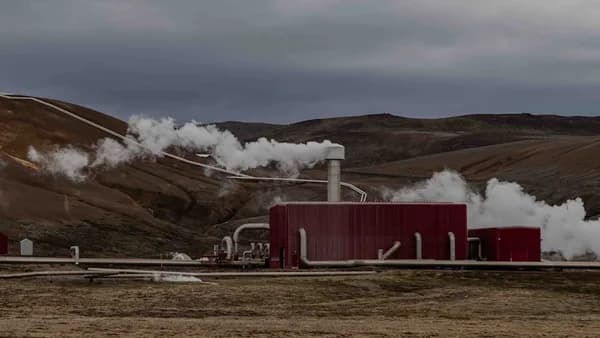
The question around Deep Fission is not whether investors like nuclear power. It is whether they will fund a company whose public-market story has become more ambitious while several disclosed milestones look less certain.
Deep Fission is seeking a Nasdaq IPO that could raise $157 million and value the company at up to $1.66 billion, according to TechCrunch. The pitch is clear: build subterranean reactors that can help power AI data centers. The complication is also clear: this is not the first time Deep Fission has said it was going public.
Why Is Deep Fission Going Public Again If It Already Announced A Public Listing?
Deep Fission said last September that it had gone public through a reverse merger with Surfside Acquisition, a Delaware shell company. That deal included a $30 million concurrent private placement at $3 a share.
But the public listing was public in a technical sense, not a trading one. TechCrunch reports that the Surfside reverse merger made Deep Fission a reporting company with SEC obligations, but its stock never traded. The company had said it planned to list on OTCQB, yet searches there did not return Deep Fission results, and the company’s S-1 says its stock has never been publicly traded.
That distinction matters. A reporting company is not the same thing as a liquid public company with price discovery, institutional coverage, and market discipline. The new filing is a more conventional Nasdaq IPO attempt, with a proposed price range of $24 to $26 a share.
| Deep Fission event | What changed | Why it matters |
|---|---|---|
| September reverse merger | $30 million private placement at $3 a share | Created SEC reporting obligations, but no traded stock |
| Current Nasdaq IPO plan | Up to $157 million at $24 to $26 a share | Seeks real public-market capital and valuation of up to $1.66 billion |
| December filing vs May S-1 | Criticality target no longer estimated | Suggests schedule certainty has weakened |
Deep Fission declined to comment to TechCrunch, citing the quiet period before its IPO.
Does A $157 Million Raise Match The Scale Of The Nuclear Problem?
For most startups, $157 million is a major raise. For a nuclear company trying to design, license, drill, build, and demonstrate a first-of-a-kind reactor concept, it reads more like runway than full deployment capital.
That is the first investor tension. Deep Fission was reportedly struggling to raise a $15 million funding round one year ago. Now it is seeking a valuation of up to $1.66 billion. The company has also received an $80 million equity investment, including $20 million from data center developer Blue Owl, which signed a non-binding MOU for future power plants.
Still, the S-1 carries the same “going concern” warning that appeared in December. If Deep Fission does not complete the IPO, it could run out of money in the next 12 months.
The financial trend has moved in the wrong direction:
- Deficit: Grew to $88.1 million as of March, from $56.2 million.
- Cash decline: Cash and equivalents fell by $6.4 million, or about 7%, in the last month and a half.
- Offering dependency: The company says the IPO matters to its ability to keep operating.
MLXIO analysis: this makes the IPO less a victory lap than a financing bridge. If investors buy the deal, they are not just betting on nuclear demand from AI infrastructure. They are betting that Deep Fission can turn a public listing into enough credibility, capital access, and milestone delivery to stay ahead of its burn.
For readers comparing startup financing risk across sectors, this is a very different profile from software-oriented early-stage stories such as Startup Battlefield 200 Puts $100K on a 7-Day Clock or $10.5M Says Stilta Can Find Patents Firms Forgot They Had. Deep Fission’s challenge is not only product-market fit. It is physics, drilling, licensing, and capital intensity.
Can Deep Fission Drill Its Way Into A Reactor Business?
Deep Fission’s core concept is unusual: place small nuclear reactors deep underground. The company says it is prioritizing drilling and has started the first of three test wells. The current well is designed to gather data “up to 6,000 feet deep.”
But the test well is eight inches in diameter. Commercial-scale boreholes would be far larger. Deep Fission says it will need boreholes 30 to 50 inches in diameter and roughly a mile deep, though it has not settled on a final dimension.
That gap is not cosmetic. The company’s reactor design depends on knowing what size hole it can reliably drill. Until that is resolved, the engineering target remains partly unsettled.
The practical risks stack quickly:
- Drilling: Commercial boreholes would be larger than what is typically used in the oil and gas industry, according to TechCrunch.
- Design lock: Reactor dimensions depend on borehole feasibility.
- Maintenance: A reactor a mile underground raises access and retrieval questions.
- Licensing: The Nuclear Regulatory Commission will still need evidence, not concept art.
- Schedule: Deep Fission once hoped to reach criticality by July 2026. The new filing gives no estimate.
Criticality is the point at which a nuclear chain reaction becomes self-sustaining. In nuclear development, walking back a criticality date is not a minor calendar edit. It changes how investors should read the whole plan.
Is The Market Rewarding Nuclear Ambition More Than Nuclear Progress?
The timing is convenient for Deep Fission. Investor excitement around fission power has been rising, and TechCrunch notes that X-energy went public last month in an upsized IPO.
But the comparison cuts against Deep Fission as much as it helps. X-energy is generating revenue and is farther along in the Nuclear Regulatory Commission licensing process, according to TechCrunch. Deep Fission is still trying to prove the drilling and reactor concept can become a buildable project.
That contrast is the heart of the IPO debate. Public markets can fund long-duration infrastructure companies. They can also misprice stories when the narrative is stronger than the evidence.
Deep Fission’s valuation target asks investors to treat future execution as financeable now. Yet the latest filing shows a company with a worsening deficit, a going-concern warning, no traded-stock history despite an earlier “going public” announcement, and a reactor timeline that has become less specific.
MLXIO analysis: the company may be trying to convert nuclear enthusiasm into capital before the harder proof points arrive. That is not automatically irrational. But it shifts risk from private backers to public investors earlier in the technical cycle.
Which Stakeholders Are Being Asked To Believe First?
Different groups will read the same filing differently.
For AI data center developers, the appeal is obvious: dense, steady power near future compute demand. But Blue Owl’s MOU is non-binding. Interest in future power plants is not the same thing as a bankable offtake agreement.
For regulators, the question is narrower and tougher: can this design be reviewed, operated, monitored, and made safe under real-world constraints? Deep Fission’s underground approach may be central to its pitch, but it also creates review questions around drilling, access, emergency planning, and long-term operations.
For public-market investors, the issue is timing. Venture investors can accept long periods of technical uncertainty. IPO buyers usually want clearer revenue visibility, milestone discipline, and fewer dependencies on future capital raises.
The company is asking all of these constituencies to move before the key evidence is complete.
What Would Make This IPO Look Better Six Months From Now?
There are three plausible paths from here.
Bull case: The IPO closes near target terms, Deep Fission funds clear engineering and regulatory milestones, drilling data supports commercial borehole assumptions, and strategic customers move beyond non-binding interest.
Middle case: The listing buys time, but the company needs repeated raises. The stock then trades on announcements, not commercial traction, and dilution becomes part of the story.
Bear case: Investors reject the valuation, the offering is delayed or downsized, or post-listing scrutiny focuses on the slipped criticality timeline, cash burn, and unresolved drilling scale-up.
The evidence that would strengthen Deep Fission’s case is specific: successful larger-diameter drilling data, a clearer reactor timeline, deeper NRC progress, binding customer commitments, and cost estimates tied to field results. The evidence that would weaken it is just as clear: more schedule slippage, more going-concern pressure, or IPO proceeds used mainly to extend runway without reducing technical uncertainty.
Public-market tolerance for nuclear startups will rise only if companies turn AI power demand and clean-energy urgency into permitted, financeable, buildable projects. Deep Fission has a story investors want to hear. The IPO will test whether they think it has enough proof.
The Bottom Line
- Deep Fission is asking public investors to back a much larger valuation despite limited evidence of traded-market validation.
- The gap between becoming an SEC reporting company and having publicly traded shares is central to judging the IPO story.
- Its AI data center nuclear pitch taps a hot market, but investors will scrutinize execution risk and prior listing claims.