Why Solar-Powered Smart Sprinklers Could Revolutionize Lawn Care in 2026
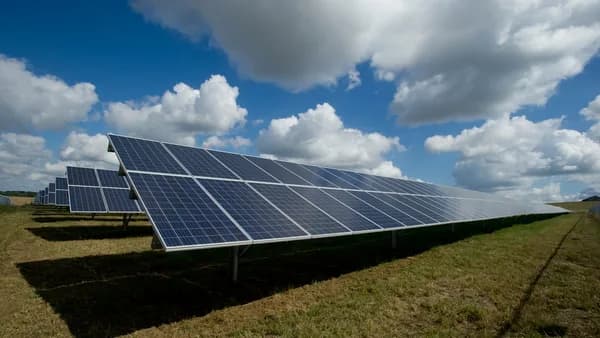
Solar panels are finally making their way into mainstream irrigation, and the Oto Smart Sprinkler signals a leap forward for sustainable lawn care. The central appeal: Oto runs on sunlight, requiring about three hours of direct sun each day to keep its battery charged and operations fully autonomous. That means property owners can skip hardwiring, battery swaps, and the guilt of running up their utility bill just to keep their grass green. This approach addresses a foundational problem for smart irrigation — reliable power in outdoor, sometimes awkward-to-wire locations.
Solar integration also sidesteps some of the environmental baggage of traditional irrigation. By cutting grid reliance and maximizing energy efficiency, the Oto Smart Sprinkler has the potential to shrink a home's carbon footprint and encourage broader adoption of green tech in everyday devices. The basic equation is clear: less fossil-fueled electricity for lawn care, more hands-off convenience for users. That promise is why solar-powered sprinklers like Oto are attracting attention, according to Wired.
But the real-world impact hinges on whether this solar-first approach works for a wide spectrum of users — and that comes down to the technical and climate-driven limitations.
Breaking Down the Oto Smart Sprinkler’s Solar Charging Efficiency and Usage Requirements
Oto’s make-or-break spec is its need for three hours of direct sunlight per day to operate reliably. For homeowners in sunny regions, this is trivial. In shaded yards, dense urban settings, or cloud-prone climates, it’s a potential dealbreaker. The device’s solar panel must capture enough energy during that window to power daily irrigation cycles — a tall order in less-than-ideal conditions.
The source doesn’t specify the exact battery chemistry or storage capacity, so it’s unclear how much reserve power Oto offers for overcast stretches. That gap raises questions: Can the unit survive a week of rain or a stretch of fog without manual intervention? How does performance degrade if sunlight is intermittent? Without these details, buyers face uncertainty about maintenance and reliability.
What is clear: Oto’s value proposition depends on its charging environment. If your lawn gets plenty of direct sun, Oto promises near-total automation. If not, you’re gambling with your lawn’s health, or you’ll need a backup plan. That charging requirement also creates a natural filter on Oto’s addressable market — not every yard is a fit, and the company’s own marketing leans on this sunlight threshold. In practice, the three-hour requirement is both a selling point and a limitation, giving early adopters reason to scrutinize their own property’s exposure before ordering.
Comparing Oto Smart Sprinkler’s Features and Performance Against Competitors in the Smart Irrigation Market
The Oto Smart Sprinkler’s main pitch is simplicity. According to Wired, setup is easy and day-to-day management is minimal — a sharp contrast with legacy systems that demand complex wiring and scheduling. App integration allows users to fine-tune watering schedules, monitor system health, and adjust for weather, though the source doesn’t detail the app’s feature set or smart integrations.
What Oto doesn’t offer, at least in the available material, is a clear comparison on pricing, long-term durability, or advanced solar capabilities relative to other smart sprinklers. There’s also no data on customer feedback, return rates, or performance benchmarks under different environmental conditions. This makes it difficult to assess whether Oto is setting a new bar or simply matching the competition in a solar-powered package.
The only hard differentiator so far: that sunlight requirement. If Oto’s solar tech is more efficient or its battery management smarter than rivals, the source doesn’t say — and that’s a gap for buyers trying to justify a switch.
Diverse Stakeholder Perspectives: Homeowners, Environmentalists, and Industry Experts Weigh In
For homeowners, Oto’s selling points are obvious: set-it-and-forget-it irrigation, no wiring headaches, and the satisfaction of using renewable power. If the three-hour sunlight rule is met, the system promises real labor and water savings, especially compared to basic timers or manual watering.
Environmentalists are likely to back any shift toward solar, especially for traditionally wasteful home systems like sprinklers. Reduced grid draw means lower emissions, and smart scheduling (if implemented well) can further cut water use — a win for drought-prone regions.
Industry experts, though, would likely push for more transparency on technical specs and performance data. The lack of detail on battery resilience and solar efficiency means the Oto Smart Sprinkler’s innovation is more about promise than proven breakthrough. Without hard numbers or peer-reviewed benchmarks, the long-term implications for the smart irrigation market remain an open question.
Tracing the Evolution of Smart Sprinkler Technology Leading Up to the Oto Model
Irrigation tech has come a long way from manual hoses and mechanical timers. The first wave of smart sprinklers focused on app-based scheduling and weather-aware watering, but most still tethered users to household power or replaceable batteries. Solar integration started appearing in garden gadgets in the last decade, but reliability and power output were limiting factors.
Oto’s model fits into a new generation of smart home devices that prioritize sustainability and user autonomy — a shift from convenience-only to green-first design. By leaning on solar power and pushing for true “set and forget” operation, Oto is betting that consumers are ready to trade minor installation constraints (like the need for sunlight) for ongoing energy independence. If it succeeds, Oto could nudge the broader smart home market toward solar-first thinking.
What the Oto Smart Sprinkler Means for Homeowners and the Future of Sustainable Lawn Care
In practical terms, Oto promises to make lawn care both easier and greener — if your property meets its sunlight requirements. Users stand to save on electricity, avoid the hassle of trenching for power lines, and potentially reduce water bills through smarter scheduling. Maintenance could drop to near zero, since there’s no battery to swap or power cable to worry about.
But these benefits are not universal. Shaded yards and unpredictable weather regions are left out or forced to compromise. The three-hour sun threshold becomes the dividing line between “set and forget” and “set and hope.” Oto’s true impact will be measured by how many homeowners can actually reap its full benefits — and whether the company can further reduce its sunlight needs in future models.
If Oto’s solar-first model gains traction, it could reset consumer expectations. People may come to demand solar power as a baseline in outdoor tech, pushing the industry to innovate beyond basic grid-tied convenience.
Forecasting the Future: Innovations and Challenges Ahead for Solar-Powered Smart Sprinklers
The next evolution in smart sprinklers will likely hinge on more efficient solar cells and smarter battery management. If future Oto models (or competitors) can operate with less sunlight or store more energy, the addressable market grows. Integration with broader smart home systems could add value — think automated weather response or water usage analytics.
But key challenges remain. Weather variability and property-specific constraints (like trees or building shadows) will always limit some users. Until solar-powered sprinklers can store enough energy to ride out long cloudy stretches, these systems will be best for sun-drenched homes.
What to watch: Any move by Oto to publish real-world performance data, or to roll out models with lower sunlight requirements, would signal confidence and technical progress. Buyers should keep an eye on whether Oto’s promise of “solar simplicity” translates to reliable, universal performance — or remains a solution for only the sunniest lawns.
Why It Matters
- Solar-powered smart sprinklers like Oto reduce reliance on grid electricity, making lawn care more sustainable.
- Autonomous, solar-charged operation eliminates the need for hardwiring or frequent battery maintenance.
- The device's effectiveness depends on local sunlight conditions, which could limit its appeal in shaded or cloudy regions.