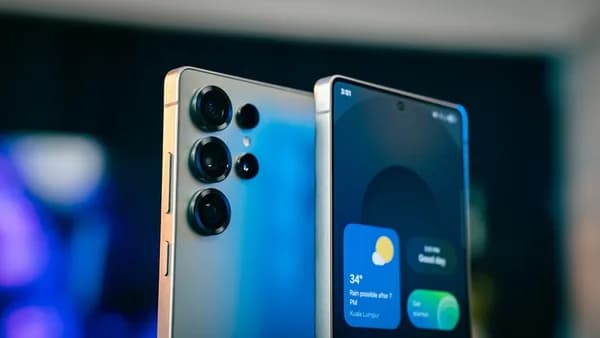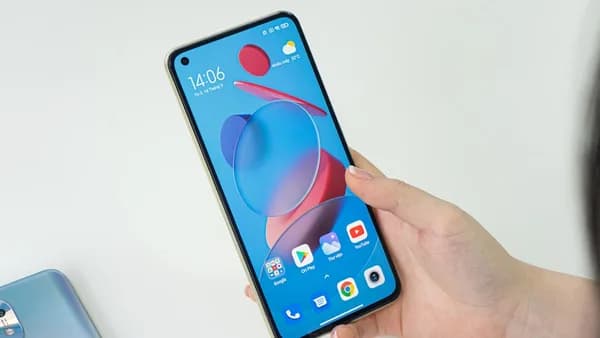
OnePlus may be testing a compact flagship with an unreleased Snapdragon 8 Elite Gen 6 chip just as its global compact-phone plans look less certain, a split that matters most to buyers outside China who want smaller Android flagships but may never get official access.
The reported device has a 6.3-inch flat display and is being evaluated with Qualcomm’s next flagship silicon, according to Notebookcheck, citing tipster Digital Chat Station. The phone is believed to be the OnePlus 16T, though the leak does not name it directly.
The tension is clear: OnePlus appears to be keeping the compact flagship idea alive, but the reported cancellation of the OnePlus 15s — expected to be the global version of the China-only OnePlus 15T — raises the obvious buyer question: if this phone launches, who actually gets to buy it?
OnePlus builders face a compact flagship problem with no finalized spec sheet
The most revealing part of the leak is not the screen size. It is the chip.
Testing a prototype with Qualcomm’s unreleased Snapdragon 8 Elite Gen 6 points to a device still deep in development, not something headed for shelves soon. Notebookcheck says the chipset is a next-generation platform built on a 2nm Snapdragon platform, and the rest of the phone’s specifications are still not finalized.
That gives OnePlus room to change the product. It also makes the leak more strategically useful than complete.
Why the chip choice matters
A compact phone with a top-tier Snapdragon chip would not be a midrange “small phone” play. It would signal a performance-first device in a smaller shell. That is the entire appeal — and the central engineering constraint.
A smaller body gives less room for battery, cooling hardware, and internal layout flexibility. The source does not provide thermal data or battery figures for the rumored 16T, so any performance claim would be premature. But the choice of flagship silicon does narrow the likely positioning: this is not being described as a cheap compact model.
The naming also remains unsettled. Digital Chat Station reportedly did not explicitly identify the phone as the OnePlus 16T. That label is an inference based on the processor class and OnePlus’ existing compact-performance line in China.
One question for builders: does OnePlus freeze the compact flagship formula early, or keep the prototype flexible until Qualcomm’s next platform launch is closer?
Buyers get a smaller screen, but not an old-school small phone
The rumored 6.3-inch flat display is compact only by current flagship standards. It is not a return to truly tiny phones.
Notebookcheck’s comparison point is the OnePlus 15T, which has a 6.32-inch AMOLED display, 165Hz refresh rate, Snapdragon 8 Elite Gen 5, 50MP dual rear camera setup, and 7,500mAh battery, a capacity point that makes the 8,000mAh OnePlus N6 leak relevant context. The rumored 16T appears to preserve the same rough screen class while moving to the next Qualcomm flagship generation.
| Device | Status | Display | Chipset | Other source-backed details |
|---|---|---|---|---|
| OnePlus 15T | Launched in China | 6.32-inch AMOLED, 165Hz | Snapdragon 8 Elite Gen 5 | 50MP dual rear camera, 7,500mAh battery |
| OnePlus 16T | Reported prototype | 6.3-inch flat display | Snapdragon 8 Elite Gen 6 | Final specs reportedly not finalized |
The reported Q1 2027 launch window also matters. Notebookcheck says that timing would track with the March debut of the 15T this year. If accurate, OnePlus is not merely testing a one-off device. It may be maintaining an annual compact flagship cadence, at least for its home market.
The buyer trade-off
A flat 6.3-inch screen will appeal to users who dislike oversized flagship slabs. But the final product will depend on unresolved details: battery capacity, charging, camera hardware, software support, and whether the global model exists at all.
That last point dominates the buying decision. A great compact flagship is far less useful to international buyers if it becomes an import-only product with regional compromises.
For readers tracking OnePlus’ broader device segmentation, this sits far above the budget conversation around $209 OnePlus N Series Could Threaten Nord's Budget Crown, and it contrasts with the uncertainty around newer OnePlus launches such as OnePlus N6 Bets on India With No Specs on the Table.
One question for buyers: is a compact flagship still attractive if the official global version never arrives?
OnePlus’ global pullback turns a spec leak into a distribution story
The biggest caveat is availability.
Notebookcheck ties the leak to reports that OnePlus may have scrapped the OnePlus 15s, which was expected to be the global version of the China-exclusive OnePlus 15T. The same report says that possible cancellation aligns with ongoing claims that OnePlus is scaling back operations in several international markets.
That changes how this leak should be read. The OnePlus 16T may be real, powerful, and close to the 15T’s compact formula. It may still matter little to global buyers if OnePlus keeps it China-first or China-only.
Why limited release changes the product’s meaning
If OnePlus launches the 16T only in its home market, the device becomes less of a global flagship challenger and more of a signal about where the company wants to spend product risk.
A limited-market launch would let OnePlus keep serving compact-performance users without committing to broader channel support. That is analysis, not confirmed strategy. The source only supports the uncertainty: the 15s may not launch globally, and the future global version could still arrive as a OnePlus 16s next year.
The open distribution question also affects how much weight to place on the specs. A Snapdragon 8 Elite Gen 6 compact phone sounds aggressive. But official availability determines whether it becomes a real option for international buyers or just another interesting Chinese-market device.
One question for OnePlus: does the company want the compact flagship to rebuild international enthusiast attention, or is the safer play to keep it contained?
Qualcomm gets a flagship showcase only if the small-phone execution holds
For Qualcomm, the reported chip placement is notable because a compact device is a tougher stage than a larger flagship body.
Notebookcheck says the prototype is being tested with the Snapdragon 8 Elite Gen 6, expected to be manufactured on a 2nm process. The source does not state performance targets, efficiency claims, benchmark numbers, or thermal expectations. Those remain unknown.
Still, if OnePlus ships a compact flagship with that chip, the device would put Qualcomm’s next flagship platform into a form factor where sustained performance is harder to hide behind sheer physical size. That makes execution crucial.
A smaller flagship with weak endurance or throttling would undercut the point of using top-tier silicon. A smaller flagship that holds up well would make the chip choice feel justified. For now, that is the test — not a conclusion.
One question for Qualcomm and OnePlus: can the next flagship Snapdragon make a compact performance phone feel premium without forcing obvious compromises?
The OnePlus 16T thesis: real product signal, unresolved global payoff
The most grounded read is this: OnePlus has not abandoned compact flagships, but it may no longer see global availability as automatic.
The evidence supports that narrow thesis. A prototype reportedly exists. It uses a 6.3-inch flat display. It is being tested with Snapdragon 8 Elite Gen 6. Development is reportedly progressing normally. A Q1 2027 launch window is plausible, based on the 15T’s March debut. But the source does not confirm the final name, final specs, global release, or whether a OnePlus 16s will follow.
That leaves three practical watch items:
- Availability: A confirmed global or regional launch would make this more than a China-market enthusiast device.
- Final hardware: Battery size, camera setup, and display refresh rate will determine whether the 16T improves on the 15T formula or simply updates the chip.
- Naming: If OnePlus uses 16T in China and 16s globally, that would echo the reported 15T/15s split. If it skips the global variant again, the pullback thesis strengthens.
The leak is compelling because it points to ambition in product design and caution in market reach. Evidence that the phone is certified, priced, or announced outside China would weaken the limited-rollout reading. Another skipped global compact model would confirm it.
The Bottom Line
- OnePlus may still be developing a compact flagship, but global availability remains uncertain.
- A Snapdragon 8 Elite Gen 6 chip would position the phone as a true high-end compact rather than a smaller midrange device.
- Buyers outside China could face limited official access if OnePlus repeats its China-only compact strategy.