Why AMD’s Ryzen 4000 Series Faces Growing Doubts in the Laptop Market
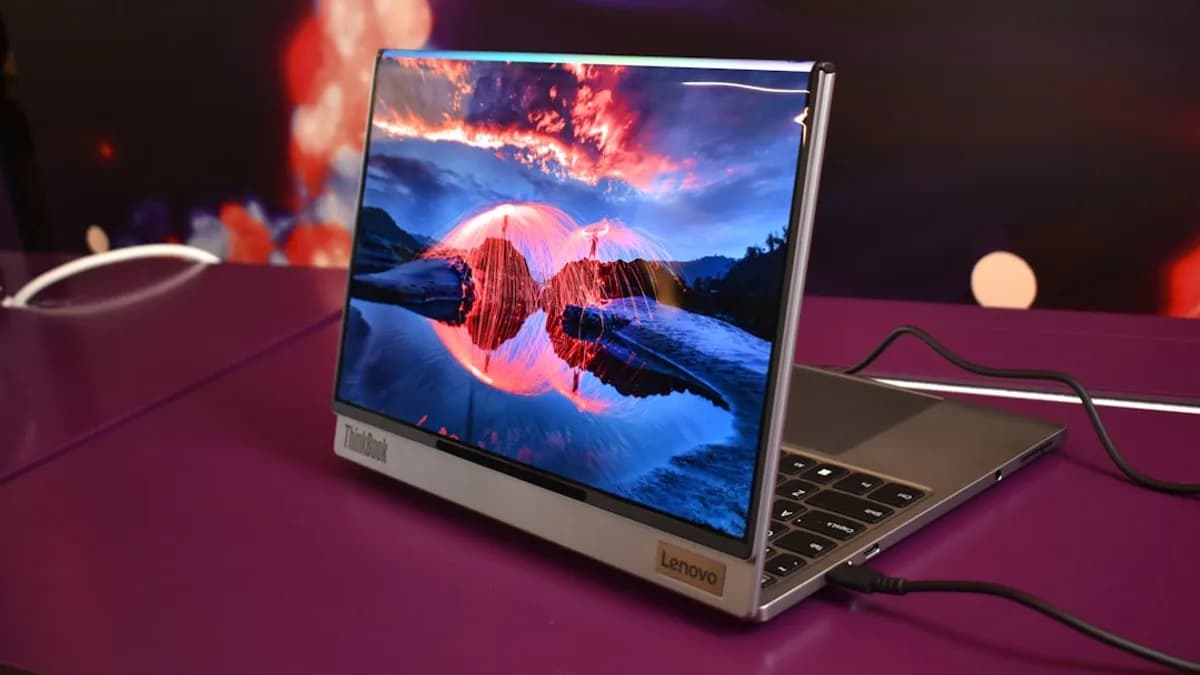
AMD’s Ryzen 4000 series isn’t just underwhelming—it’s a warning sign for a company that once forced Intel to scramble. The Lenovo IdeaPad Pro 5 14, one of the most visible Ryzen AI laptops, is a showcase for what went wrong. Expectations were sky-high: more cores, smarter integrated AI, a generational leap in battery life. What users got was a chip that felt more like a minor patch than a bold advance, especially against the backdrop of Intel’s Meteor Lake blitz. Reviewers and early adopters aren’t shy about their disappointment. The gap between marketing promises and real-world gains is wide, even by CPU industry standards. As Notebookcheck reports, the latest Ryzen AI launch feels less like a stride forward and more like treading water in a rising tide of competition.
Performance Shortcomings of Ryzen 4000 Series in Real-World Laptop Use
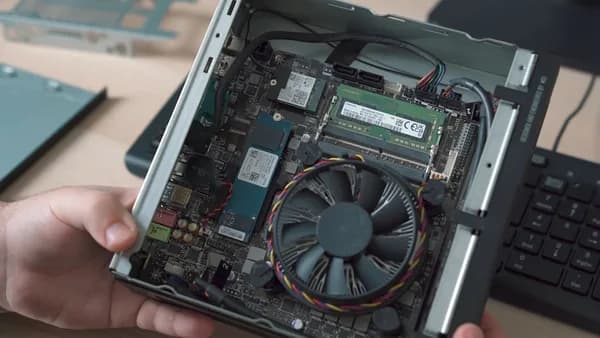
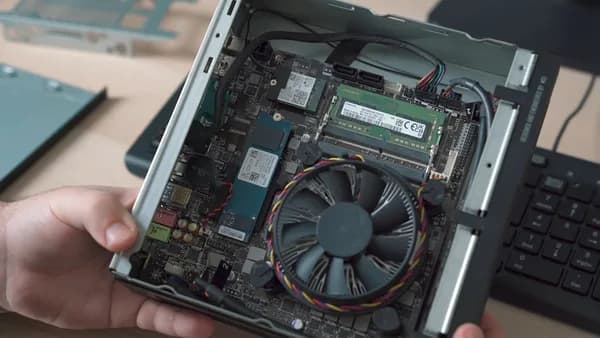
Pop the lid on the Lenovo IdeaPad Pro 5 14, and you’ll find a Ryzen 7 8845HS—on paper, a chip with 8 cores, 16 threads, and a dedicated NPU for AI tasks. In actual workflows, the numbers don’t impress. The Ryzen 4000’s AI acceleration delivers a modest boost: on local image generation tasks (think Stable Diffusion), it lags Intel’s Core Ultra by as much as 30%. In multi-threaded CPU benchmarks, the uplift over the previous Ryzen 7000 series is often single-digit percentage points—a rounding error for most users.
Productivity suffers, too. In sustained loads, thermal throttling kicks in, with performance dipping below expectations for a “next-gen” chip. Video editors and 3D artists chasing quicker exports or more responsive workflows will look elsewhere. Even the integrated Radeon 780M GPU, while solid in isolation, fails to push past Intel’s latest Arc-integrated chips for light gaming and AI-accelerated creative work.
Battery life, long an AMD bragging point, is also stagnant: the Lenovo IdeaPad Pro 5 14 posts runtimes barely above 8 hours in mixed use. That’s fine—but not a leap forward, especially as Apple’s M-series Macs routinely clear 12 hours and Intel’s Meteor Lake chips stretch well past 10. In all, Ryzen 4000 in laptops feels like a placeholder, not a pacesetter. For a generation branded as “AI,” the tangible advantages are thin.
How AMD’s Incremental Upgrades Fail to Impress Amidst Fierce Competition
AMD’s “incrementalism” has caught up with it. The company bet that small tweaks—slightly better efficiency, a few more TOPS for the NPU, a bit more GPU muscle—would be enough to maintain momentum. That strategy looks shaky as Intel and Apple swing for the fences. Intel’s Meteor Lake, with its Foveros packaging and Arc graphics, didn’t just close the gap—it set a new bar for what users expect in mid-2024 laptops. Apple, meanwhile, keeps raising the stakes on performance-per-watt, especially for creative pros who’d never have touched a MacBook five years ago.
The numbers tell the story: AMD’s laptop CPU market share slipped from 20% in Q2 2023 to 16% in Q1 2024, according to Mercury Research. The Ryzen brand, once synonymous with disruption, now risks being shorthand for “good enough.” That’s a dangerous place to be in a segment where buyers are increasingly price-insensitive and spec-obsessed.
It’s not just about the silicon. Intel is winning the narrative war, too. OEMs are touting Intel AI PCs with “Copilot+” features, while AMD’s messaging feels tepid. For consumers, the choice is no longer just about raw cores or clock speed—it’s about workflows, battery life, and future-proofing for AI. AMD’s Ryzen 4000 series doesn’t deliver a clear win on any front. That erodes not just sales, but mindshare.
Acknowledging AMD’s Strengths and the Challenges of CPU Innovation
AMD didn’t forget how to build great chips overnight. The original Ryzen launch in 2017 forced Intel to rip up its roadmap, and the Zen 3 surge in 2020 gave AMD its first taste of premium-market dominance in years. That track record matters. Innovating at this level is brutal: shrinking process nodes, integrating competitive NPUs, and balancing performance with power efficiency is a high-wire act. Even Apple’s M2 stumbled with thermal issues, and Intel’s Rocket Lake was roundly panned for being too hot and late to market.
External shocks haven’t helped. Supply chain snarls have squeezed everyone, but AMD—without the scale of Intel or Apple’s vertical integration—felt it harder. Meanwhile, consumer priorities shifted: remote work, hybrid schedules, and AI hype have changed what buyers want from a laptop. In that context, Ryzen 4000’s stumbles are understandable, if not excusable.
Why AMD Must Innovate Boldly to Regain Laptop CPU Leadership
AMD can’t afford another “placeholder” generation. With Qualcomm’s Snapdragon X Elite moving into traditional laptop turf and Intel doubling down on AI PC, the center of gravity is shifting. The next Ryzen must aim higher: a real leap in AI compute, a radical improvement in efficiency, or a brand-defining feature that forces the market to take notice. Coasting on Zen’s reputation won’t cut it.
AI workloads are already shaping how people use their laptops—from video upscaling to code completion and local LLMs. AMD has the engineering chops and the IP portfolio to compete, but it needs to show it on silicon, not just in press releases. Consumers should demand more—faster, smarter, and genuinely differentiated CPUs. Investors and partners should do the same. If AMD wants to be more than a value pick in the laptop space, the next generation has to swing for the fences, not bunt for first.
The Bottom Line
- AMD’s Ryzen 4000 laptops aren’t delivering meaningful real-world gains over previous generations.
- Intel’s Meteor Lake chips now hold a clear performance lead in AI and productivity tasks.
- Consumers and creative professionals may need to reconsider AMD as the default value choice in laptops.