20 years after the original iPhone arrived in 2007, Apple’s next anniversary device is reportedly chasing the same unfinished idea Jony Ive kept describing: “a single slab of glass.”
That phrase matters because this is not just another thin-bezel rumor. The reported 20th anniversary iPhone points to a deeper reset: Apple trying to make the iPhone feel visually inevitable again, after years of iterative refinements around the notch, Dynamic Island, camera islands, and side buttons. Former Apple design chief Jony Ive framed the long-term destination as an uninterrupted glass object, and Apple appears to have kept that direction alive after his departure, according to 9to5Mac .
The latest claimed piece is deceptively simple: a return to a glass back. Leaker Fixed Focus Digital says Apple’s preferred approach for “next year’s Apple iPhone 20” is to move back from the aluminum used on recent models, with production facilities already prepared.
“For next year’s Apple iPhone 20, the preferred approach is a return to a glass back, with manufacturing quality likely on par with the first-generation Air. The production facilities have already been prepared.”
If accurate, the back panel is not a cosmetic afterthought. It is part of the illusion. A curved front display, hidden sensors, and glass rear surface would all push the same message: the phone is no longer a screen inside a frame. The phone is the surface.
2027 gives Apple a rare anniversary opening to reset the iPhone’s visual language
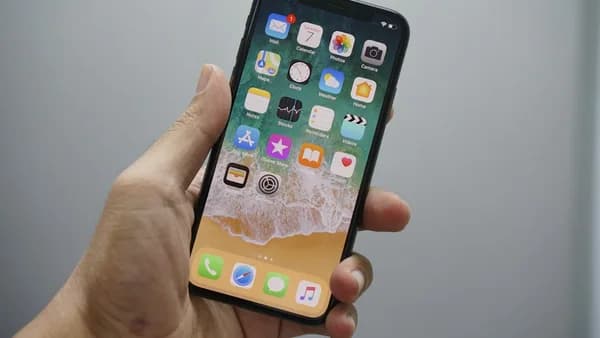
The timing is doing real work here. 2027 marks the 20th anniversary of the iPhone, just as 2017 marked the 10th anniversary with iPhone X. That device removed the home button, introduced Face ID, and set the template that still shapes today’s iPhones.
The reported anniversary model may not be a standalone commemorative device. 9to5Mac notes that earlier expectations pointed to a special-edition anniversary iPhone, while more recent reports suggest the major design features could instead land on the iPhone 19 Pro. Naming is also unsettled. Some believe Apple could skip the iPhone 19 label and call the device iPhone 20 Pro to mark the anniversary.
That uncertainty is important. The story is not yet “Apple will ship X.” It is more accurate to say Apple appears to be converging several design and component goals around a 2027 flagship-class iPhone.
MLXIO analysis: The anniversary gives Apple permission to do something it rarely does: attach symbolic weight to industrial design. The practical question is whether that symbolism can survive contact with durability, usability, and production scale. The source material supports the fragility concern directly: 9to5Mac notes that a glass back “makes for a more fragile device,” even if it contributes to the slab-of-glass effect.
Liquid Glass looks like software preparation for a borderless hardware object
Liquid Glass may be the more revealing clue than the glass back. 9to5Mac frames it as Apple’s software preparation ahead of the new hardware, and that reading makes sense: if the device is meant to look less like a bordered rectangle, the interface has to stop feeling boxed in by the hardware too.
The design logic is clear. A phone with curved display edges, minimal visible bezel, and hidden sensors needs software that feels native to that uninterrupted surface. Translucency, depth, reflections, and edge-aware motion can make controls appear embedded in glass rather than layered on top of a panel.
Apple has often made hardware transitions feel less abrupt by conditioning users through software first. Here, the alleged direction is not just “new icons” or “more depth.” It is a rehearsal for a device where the boundary between UI and object is intentionally blurred.
For separate MLXIO coverage of Apple’s iOS release cadence and device support decisions, see Beta 5 Puts iOS 26.6 in iPhone Cleanup Mode Before iOS 27 and Apple Reopens iOS Signing After Legacy iPhones Get Cut Off. Those are not evidence for the anniversary iPhone hardware, but they show why software timing remains central to how Apple stages platform transitions.
Four hardware ingredients would create the “single slab” illusion
The rumored anniversary iPhone is best understood as a bundle of separate technologies, not one magic material breakthrough. Each one removes a visible interruption.
| Reported element | How it supports the glass-slab look | Status in supplied material |
|---|---|---|
| Display curved on all four sides | Makes the front appear to spill over the edges, reducing the sense of a frame | Described by 9to5Mac as the expected key design feature |
| Under-display Face ID | Removes a major visible sensor area from the front | 9to5Mac says it is “looking near-certain” for that year |
| Under-screen camera and speaker | Would further reduce cutouts and openings | 9to5Mac describes this as a hope, not a confirmed feature |
| Glass back | Extends the glass-object illusion beyond the front face | Claimed by Fixed Focus Digital, cited by 9to5Mac |
The front display is the main event. 9to5Mac says the key design feature is expected to be a display that curves away from the front on all four sides, creating the illusion of no bezel at all. Related reporting supplied in the prompt says Apple is working with Samsung-manufactured display technology for an equal-depth quad-curved panel, with a shallow “micro-curve” rather than the more aggressive curved edges seen in some past designs.
The sensor story is more complicated. 9to5Mac says under-display Face ID looks close for the anniversary device, with hopes that the front-facing camera and speaker could also move beneath the display. Other supplied reporting says there are conflicting views on whether a fully notch-free iPhone is ready for 2027, including the possibility of a smaller notch or cutout if the camera cannot disappear in time.
MLXIO analysis: That makes the likely endgame less binary. Apple does not need a literal all-glass monolith to signal a new era. A shallow quad-curved display, much smaller visible sensor area, and glass rear could still create the strongest “single slab” impression the iPhone has ever had.
The glass back is a small detail with a large trade-off
The newest claim matters because the back of the phone determines whether the design reads as a complete object or a front-facing trick. A borderless-looking display paired with an aluminum rear would still feel like a screen attached to a chassis. A glass rear makes the whole product participate in the same visual idea.
But 9to5Mac’s own framing highlights the trade-off: glass contributes to the futuristic look and also makes the device more fragile. That is the core tension of this rumor cycle. Apple can hide bezels, soften edges, and bury sensors, but the result still has to survive daily handling.
This is where the “single slab of glass” ambition becomes less romantic. A device that looks uninterrupted also gives Apple fewer obvious places to hide practical compromises. Buttons, speaker openings, camera cutouts, bezels, and frame seams are not just visual interruptions. They are functional accommodations.
Supplied related reporting also points to another possible step: solid-state buttons with haptic feedback for controls such as the side button, volume buttons, Action button, and Camera Control button. If Apple folds buttons into the frame, the object gets cleaner. If it does not, physical controls remain one of the last visible breaks in the slab.
iPhone X showed Apple can turn compromise into a new default
The useful comparison is iPhone X, not because the 20th anniversary iPhone will repeat it, but because iPhone X showed Apple’s pattern. The 10th anniversary model removed the home button and introduced a new front design built around Face ID. It also introduced a compromise: the notch.
That compromise did not stop the design from defining the next decade of iPhones. Apple turned a hardware requirement into a recognizable interface and brand element. Later, Dynamic Island pushed that logic further by making the sensor area more active in software.
The 20th anniversary device appears aimed at the next stage of the same campaign: erase the front of the phone without making the hidden machinery feel unreliable or awkward.
MLXIO analysis: This is the real significance of Liquid Glass. If Apple cannot remove every interruption in hardware, it can still make the remaining interruptions feel intentional in software. The company’s design challenge is not only to hide components. It is to make whatever remains feel like part of the surface language.
The next proof point is whether Apple hides the camera, not whether it changes the name
The naming debate — iPhone 19 Pro, iPhone 20 Pro, or something else — will generate noise. The more important evidence will be technical.
A strong confirmation of the glass-slab thesis would include three signs: a four-sided curved display, under-display Face ID, and credible evidence that the front-facing camera can either disappear or shrink dramatically without undermining the front design. A glass back would strengthen the visual case, especially if Fixed Focus Digital’s manufacturing claim proves accurate.
A weaker version would still matter: glass rear, thinner bezels, and under-display Face ID, but a remaining notch or camera cutout. That would be less than Ive’s ideal, yet still a meaningful step toward it.
The practical watch item is not whether Apple can make a beautiful anniversary iPhone. The source material already points to that ambition. The harder test is whether Apple can make the glass object feel durable, usable, and manufacturable enough for a flagship iPhone — without the “single slab of glass” becoming a design promise users experience mainly as fragility.
The Bottom Line
- Apple may use the iPhone’s 20th anniversary to make its biggest visual reset since the iPhone X.
- A return to a glass back would support the long-running goal of making the device feel like one continuous surface.
- The design could move Apple beyond years of incremental changes around notches, Dynamic Island, camera islands, and buttons.