Why Having an Independent Communication Network Matters in Remote and Disaster-Prone Areas
When wildfires knock out cell towers or hikers vanish beyond the grid, communication isn’t merely a convenience—it’s a lifeline. In rural Alaska, for example, nearly 13% of households lack reliable cellular coverage, according to FCC data. During Hurricane Maria, Puerto Rico saw 95% of cell sites disabled, leaving millions without access to emergency alerts or rescue coordination. The fragility of traditional networks is glaring in both extremes: remote locations and disaster zones are often the first to lose connectivity and the last to regain it.
Cellular networks depend on dense infrastructure: towers, fiber optics, and power. Any disruption—whether a landslide, storm, or blackout—can sever links across vast areas. Even satellite phones, touted as the ultimate backup, get hamstrung by cost, limited bandwidth, and signal obstructions (dense forests, urban canyons, or heavy weather). That leaves first responders, rural communities, and adventurers exposed when they need communication most.
Maintaining basic connectivity goes beyond sending texts or photos. During emergencies, it means relaying evacuation orders, tracking missing persons, or coordinating supply drops. In everyday rural life, it’s about calling for help, checking in, or even sharing weather updates. When the grid fails, improvising a local network isn’t just resourceful—it’s essential. Devices that can create their own infrastructure, bypassing telecom providers, are no longer niche curiosities. They’re survival tools, and demand is rising as climate events and urban sprawl strain legacy networks, according to Notebookcheck.
What Is Seeed Studio’s Network-Creating Gadget and How Does It Operate Without Cellular Signals?
Seeed Studio’s kit isn’t a satellite phone or walkie-talkie—it’s a compact, modular device that builds its own communication network, independent of cell towers or Wi-Fi. The core package combines a LoRa (Long Range) radio module, microcontroller, and power source. LoRa is a low-power, wide-area networking protocol, capable of transmitting data over several miles at modest speeds—enough for text, GPS coordinates, or sensor readings.
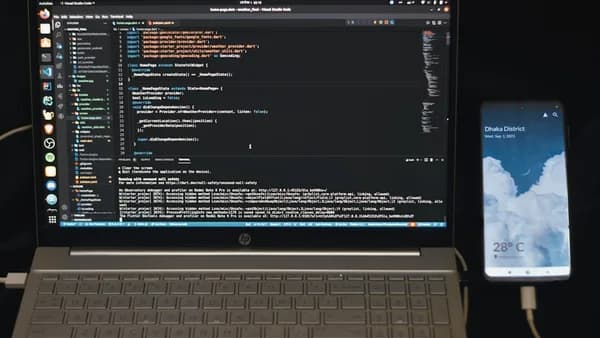
The kit’s brains are typically an open-source microcontroller like the Seeed Studio XIAO or Arduino-compatible board. Users plug in the LoRa radio, load custom firmware, and pair the device with a smartphone or laptop via Bluetooth or USB. When powered up, each unit acts as a node: sending and receiving packets across the LoRa band (usually 433 MHz or 868 MHz, depending on the region).
Unlike mesh networks that rely on multiple devices relaying messages, Seeed Studio’s approach is direct point-to-point or multi-point, depending on configuration. That means fewer hops, lower latency, and simpler setup. The LoRa signal cuts through obstacles—hills, trees, urban clutter—better than Wi-Fi, though its throughput maxes out around 50 kbps. That’s not enough for video, but easily covers urgent text, location, and sensor data.
The device’s independence comes from two factors: it doesn’t register with any telecom provider, and it handles its own encryption and routing. Users can deploy a handful of units, each with unique IDs, to create a private communication channel. In practice, this looks like hikers sending GPS pings to each other, villagers relaying weather alerts, or rescue teams coordinating supply drops—all without touching the cellular grid.
How This Gadget Bridges Long Distances to Keep People Connected When Traditional Networks Fail
The LoRa technology at the heart of Seeed Studio’s kit routinely achieves ranges of 5-10 miles in open terrain. In rural Colorado, a recent test saw LoRa nodes maintain connectivity across 7 miles of rolling hills, even with dense pine forest in between. Urban deployments shrink that distance—buildings and interference can cut effective range to 1-2 miles—but the signal still outpaces Wi-Fi (which rarely exceeds 100 meters outdoors).
Compared to satellite phones, LoRa is vastly cheaper and doesn’t require line-of-sight to orbiting satellites. Satellite devices can cost $500+ per unit, with monthly fees topping $40. Seeed Studio’s kit retails for under $100, with no subscription. Unlike walkie-talkies, which are limited by voice-only channels and often require licensing, LoRa devices transmit data—texts, GPS, sensor alerts—without regulatory hurdles in many countries.
Mesh networks, such as goTenna or the Serval Project, use multiple nodes to relay messages over larger distances. But each node needs power and users. Seeed Studio’s kit can function with only two units, making it viable for small teams or families in the field. In disaster scenarios, this direct bridging is crucial: when power is out and infrastructure is shattered, every extra mile of connectivity buys time and safety.
What Are the Practical Applications and Benefits of Using Seeed Studio’s Kit in Emergencies and Remote Areas?
During wildfires in California, communication blackout zones routinely stretch for dozens of miles. Seeed Studio’s kit can serve as a digital lifeline, sending evacuation notices and GPS locations between shelters and field units. In Nepal, remote villages have used LoRa-based devices to relay health alerts during monsoon floods, bypassing unreliable cellular service.
For outdoor adventurers, the kit enables peer-to-peer messaging. A group of hikers in the Scottish Highlands used LoRa modules to check in every hour, relaying their locations even when the nearest cell tower was 20 miles away. In rural communities, LoRa networks can distribute weather warnings, coordinate agricultural operations, or monitor livestock—all for pennies per month.
Emergency responders benefit from independence: during Hurricane Dorian, teams in the Bahamas deployed LoRa units to connect command posts with rescue boats, keeping communication alive when satellite links dropped. The devices also support environmental sensors, tracking water levels or air quality for rapid, localized alerts.
The kit’s reliability stems from its autonomy. Unlike cellular or Wi-Fi networks, which can be throttled, shut down, or overloaded, LoRa devices run on local power and frequencies. No telecom fees, no reliance on external infrastructure. The main trade-off is bandwidth: you won’t stream video or upload large files, but for mission-critical text and location data, the system is tough to beat.
How Can Individuals and Organizations Set Up and Use This Gadget to Establish Their Own Communication Network?
Setting up the Seeed Studio kit is straightforward, even for non-engineers. First, users select their LoRa frequency band based on local regulations (433 MHz in Asia, 868 MHz in Europe, 915 MHz in the US). Next, they assemble the device: plug the radio module into the microcontroller, attach the antenna, and connect a battery or USB power bank.
The device ships with open-source firmware, but users can customize message formats and encryption keys. Pair the gadget with a smartphone or laptop via Bluetooth, using Seeed Studio’s companion app to send and receive messages. In a field deployment, place units at high points or spread evenly to maximize coverage. For best results, keep antennas vertical, minimize obstructions, and monitor signal strength via the app.
Technical skills required are minimal: basic assembly and app navigation. For organizations, deploying a dozen units can create a local network covering an entire village, construction site, or disaster zone. Maintenance is simple—swap batteries as needed, check connections, and update firmware for new features. The main challenge is signal interference: avoid crowded radio bands and keep devices away from large metal structures.
Optimizing performance means experimenting with placement and antenna orientation. In open terrain, line-of-sight maximizes range. In urban or forested areas, spacing units every mile or two ensures coverage. Users can add solar panels or larger batteries for longer deployments.
What Should Readers Watch For as Independent Networks Grow Beyond Niche Use Cases?
LoRa-based devices like Seeed Studio’s kit are poised to disrupt how communities and responders operate off the grid. As climate events intensify and rural populations demand connectivity, expect LoRa adoption to surge—not just for emergencies, but for agriculture, IoT sensors, and event coordination. Telecoms may eye spectrum restrictions, so users should keep up with local regulations as demand grows.
For investors and tech buyers, watch for hybrid devices that blend LoRa with cellular fallback, or integrate with mesh networks for broader coverage. For individuals, the takeaway is clear: don’t wait for the next outage or disaster. Establishing a local, independent network is now affordable and practical. As more people build their own communication infrastructure, the traditional monopoly of cell towers and satellite links is starting to crack. The future of connectivity, it turns out, may be DIY.
Why It Matters
- Reliable communication during disasters can save lives when cell networks fail.
- Remote communities and adventurers need alternatives to traditional cellular networks for safety.
- Demand for independent network devices is rising as climate events and infrastructure failures become more frequent.