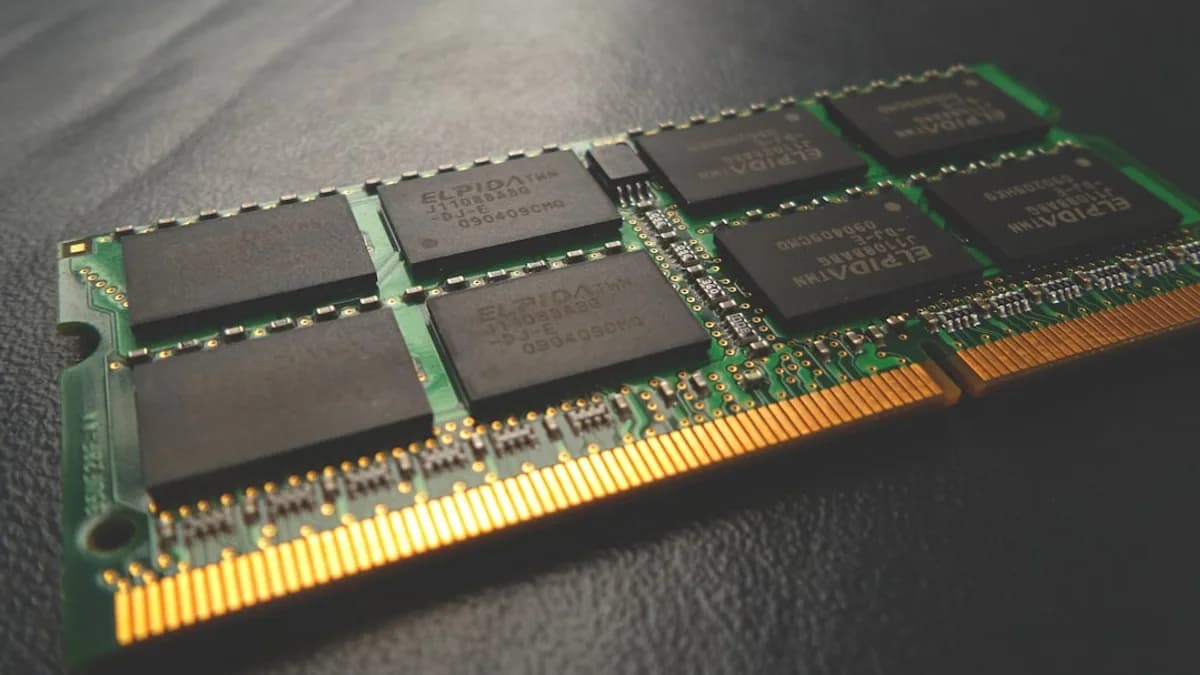
Framework just raised its Laptop 13 Pro memory ceiling to $1,600 for 64GB, turning a repairable-laptop launch into a test of how much supplier volatility a small hardware company can pass through before buyers flinch.
The move, reported by Notebookcheck, hits the customers most committed to Framework’s pitch: buyers paying up for modular, upgradeable hardware just before the first units were expected to ship. The harder question is not whether RAM got expensive. It is who pays when the part that makes modularity attractive becomes the part that blows up the bill?
Framework’s urgent problem: supplier pricing moved faster than the launch plan
Framework says the trigger was an unexpected cost update from its LPCAMM2 RAM supplier. CEO Nirav Patel described the increase as far outside the company’s forecast, and unusually bluntly framed absorption as a threat to the business.
“We’ve recently received a cost update from our LPCAMM2 supplier that goes far beyond anything we had predicted and anything we’re able to absorb without putting our ability to operate at a financial risk. Rather than the low-to-mid double-digit percentage increase we had forecast from Q2 to Q3 on LPCAMM2 costs, we’ve received prices that are more than double that of the prior inventory we had brought in.”
That quote matters because consumer hardware companies rarely say the quiet part this clearly. Framework is not presenting this as a routine margin adjustment. It is saying the cost increase is large enough that swallowing it would endanger operations.
The new memory math is stark
| Component | Old price | New price | Change described by source |
|---|---|---|---|
| 32GB LPCAMM2 module | $439 | $800 | Nearly doubled |
| 64GB LPCAMM2 module | $849 | $1,600 | Nearly doubled |
| 16GB LPCAMM2 module | $239 | Still $239 for now | Price will rise after current inventory runs out |
The 64GB configuration is the headline shock, but the 32GB jump may be the broader buyer problem. Many premium laptop customers treat 32GB as the practical step-up configuration. At $800, that memory tier becomes a major purchasing decision on its own.
MLXIO analysis: this is where Framework’s model gets stress-tested. The company’s repairable, modular design makes component pricing more visible. In a conventional laptop, a buyer may only see a bundled system price. Here, the memory module itself becomes the controversy.
Builders and makers now face the ugly side of modular transparency
Framework has built its brand around products that are easy to repair, upgrade, and customize. Its own messaging says, “Let’s fix Consumer Electronics,” and positions its devices as hardware users can keep longer through replacement parts and modules.
That pitch does not break because one component spikes. But it does become more complicated. What happens when the replaceable part is available, but no longer feels economically accessible?
LPCAMM2 is the pressure point in this case because it is the memory format tied to these Laptop 13 Pro configurations. The source material does not establish whether the shortage is structural, temporary, or supplier-specific. What it does show is that Framework’s inventory is limited enough to force triage.
Patel said the company has enough 64GB modules to cover:
- Laptop pre-order batches through Batch 4
- Mainboard pre-order batches through Batch 7
For 64GB orders beyond those batches, Framework has changed the configuration to a 32GB module at the original 32GB price.
The company then allocated remaining 32GB modules to DIY Edition Mainboard pre-orders configured with 32GB through Batch 4 of laptops and Batch 7 of Mainboards. For later DIY Edition and Mainboard orders configured with 32GB, Framework changed the configuration to a 16GB module at the original 16GB price.
That is not a clean customer experience. It is inventory rationing.
Buyers get price protection on some orders, but not the configuration they expected
Framework is trying to avoid the most explosive outcome: charging existing pre-order customers more after the fact for components that rose in price. According to the source material, for pre-orders whose component prices increased, the company will still charge the amount customers paid when they pre-ordered.
That helps. But it does not erase the friction for buyers whose configurations are being adjusted.
The most important buyer split now looks like this:
- Early batches: More likely to receive the originally selected higher-memory configuration, based on available inventory.
- Later 64GB orders: Shifted to 32GB at the original 32GB price.
- Later 32GB DIY Edition and Mainboard orders: Shifted to 16GB at the original 16GB price.
- Lower-priced components: Framework says unfulfilled pre-orders with components whose prices dropped will have their prices reduced.
For buyers, the question is simple: is Framework’s promise more about getting the exact configuration at launch, or about having a repairable machine that can be adjusted later?
MLXIO analysis: loyal Framework customers may tolerate more volatility than mainstream buyers because the company is being direct about the cause. But transparency cuts both ways. It builds trust, while also showing that small hardware makers have less room to shield customers from component shocks.
This is a different kind of pricing problem from the device-positioning fights we covered in $1,599 Surface Laptop 8 Loses the Price War to Asus. There, the issue was competitive value. Here, the issue is whether the component stack can support the product promise at launch.
Framework’s wider price changes show RAM is not the only squeeze
The memory increase is the sharpest move, but it is not the only adjustment. Framework is also increasing prices on X7 and X9 systems and Mainboards, citing rising chip and Windows licensing costs, plus premium memory and storage on Ryzen AI 300 configurations.
At the same time, not every part is moving higher. Framework says it found lower prices on 48GB DDR5 modules and some SSDs, including the SN850X 8TB and SN7100 1TB. Oddly, the SN850X 1TB and SN7100 4TB are getting price increases.
That mixed list matters. It suggests Framework is not applying a blanket markup across the catalog. It is repricing component by component.
Could that soften the backlash? Possibly, but only for customers whose configurations benefit. A buyer facing a forced step-down from 64GB to 32GB will not care much that another SSD got cheaper.
For another example of how quickly product narratives can become pricing narratives, MLXIO’s coverage of GeForce Now Bets India Gamers Will Pay U.S. Prices is useful context. The shared lesson is narrow but important: specs start the conversation, pricing often ends it.
Rivals get an opening, but not a clean victory over repairability
No competitor reaction is included in the source material, so any read here has to be framed as analysis.
MLXIO analysis: larger laptop brands can use episodes like this to make integrated designs look simpler. A fixed configuration, soldered memory, and tighter supply planning can reduce visible component-by-component sticker shock. But that does not prove the integrated model is better for users. It only hides different trade-offs inside the system price and configuration menu.
Framework’s vulnerability is different. Its modularity exposes the cost of parts more directly. When prices fall, that transparency can make upgrades feel fair. When prices spike, the pain is impossible to bury.
The reputational risk is also sharper because Framework is not just selling laptops. It is selling a philosophy: repair, upgrade, customize, keep the machine longer. A $1,600 RAM module does not negate that philosophy, but it makes the economics harder to defend for high-memory buyers.
The late-July launch now depends on execution, not just specs
Framework says the Laptop 13 Pro remains on track for a late July release. That leaves little room for confusion around revised configurations, batch eligibility, and future module pricing.
The watch item is not simply whether the laptop ships. It is whether Framework can keep the launch from being defined by RAM sticker shock.
Evidence that would support Framework’s approach:
- Clear fulfillment updates by batch and configuration.
- No surprise charges for affected pre-orders.
- Visible price reductions where component costs dropped.
- A credible path for customers who still want 32GB or 64GB later.
Evidence that would weaken it:
- More forced configuration changes beyond the batches already described.
- A fast 16GB price increase after current inventory runs out.
- Further component spikes across Mainboards, X7, X9, memory, or storage.
- Launch delays tied to final pricing or inventory allocation.
For buyers, the practical takeaway is blunt: reassess memory needs before locking in a high-RAM Framework Laptop 13 Pro configuration. For Framework, the task is harder. It must prove that modular hardware can survive not only repairability debates, but also the less romantic math of supplier costs.
The Bottom Line
- Framework’s steep RAM price hike tests how much cost volatility buyers will tolerate for modular hardware.
- CEO Nirav Patel’s warning signals that supplier pricing could threaten smaller hardware companies’ operations.
- The increase makes high-memory Laptop 13 Pro configurations significantly more expensive just before initial shipments.