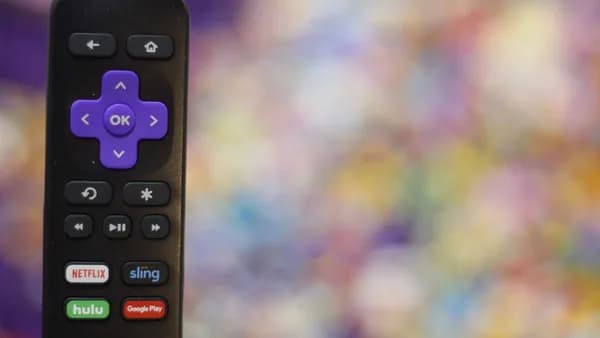
Fox’s proposed $22 billion takeover of Roku signals that the next fight in streaming is not just over shows, sports, or subscriptions — it is over the operating layer that decides how television reaches the viewer.
Fox agreed to buy Roku for $160 per share, combining its broadcast and streaming assets with Roku’s streaming hardware, Roku OS, The Roku Channel, and ad business, according to Ars Technica. The thesis is clear: Fox is not paying mainly for sticks and smart TVs. It is paying for distribution, data, advertising scale, and a stronger position inside connected TV.
Fox Is Buying Roku’s Route Into the Living Room, Not Just Its Devices
The headline asset is Roku’s reach. Roku says 100 million households use its platform. That gives Fox a direct path into streaming households at a moment when the company is trying to widen its position beyond traditional broadcast distribution.
The more important asset is Roku OS. MLXIO analysis: owning the TV operating system gives Fox a different kind of strategic option than owning another streaming app. A streaming service competes for attention inside someone else’s interface. A TV OS sits closer to the viewer’s starting point.
That distinction matters because Fox already owns major content and streaming properties: Fox, Fox News, Fox Business, FS1, and Tubi, the FAST service it bought in 2020. Roku adds The Roku Channel, another FAST service, plus a platform where advertising and viewer relationships already sit at the center of the business.
This follows a broader pattern we flagged in Future Trends Everyone Keeps Misreading — Here’s Why: the more valuable tech shift is often not the flashiest consumer product, but the control layer underneath it.
Roku’s Profit Engine Is Advertising, Not Hardware
The financial split explains why Fox wants Roku despite the low-margin reputation of streaming devices.
In the quarter ending March 31, 2026, Roku’s hardware business lost $19.1 million. Its advertising and subscriptions business posted $584.1 million in gross profit, while advertising generated $371 million in revenue.
| Roku segment | Source-supported detail |
|---|---|
| Hardware | Lost $19.1 million in the quarter ending March 31, 2026 |
| Advertising and subscriptions | Posted $584.1 million in gross profit |
| Advertising revenue | Generated $371 million in revenue |
| Platform reach | Roku says it has 100 million households using its platform |
That mix makes the deal easier to understand. Fox is not trying to become a better hardware company. It is trying to attach its live, news, sports, and FAST assets to Roku’s advertising-driven platform economics.
Roku became profitable during the COVID-19 pandemic in 2021, but did not return to annual profitability until 2025. That makes scale more than a slogan here. Fox and Roku are presenting the merger as a way to sustain profitability with a larger combined base.
Anthony Wood, Roku’s CEO, said the acquisition would help Roku move faster:
“to execute on our strategy faster than we would otherwise by ourselves, even though we’re doing extremely well,”
Fox’s stated advertiser logic points in the same direction. Lachlan Murdoch told investors:
“Advertisers are … seeking large audiences, improved digital targeting and more consistent measurement across platforms,”
He added:
“These converging dynamics across viewing, aggregation, and advertising have fueled the rapid growth of connected TV, and we are still in the early stages of this transition.”
The Combined Company Wants to Rank Behind YouTube and Disney in TV Viewing
Fox and Roku said the merged company would become the third-largest player in US television by share of viewing on a pro forma basis.
Ars Technica notes that the claim seemingly refers to Nielsen data for March on total TV usage by media company. The ranking cited in the source was:
- YouTube: 13.2 percent
- The Walt Disney Company: 10.5 percent
- NBCUniversal/Versant: 8.4 percent
- Fox: 7.2 percent
- The Roku Channel: 3 percent
The math is not merely about bragging rights. MLXIO analysis: if Fox can combine large live audiences with Roku’s connected-TV advertising footprint, it can approach advertisers with a broader package than content alone. That does not guarantee pricing power. It does give Fox a clearer pitch: live programming, FAST inventory, streaming distribution, and measurement ambitions under one corporate roof.
The ownership structure reinforces how Fox is steering the deal. If it closes, Fox shareholders are expected to own about 73 percent of the combined company, while Roku shareholders are expected to own about 27 percent.
Tubi and The Roku Channel Make FAST Central to the Deal
The Fox-Roku combination is especially notable because it joins two free ad-supported streaming assets: Tubi and The Roku Channel.
That is not the same strategy as building the largest possible subscription streaming bundle. Fox’s move is more advertising-led. It pairs content, platform access, and free streaming inventory rather than betting the story solely on paid subscriber growth.
MLXIO analysis: this makes the acquisition a platform-first media deal. Fox can still use traditional broadcast strength, but the growth argument sits in connected TV advertising and free streaming distribution. The important question is whether Fox can combine those assets without damaging the open-platform appeal Roku has built with users, device partners, and content partners.
The device angle also fits a larger consumer-tech lesson: software increasingly defines hardware value. We saw a smaller version of that in iOS 27 Bets on Fixing Your iPhone Before AI Takes Over, where the operating layer matters more than surface-level hardware novelty.
Advertisers, Viewers, Partners, and Regulators Face Different Trade-Offs
For advertisers, the upside is straightforward: Fox is promising scale, connected-TV targeting, and more consistent measurement across platforms. Those are exactly the themes Murdoch emphasized on the investor call.
For viewers, the trade-off is less clean. A larger Fox-Roku company could mean more free programming through FAST services. But Roku OS already has “a notable amount of ads,” according to Ars Technica, and Fox would gain a new route for ad sales and user tracking through The Roku Channel and Roku OS.
For partners, the key issue is neutrality. The companies said:
“Fox and Roku are committed to continuing to operate Roku as an open, partner-friendly platform and to the continued ubiquitous distribution of Fox content.”
That sentence is doing heavy work. If regulators, app partners, or TV manufacturers doubt the open-platform commitment, the transaction could face harder questions.
The deal still needs approval from Fox and Roku shareholders, plus regulatory approval. It is expected to close in the first half of 2027.
Three Paths From Here: Ad Flywheel, Integration Friction, or Deal Constraints
The most favorable path is an advertising flywheel. Fox combines its live and streaming assets with Roku’s platform reach, grows ad revenue, keeps Roku broadly partner-friendly, and extracts the planned $400 million in combined expense reductions.
The harder path is integration drag. Roku’s value depends partly on being a widely used platform, not just a Fox distribution pipe. If the combined company pushes too aggressively on ads or prioritizes Fox properties in ways partners dislike, it risks weakening the asset it just paid for.
The third path is a regulatory or approval bottleneck. The companies have not closed the deal yet, and the stated timeline runs into the first half of 2027.
The evidence to watch is concrete: whether shareholder approvals clear, how regulators frame the combination, whether Fox keeps Roku’s partner-friendly posture intact, and whether Roku’s advertising business continues to carry the economics while hardware remains secondary. If those pieces hold, Fox’s Roku acquisition may mark a shift from buying streaming content to buying the connected-TV infrastructure that sells it.
The Bottom Line
- Fox is buying control over connected-TV distribution, not just another streaming brand.
- Roku’s 100 million households could give Fox a stronger advertising and viewer-data position.
- The deal shows that TV operating systems are becoming a major battleground in streaming.