Why Europe’s Innovation Model Needs a Radical Overhaul to Counter Emerging Drone Threats
Europe’s airports suffered more than 60 disruptive drone incidents in 2025 alone, costing tens of millions in delays and security sweeps. That’s not just a nuisance — it’s a wakeup call. Unlike the U.S. or China, European states lack the ability to deploy homegrown anti-drone systems at scale, leaving critical infrastructure exposed to foreign-made hardware and unpredictable threats. This vulnerability isn’t just technical; it’s regulatory and strategic. Every police force, security agency, and energy operator is stuck with fragmented procurement, making a unified response impossible.
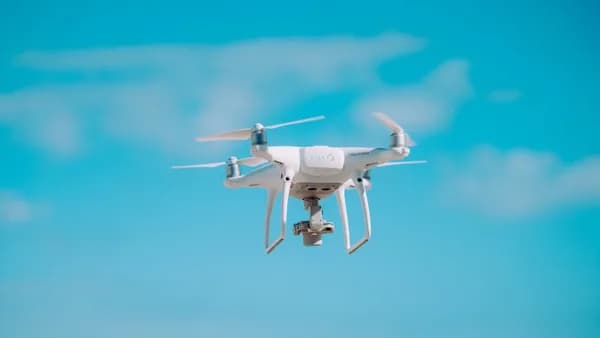
The urgency isn’t hypothetical. Drones armed with explosives have hit civilian sites in the Middle East, and European nuclear plants are now considered high-risk targets. Europe’s reliance on DJI — a Chinese manufacturer — for surveillance and defense is risky in an era where supply chains can turn hostile overnight. The continent’s innovation funding model, still dominated by slow-moving grants and bureaucratic project cycles, can’t keep pace with the speed at which drone threats evolve.
SPRIND and Vinnova, Germany and Sweden’s public innovation agencies, are betting that radical institutional change is the only way forward. Their new partnership aims to break the cycle of cautious incrementalism, making it possible for startups to iterate quickly and build sovereign solutions. As Jano Costard of SPRIND put it, copying traditional methods means getting traditional results — and those results have left Europe behind. Fast Company Tech
Crunching the Numbers: How SPRIND and Vinnova Are Reshaping Europe’s Innovation Landscape
SPRIND’s legal powers are a sharp break from German tradition. Since 2019, it’s been able to take equity stakes in startups, thanks to a 2023 parliamentary act. This move is rare — most German public bodies are banned from direct investment in private companies, leaving SPRIND uniquely positioned to back high-risk, high-reward ventures. In the past four years, SPRIND has funded dozens of tech teams, including those working on anti-drone systems, and now holds equity in several, giving it a direct stake in their success.
Sweden’s Vinnova, operating since 2001, has quietly outperformed its larger neighbors. With just 10 million citizens, Sweden produced over 500 IPOs in the last decade — more than Germany, France, Spain, and the Netherlands combined. Vinnova’s challenge-driven funding model, which rewards teams solving specific security problems, is credited with attracting private venture capital and accelerating time-to-market.
The fragmentation of Europe’s drone sector is stark. There are at least 100 startups working on anti-drone technology, but almost none can scale beyond their home country. The reason: procurement requirements vary wildly between member states, making cross-border sales a logistical nightmare. As Costard notes, startups face a “requirement hell” — if every police force wants something different, no company can build a standardized product.
Drone incidents are rising fast. Eurocontrol estimates a threefold increase in unauthorized drone sightings over airports since 2022, and the European Commission flagged drones as a top-tier security threat in its 2024 infrastructure report. The market for anti-drone tech is projected to hit $2.2 billion in Europe by 2027, but only if startups can navigate the patchwork of regulations and funding mechanisms.
Multiple Perspectives on Europe’s New DARPA-Style Agencies: Innovators, Policymakers, and Industry Voices
SPRIND and Vinnova leaders see themselves as catalysts for a new kind of innovation. Costard argues that iteration speed — the ability to fund, test, and pivot — is the “superpower” Europe needs. Darja Isaksson, Vinnova’s director general, talks openly about making Europe a magnet for venture capital by “crowding in” private money once public agencies have de-risked the hardest problems.
For founders like Martin Saska, whose team at EAGLE.ONE builds drones to intercept hostile UAVs, agency support isn’t just capital — it’s market access. Winning a SPRIND challenge landed Saska’s company in front of German buyers and led to contracts that would have taken years to secure otherwise. He insists Europe needs sovereign drone capabilities, not just for security but to reduce dependence on Chinese hardware. Saska’s team, based at Czech Technical University, now has a direct pipeline to buyers and investors across the continent.
Security experts warn that Europe’s reliance on consumer-grade drones from DJI isn’t sustainable. The risk isn’t just espionage, but sudden embargoes or software lockouts if geopolitical tensions flare. Fragmented requirements across police forces and militaries compound the problem. Without coordinated demand, even the best-funded startups risk building products nobody can buy at scale.
Industry voices are split. Some see SPRIND and Vinnova as overdue disruptors, finally giving startups a fighting chance. Others worry about mission creep and the risk of public agencies crowding out private market dynamics. But the evidence so far points toward a net positive: more capital, faster iteration, and early signs of cross-border scaling.
Learning From History: How DARPA’s Legacy Inspires Europe’s Disruptive Innovation Strategy
DARPA’s fingerprints are all over the technologies we take for granted — the internet, GPS, stealth aircraft. Its model: aggressive funding for radical ideas, with a bias toward speed and measurable results. But DARPA is inseparable from its military roots, with projects driven by defense priorities and wartime urgency.
SPRIND and Vinnova are consciously civilian. Their mandate is solving “grand challenges,” from drone defense to climate tech, without the military frame. This changes the culture: teams are rewarded for solving hard problems, not just meeting defense needs. Legal agility is crucial — SPRIND’s ability to take equity and move capital fast is a direct import from DARPA’s playbook, but adapted for civilian tech markets.
Stripping away the military context has benefits and risks. There’s less stigma for founders, more appeal for private VC, and fewer constraints on dual-use tech. But it can also mean less urgency and fewer guaranteed buyers. The challenge for Europe: keep the speed and ambition, while building markets that aren’t just propped up by public procurement.
What Europe’s Coordinated Innovation Effort Means for the Drone Security Industry and Beyond
Unified demand across EU member states could shift the entire anti-drone industry from fragmented pilots to scalable products. If airports, police forces, and nuclear plants adopt common requirements, startups can build for a continental market, not just one city or country. SPRIND and Vinnova are pushing for this: their challenge-driven funding isn’t just about technology, but about aligning buyers so startups can scale.
The stakes are high. Europe has over 400 airports and 100+ nuclear sites, all vulnerable to drone incursions. Current systems are patchwork — some rely on jamming, others on nets, still others on AI-powered detection. No single company has managed to deploy a pan-European solution. Coordinated innovation could change this, creating a market big enough for startups to attract serious VC and exit via IPO, not just government contracts.
Private sector VC is already circling. SPRIND’s equity moves signal to investors that public agencies will back winners, de-risking early-stage bets. Vinnova’s track record — over 500 IPOs in a decade — shows what’s possible when challenge-driven funding meets a market with harmonized demand. The ripple effects could extend to cybersecurity, AI, and other sectors where public-private collaboration is needed to outpace global rivals.
Expanding the Model: How SPRIND-Vinnova’s Success Is Sparking a Continental Innovation Renaissance
SPRIND’s approach is contagious. The Netherlands announced plans for a DARPA-style agency in 2024, aiming to replicate SPRIND’s legal flexibility and challenge model. The European Innovation Council is piloting challenge-driven funding, moving away from classic grants toward milestone-based payouts tied to real-world problems.
Sweden’s Vinnova is considering an expanded mandate, potentially doubling its annual budget and launching more cross-border challenges. Mario Draghi’s competitiveness report — blunt about Europe’s lag in scaling radical ideas — is now shaping negotiations for the next EU research framework. The Commission is weighing reforms that could make challenge-driven funding the norm, not the exception.
This isn’t just bureaucratic tinkering. If SPRIND, Vinnova, and their imitators succeed, Europe could finally close the gap with the U.S. and China on tech commercialization. The model is spreading, and the continent’s innovation agencies are poised for a rare moment of alignment.
Looking Ahead: Predictions for Europe’s Role in Global Drone Defense and Innovation Ecosystems
Europe’s bet on iteration speed and cross-border agency collaboration could deliver anti-drone breakthroughs within two years. SPRIND’s equity model and Vinnova’s challenge funding will likely attract more private VC and accelerate time-to-market. If member states agree on common procurement standards, startups could see a fivefold increase in addressable market, making Europe a genuine competitor to the U.S. and China in drone defense.
The risks are real. Bureaucratic inertia remains a threat — if agencies can’t maintain legal agility, funding could stall. Geopolitical shifts, such as worsening relations with China or Russia, might force sudden changes in supply chains and buyer requirements. And there’s always the danger of public agencies crowding out private risk-taking if the balance tips too far.
But the evidence points to a new trajectory. SPRIND, Vinnova, and soon the Netherlands are creating a template for challenge-driven innovation — one that rewards speed, scale, and technical daring. Expect a wave of anti-drone IPOs and acquisitions by 2027, with Europe’s airports and nuclear sites leading the adoption. In the process, the continent could reassert itself as a global leader in sovereign defense technology, pushing back against the fragmentation and slow motion that have hampered its innovation engine for decades. The next breakthrough won’t just be a technical fix — it’ll be a new way of funding, building, and scaling solutions for the hardest problems.
Impact Analysis
- Europe’s critical infrastructure remains exposed to unpredictable drone threats due to fragmented innovation and procurement.
- Dependence on foreign-made anti-drone hardware poses security and supply chain risks amid global tensions.
- New public innovation models like SPRIND and Vinnova aim to enable rapid, sovereign solutions for evolving threats.