Why Tesla’s 10 Billion Miles Milestone Challenges Conventional Safety Benchmarks
Elon Musk’s self-imposed threshold for “safe unsupervised” driving—10 billion miles logged by Tesla’s Full Self-Driving (FSD) Supervised fleet—has been crossed, but the company hasn’t flipped the switch on driverless cars. Tesla’s updated safety page counts over 10 billion FSD miles, a figure that dwarfs not only previous internal targets but also the mileage racked up by most competing autonomous vehicle programs. In Musk’s words, this was the number that would prove the system was ready to operate without human intervention. Yet, after all the hype, the vehicles are still Level 2: hands-on, eyes-on.
This is no mere vanity metric. For context, Waymo reported its first million miles of fully autonomous rides in Phoenix in 2021; Cruise passed the million-mile mark in San Francisco last year, before regulatory setbacks capped its expansion. Tesla’s 10 billion is an order of magnitude higher—but all with a driver ready to intervene. The industry standard for “safe” is not mileage alone, but incident rates: NHTSA’s threshold suggests automated systems must outperform human drivers, whose fatality rate hovers around 1.33 deaths per 100 million vehicle miles.
Tesla’s milestone is a stress test for the entire industry’s metrics: If sheer scale is enough, then FSD should be ready for Level 3 or beyond. But the company’s refusal to upgrade its system—despite hitting Musk’s threshold—signals that either the bar was set too low, or that mileage isn’t the only factor that matters. Tesla’s achievement forces regulators, rivals, and investors to reconsider what “safe” really means in the era of algorithmic driving, according to The Verge.
Dissecting Tesla’s Full Self-Driving System: What ‘Level 2’ Really Means for Drivers
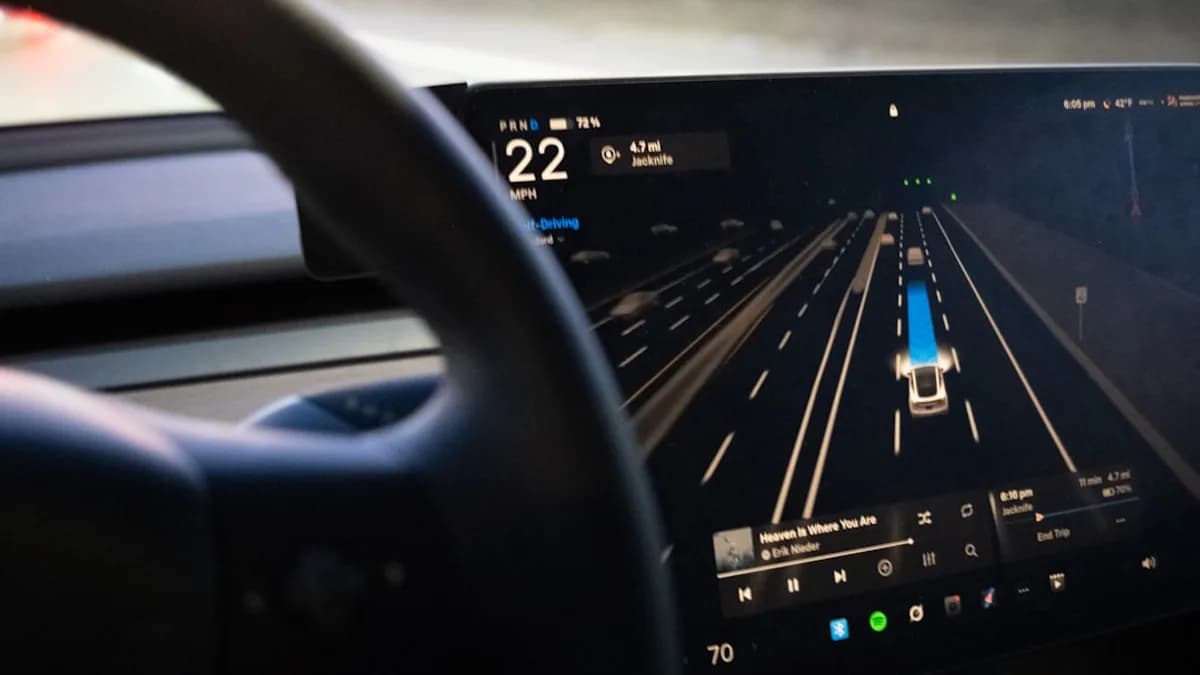
Level 2 autonomy is a far cry from the hands-off robotaxi fantasy: It means the vehicle can control both steering and acceleration, but the driver must stay engaged and intervene at any moment. Tesla’s FSD (Supervised) is marketed as the pinnacle of consumer-accessible automation, but it’s still stuck at Level 2—no matter how many miles it logs. That’s not a technicality; it’s a legal and practical wall.
Tesla’s system relies on driver vigilance. Cameras track eye and hand position, and the car will nag or disengage if it senses the driver isn’t paying attention. The company’s own disclosures admit that FSD can make unpredictable decisions, from phantom braking to missing stopped vehicles—a recurring complaint among owners. The responsibility for safety rests squarely on the person behind the wheel, not on the software.
Contrast this with Level 3, where the system promises to handle driving in specific conditions, freeing the driver from constant supervision. Mercedes, for example, recently launched Level 3 Drive Pilot in Germany and California, but only for speeds below 40 mph and in well-mapped areas. Tesla’s reluctance to move beyond Level 2—despite the mileage milestone—highlights both regulatory caution and technical gaps. For drivers, this means no legal shield: If FSD screws up, you’re still liable.
Crunching the Numbers: What Tesla’s 10 Billion Miles Tell Us About Real-World Autonomous Driving Safety
Tesla’s 10 billion-mile figure is a statistical goldmine, but the headline number hides the deeper question: How safe is FSD compared to human drivers, and how does it stack up against rival autonomous systems? According to Tesla’s latest safety report, vehicles operating with Autopilot engaged (including FSD) were involved in one crash for every 4.83 million miles driven in Q1 2023. For comparison, NHTSA’s average for U.S. drivers is one crash per 484,000 miles—a tenfold improvement, if you take the numbers at face value.
But those numbers aren’t apples to apples. Tesla’s data is skewed by highway driving, where Autopilot and FSD are most often engaged, and crash rates are naturally lower. Most accidents happen off-highway, where FSD is less reliable and often disengaged. Third-party studies, such as those from the Insurance Institute for Highway Safety, have flagged discrepancies between Tesla’s self-reported rates and independent data.
Waymo and Cruise provide some benchmarks: Waymo’s driverless fleet in Phoenix reported zero fatal crashes in its first million miles, but minor incidents (like curb strikes and fender benders) occurred at rates similar to human drivers. Cruise’s data, before its California operations were suspended, showed a comparable safety profile, but its fleet is much smaller and confined to geofenced urban areas.
The statistical challenge is clear—Tesla’s 10 billion miles are mostly supervised, not fully autonomous, and the incident rates are self-reported. Without granular, third-party-verified data on disengagements and near misses, the milestone is impressive but not definitive proof of safety. Regulators want more than aggregated numbers: They demand detail, context, and transparency.
Diverse Stakeholder Views on Tesla’s Safety Milestone and Its Impact on Autonomous Driving Regulation
Tesla’s milestone has triggered a split-screen reaction. Musk touts the achievement as proof that FSD is ready for unsupervised operation, but he’s stopped short of actually deploying Level 3 or higher autonomy. Regulators, led by NHTSA and California’s DMV, remain skeptical: The agency’s ongoing investigations into Tesla’s crash history and “phantom braking” incidents underscore the gap between mileage and functional safety.
Safety advocates warn against premature claims. The Center for Auto Safety and Consumer Reports have consistently argued that abundant miles do not equal safe deployment, especially when the system still requires constant human oversight. They point to the recent history of AV testing—Uber’s fatal crash in Arizona (2018), Cruise’s pedestrian drag incident (2023)—as proof that real-world complexity can’t be solved by scale alone.
Industry experts are divided. Some see Tesla’s feat as a breakthrough in data-driven validation, while others dismiss it as PR until the system can demonstrate hands-off, eyes-off reliability. The regulatory impact is already visible: California suspended Cruise’s permits after a single high-profile incident, and Mercedes’ Level 3 rollout is tightly restricted. Tesla’s milestone may spark renewed scrutiny, not relaxation, as lawmakers wrestle with the question of when “safe” is safe enough.
Tracing Tesla’s Autonomy Journey: How Past Milestones Set the Stage for Today’s Safety Claims
Tesla’s path to autonomy is littered with bold targets and missed deadlines. When Autopilot debuted in 2015, Musk claimed that “full self-driving” was two years away. By 2019, FSD was promised for “next year” and pre-sold to drivers for thousands of dollars. Each milestone—1 billion miles, then 5 billion, now 10 billion—has been leveraged to build investor confidence and drive preorders, but the system’s core capabilities have evolved at a slower pace than the marketing.
Past industry milestones offer cautionary tales. Waymo’s first million driverless miles were celebrated, but the company still restricts operation to mapped urban zones. Cruise’s expansion was halted not by lack of mileage, but by regulatory blowback after a crash. Tesla’s approach, in contrast, relies on massive data collection from real-world, unsupervised environments—an advantage over competitors who operate in geofenced “safe” zones.
The evolution is clear: Tesla has shifted from promising timelines to touting scale, but the jump from supervised to unsupervised driving remains elusive. The company’s reliance on video data, neural networks, and fleet learning sets it apart, but the regulatory frameworks haven’t kept pace with the volume of data—or the rate of software updates.
What Tesla’s Safety Milestone Means for Drivers and the Future of Autonomous Vehicles
For Tesla owners, the milestone is both reassurance and frustration. They’re driving vehicles that have collectively logged more self-driving miles than any other consumer fleet, but the cars remain legally and technically dependent on their vigilance. FSD subscribers—who paid $8,000-$12,000 upfront—still can’t sit back and let the car do the work.
Potential buyers face a paradox: Tesla’s cars are the most feature-rich on the market, but the gap between marketing and reality is wide. The promise of “robotaxi” functionality is still theoretical. Owners must monitor the system, accept liability, and navigate frequent software updates that sometimes add new features—but also new bugs.
Industry-wide, Tesla’s milestone resets consumer expectations. If 10 billion miles isn’t enough to trigger unsupervised driving, what number will be? The achievement pressures rivals—like Waymo, Mercedes, and GM—to accelerate their own data collection, but also to clarify what counts as “safe” in regulatory terms. Until Level 3 or higher autonomy is approved, the self-driving revolution remains a marathon, not a sprint.
Predicting the Next Phase: How Tesla’s Milestone Could Shape the Road Ahead for Self-Driving Technology
Tesla’s 10 billion-mile marker will force the next wave of regulatory and technical decisions. The company will likely push for limited Level 3 trials in geofenced areas, mirroring Mercedes’ cautious rollout. Expect lobbying for new safety standards that prioritize real-world mileage over laboratory testing, and pressure on NHTSA to clarify when “enough data” is enough.
Technologically, Tesla may deploy “FSD Unsupervised” for select beta users in low-risk environments—suburban roads, mapped highways—within 12-18 months. But nationwide, hands-off driving is still years away. The bottleneck isn’t software, but verification: Regulators need detailed incident logs, disengagement rates, and third-party audits before signing off.
Market dynamics will shift. Investors may reward Tesla for its data scale, but rivals will tout reliability and regulatory compliance. The next major milestone won’t be another billion miles—it’ll be the first fleet legally allowed to operate with no human oversight in a major city. Tesla’s achievement has raised the stakes, but the real test will be whether the company—and its competitors—can turn scale into trust. That, not mileage, will determine who wins the self-driving race.
Impact Analysis
- Tesla’s milestone challenges how safety in autonomous driving is defined—moving beyond traditional benchmarks.
- Regulators and rivals must reassess whether large-scale supervised driving data alone can justify unsupervised operation.
- Consumers and investors face uncertainty about what true 'driverless' readiness really means in the industry.