Is Google’s AI-heavy search redesign teaching some iPhone users to look for the exit before they even know whether they will stay gone?
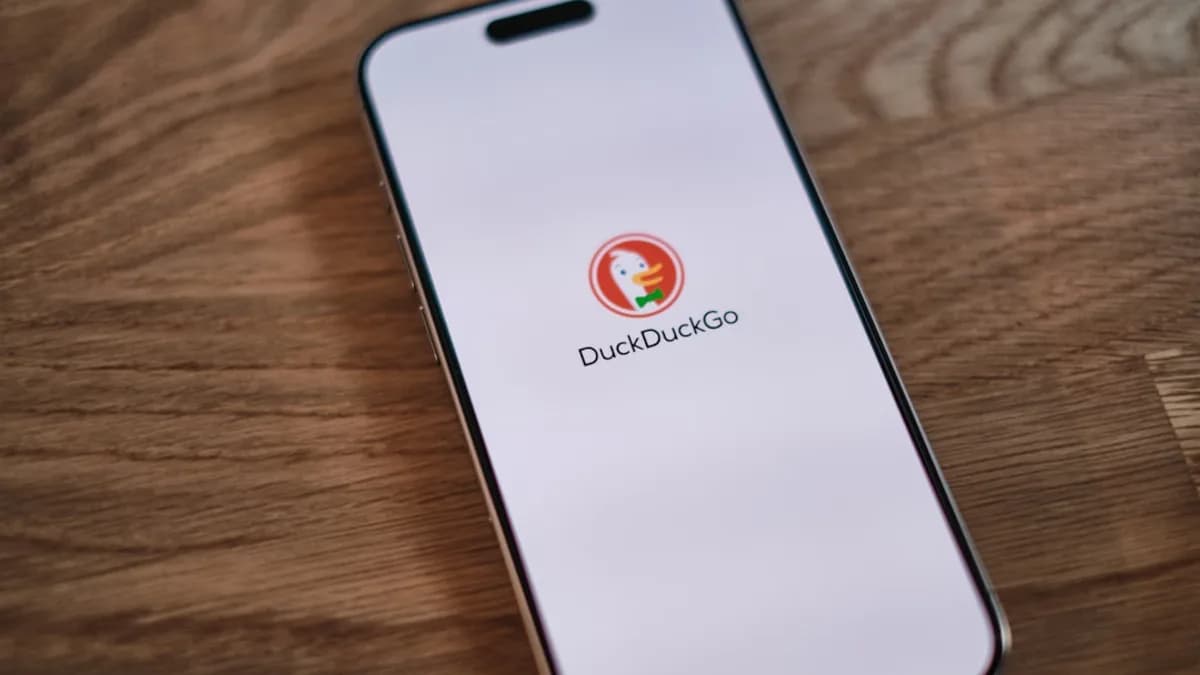
That is the sharper read on DuckDuckGo’s latest spike. The privacy-focused search company told 9to5Mac that Monday, June 1 marked its highest single-day search traffic ever, following elevated install levels after Google’s AI search announcements at Google I/O.
This is not proof of a mass migration from Google. It is proof of something narrower and still meaningful: Google’s AI search direction is creating enough user friction that a smaller rival can turn “choice” into a download event, especially on iOS.
Did Google I/O turn DuckDuckGo into an iPhone protest download?
The timing is hard to ignore. After Google showed a more AI-centered search experience at Google I/O, DuckDuckGo saw a sustained lift in installs, with the strongest numbers coming from iPhone users.
According to data DuckDuckGo shared with 9to5Mac:
- Search traffic: Monday, June 1st set a new single-day all-time high.
- US installs: The most recent week ran 61% higher than the pre-announcement week.
- Peak day: Install levels hit 76% above the pre-announcement daily average on June 1.
- iOS installs: US iOS installs over the most recent week were 95% above the pre-announcement week.
- App Store position: DuckDuckGo was the most downloaded browser in the iOS App Store behind Chrome, ranking number 3 in the utilities chart.
That follows the earlier spike we covered in Google's AI Search Push Hands DuckDuckGo a Protest Win, where the first wave looked like a reaction to Google’s AI search presentation. The new data matters because it suggests the move was not just a one-day curiosity bump.
Still, the signal needs discipline. Install growth shows intent to try. App Store rank shows visibility. Search traffic shows at least some usage. None of those, alone, prove long-term retention.
Are the install spikes translating into real search behavior?
The strongest detail in the 9to5Mac report is not the App Store rank. It is the single-day all-time search traffic record.
Downloads can be noisy. Search traffic is closer to behavior.
TechCrunch separately reported that DuckDuckGo said US app installs rose 18.1% week-over-week on average during May 20 to May 25, compared with May 13 to May 18, peaking at 30.5% on May 25. On iOS, week-over-week growth averaged 33% and peaked at 69.9%. Visits to noai.duckduckgo.com, DuckDuckGo’s AI-free search page, averaged 22.7% WoW growth, peaking at 27.7% on May 24, according to TechCrunch.
Third-party data also supported the direction, though not the full scale. TechCrunch cited Apptopia, which found a 29% increase in average daily downloads in the U.S. and a 12% increase globally over the same period.
The limiting context is just as important. TechCrunch noted DuckDuckGo accounts for only around 2% of the U.S. search market. That means DuckDuckGo can post eye-catching growth rates without threatening Google’s scale in the near term.
MLXIO analysis: the useful question is not whether DuckDuckGo is “beating Google.” It is whether Google’s AI-first redesign has created a repeatable acquisition channel for privacy-first, lower-clutter search products.
Why would an AI answer box send users back to simpler results?
Google’s new search pitch is more assistant-like. TechCrunch described Google’s plan as transforming the search box into a conversational engine that supports longer queries, anticipates intent, autocompletes searches, and uses AI Overviews to answer questions directly before traditional links. Google also showed a more fluid AI Mode, with follow-up questions inside AI Overviews.
That is convenient for some searches. It is also exactly what some users dislike.
DuckDuckGo CEO Gabriel Weinberg framed the backlash bluntly:
“Google is force-feeding AI with no way to opt out,” Weinberg said. “As a result, their results are getting worse, not better. We want to be the place that puts users in charge and allows them to decide how much or how little AI they want.”
A Google spokesperson told TechCrunch that AI Overviews have existed for two years and AI Mode is not the default. That distinction matters. The criticism is not simply that Google uses AI. It is that some users feel the search page is becoming less controllable.
DuckDuckGo’s counter-position is not anti-AI. The company offers Duck.ai, plus Search Assist and an AI Image Filter. TechCrunch reported that Search Assist and AI Image Filter are among the company’s most popular AI features, according to Kamyl Bazbaz, DuckDuckGo’s chief communications and policy officer.
Bazbaz’s read was simpler:
“People just want a choice,” Bazbaz said.
That is the wedge. Google is selling AI as the new default direction for search. DuckDuckGo is selling AI as optional.
| Search question | Google’s current direction, per source material | DuckDuckGo’s pitch, per source material |
|---|---|---|
| AI in results | AI Overviews and AI Mode are central to the new search presentation | AI features exist, but users can disable them |
| User control | Google spokesperson said AI Mode is not default | noai.duckduckgo.com turns off every AI feature by default |
| Privacy posture | Not addressed in the supplied Google comments | DuckDuckGo says it does not collect search histories or chats |
| Current momentum | Google remains the dominant search player | DuckDuckGo is seeing sharp install and traffic spikes |
Can DuckDuckGo turn privacy branding into a daily iPhone habit?
DuckDuckGo has long positioned itself around private search. Its own site pushes a free browser, tracker blocking, and making DuckDuckGo the default search engine. The current spike gives that pitch a new hook: not just privacy, but control over AI.
That matters because the iOS data is the standout. DuckDuckGo said US iOS installs were 95% above the pre-announcement week. It also ranked number 3 in the utilities chart and sat behind Chrome among iOS browser downloads, per 9to5Mac.
MLXIO analysis: iPhone is the right place for this kind of test because changing a search app or browser is a low-commitment action. A user can install DuckDuckGo, run a few searches, and leave if results disappoint. The friction is low enough for protest behavior. The bar for habit change is much higher.
That is why this should not be blended too loosely with every other iPhone AI story. Separate Apple software coverage, including Siri’s ChatGPT Redesign Leaks in iOS 27 Renders for iPhone and iOS 27 Siri Leak Reveals Apple’s AI Power Grab on iPhone, sits in a different lane. The DuckDuckGo data is narrower and cleaner: after Google’s AI search overhaul, iOS installs and search traffic rose.
Who has the most to lose if this keeps happening?
Google’s risk is not immediate share loss to DuckDuckGo. The more realistic risk is trust erosion among users who came to Google for fast source discovery and now feel they are being routed through an answer layer first.
DuckDuckGo’s opportunity is also narrower than the headline suggests. It can acquire users on frustration. It can only keep them on result quality, speed, and habit. If new users treat DuckDuckGo as a temporary anti-Google vote, the June 1 traffic record will fade into a spike chart.
For users, the trade-off is clear:
- Convenience: AI summaries can answer simple questions faster.
- Control: Link-forward search gives users more room to judge sources.
- Privacy: DuckDuckGo says searches and chats are private, with chats not used for AI training.
- Choice: DuckDuckGo offers a no-AI route; Google’s comparable controls are more limited in the supplied material.
For the open web, the concern is harder to quantify from the available sources. TechCrunch noted that some critics argue AI search could “kill the open web,” but the supplied material does not provide traffic-loss data for publishers tied to this rollout. That remains an argument, not a measured outcome here.
Which signals will prove this is more than an AI backlash cycle?
The next year will test whether DuckDuckGo’s iPhone surge is a durable behavior shift or a short-lived reaction to Google I/O.
Evidence that would strengthen the thesis:
- Sustained search traffic above pre-announcement levels, not just installs.
- Repeat iOS usage after the initial download wave.
- Continued growth for noai.duckduckgo.com, showing demand for explicitly AI-free search.
- DuckDuckGo holding elevated App Store visibility without a fresh Google news cycle.
Evidence that would weaken it:
- Install growth falling back quickly.
- Search traffic returning to normal after curiosity fades.
- Google calming backlash with clearer controls, better citations, or less intrusive AI placement.
- Users accepting AI Overviews as convenient despite early complaints.
MLXIO’s read: this is not a Google-killer moment. It is a warning shot. Google’s AI search overhaul may still prove useful to many users, but the DuckDuckGo spike shows that forcing a new search interface too aggressively can create real openings for focused competitors.
The watch item is simple: if DuckDuckGo’s June 1 record becomes a new baseline rather than a peak, AI fatigue will have moved from social-media complaint to measurable search behavior.
The Bottom Line
- Google’s AI search changes appear to be pushing some users to test alternatives.
- DuckDuckGo’s strongest growth came from iPhone users, showing iOS remains a key battleground for search choice.
- The spike is not proof of mass defection, but it shows user discomfort can quickly become app installs.