Dell is bringing the XPS 13 back as a student-priced shot at Apple’s MacBook Neo, but its headline $599 deal expires after the back-to-school window.
The new XPS 13 launches in July with a temporary student promotional price of $599, before moving to a $699 starting price for everyone else, according to The Verge. The timing is deliberate: Dell is trying to put an XPS-branded Windows laptop directly in front of students before Apple’s lower-cost MacBook becomes the default comparison.
Dell revives the XPS 13 with a back-to-school discount that has an expiration date
Dell teased the return of the XPS 13 at CES and is now turning that tease into a real launch. The laptop arrives in July, with the student-focused $599 price running only through September.
That makes the offer more of a back-to-school campaign than a permanent reset for the XPS line. Dell’s public site also lists the New XPS 13 as “Starting at $699” with “Exclusive student pricing starting at $599.”
The low starting price comes with a clear entry-level spec. The Verge reports that the base model includes a six-core Intel Core 5 320 “Wildcat Lake” chip, 512GB of storage, and 8GB of RAM.
That last number is the pressure point. A Windows 11 laptop with 8GB of RAM can still work for school basics, but it gives Dell less room to argue that the XPS 13 is simply a premium machine at a budget price.
Dell is also promising a strong display across configurations. Every version is set to include a 13.4-inch anti-glare touchscreen with 2560 x 1600 resolution, 30-120Hz variable refresh rate, 500 nits of brightness, and 100 percent coverage of the DCI-P3 color space.
Analysis: Dell appears to be protecting the XPS identity by keeping the screen spec high while cutting elsewhere. That is a cleaner compromise than cheapening the whole machine, but it makes the base RAM and chip choice more important in reviews.
Dell is copying Apple’s student pitch, but Apple still has the cleaner price story
Dell is not being subtle about the target. The XPS 13 is aimed directly at Apple’s MacBook Neo, which also starts at $599.
The catch is that students can get Apple’s budget laptop for $100 less, according to The Verge. That means Dell’s promotional price matches Apple’s public starting point, not necessarily Apple’s effective student price.
ZDNET reported that Dell COO Jeff Clarke called out the MacBook Neo directly during an early media briefing.
“We didn’t change a single feature when the Neo was launched. We stayed true to the XPS’ identity ... And I think we’ve achieved it with the $599 price point.”
Clarke also said, according to ZDNET:
“We’re not in a race to the bottom. We’re not trying to be the cheapest option.”
That distinction matters. Dell is not just trying to sell the cheapest laptop on the shelf. It is trying to sell the cheapest laptop that still feels like an XPS.
| Reported detail | Dell XPS 13 | Apple MacBook Neo |
|---|---|---|
| Starting price | $699 general, $599 student promo through September | $599 starting price |
| Student comparison | Promo matches Neo starting price | Students can get $100 less, per The Verge |
| Weight | 2.2 pounds / 1kg | 2.7 pounds, per ZDNET |
| Display | 13.4-inch touchscreen, 2560 x 1600, 30-120Hz | 13-inch, no touchscreen, per ZDNET |
| Keyboard | Backlit keyboard | No backlit keys, per ZDNET |
| Ports | Two USB-C ports, no 3.5mm jack | ZDNET reports weaker I/O by comparison |
The Verge also notes that Dell reps said the laptop should last a student’s full day of classes. Dell claims up to 17 hours of “streaming” battery life.
For readers tracking adjacent laptop pricing, MLXIO has covered very different ends of the spec-value spectrum, including Dell's $2,577 Ubuntu Laptop Packs 64GB in 14 Inches and $399 Acer Aspire Go 15 Puts MacBook Neo Buyers on Notice. The common thread is simple: the sticker price only tells part of the story.
Dell’s thinnest and lightest XPS now carries the burden of proving 8GB is enough
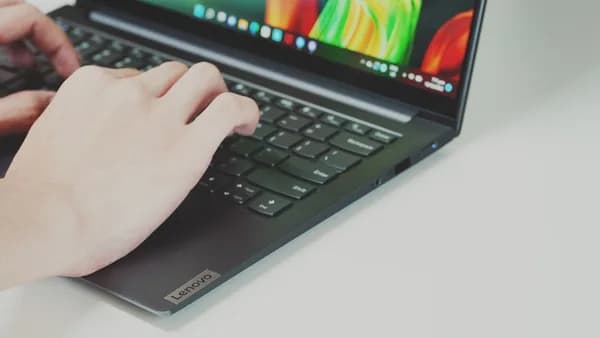
Dell says this will be its thinnest and lightest XPS so far. The machine measures 0.5 inches / 12.7mm thick and weighs 2.2 pounds / 1kg.
That gives Dell a concrete hardware advantage to market. The new XPS 13 is lighter than the MacBook Neo, and it adds features Apple’s budget laptop reportedly lacks, including a touchscreen and backlit keyboard.
But Dell also carried over a controversial minimalist port setup. The XPS 13 has just two USB-C ports and no 3.5mm audio jack, similar to the previous XPS 13 that cost much more.
Higher-end configurations are coming later with Intel Panther Lake chips, Thunderbolt 4, and up to 32GB of RAM. The Verge reports that even those versions will not add a dedicated audio jack.
There is also one spec wrinkle to watch. The Verge reports 512GB of storage for the entry configuration, while ZDNET describes options starting at 256GB and going up to 1TB. Until Dell’s full configuration matrix is live, the exact storage floor for the $599 model deserves scrutiny.
The bigger XPS comeback is not finished
Dell also teased another XPS reveal for Computex: a model with discrete graphics, some level of Nvidia RTX GPU, an extra-bright tandem OLED display, a dedicated HDMI port, and an SD card slot.
That points to a split strategy. The XPS 13 is being positioned against the MacBook Neo, while the teased larger XPS sounds aimed at higher-performance MacBook Pro-style buyers.
The XPS 13’s first test is narrower and more immediate. Can Dell make a $599 Windows laptop feel premium enough to beat a cheaper Apple education deal?
The answer will depend on three things reviewers can measure: real-world performance from Wildcat Lake, whether 8GB of RAM becomes a daily constraint, and whether Dell’s display, weight, keyboard, and port choices outweigh Apple’s student discount before the September promo clock runs out.
The Bottom Line
- Dell is positioning the XPS 13 as a lower-cost Windows alternative for students before Apple’s MacBook Neo gains traction.
- The $599 price is temporary, making timing important for buyers considering the new model.
- The base model keeps a strong display but cuts costs with 8GB of RAM, which may limit its premium appeal.