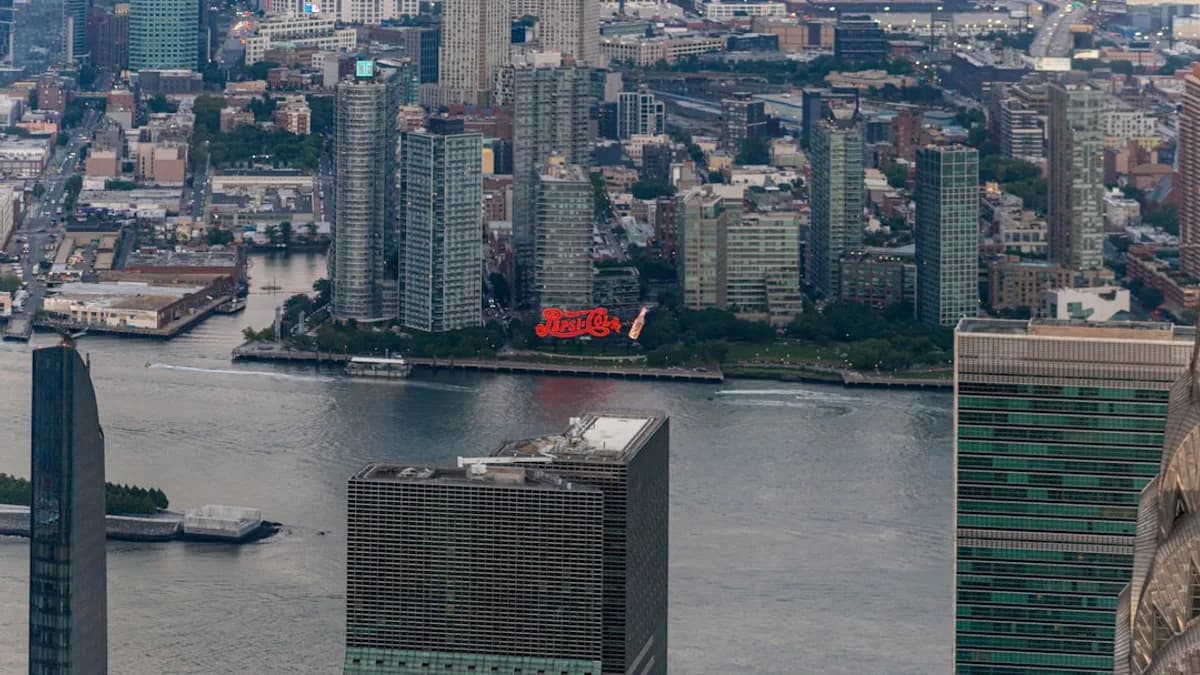
Why Are Delivery Drones Taking to the Skies Over New York City?
Delivery drones are flying over New York City—one of the most crowded, regulated, and unpredictable airspaces in the country. That’s not a hypothetical: it’s happening right now, possibly only for a limited time, as Wired reports. The arrival of drones over Manhattan and its boroughs signals a new phase in the ongoing experiment to solve urban logistics gridlock.
The promise: drones could speed up package drop-offs and keep more vans off the city’s jammed streets. In theory, a network of aerial couriers could sidestep gridlock, deliver goods faster, and free up sidewalks and bike lanes. New York’s dense layout makes it a perfect stress test—if drones can function here, they might work in any city. But this is far from settled science, and every flight is an experiment.
What Challenges Do Delivery Drones Face in Crowded Urban Environments?
Flying anything over New York is already a challenge. Add thousands of buildings, millions of people, and tightly managed airspace, and the risks multiply. Drones in cities run into unique technical and regulatory hurdles: unpredictable wind tunnels created by skyscrapers, constant foot and vehicle traffic below, and a swarm of helicopters and planes above.
Safety is a front-line concern. A mid-air collision or even a minor crash could create chaos on the streets or sidewalks. Noise complaints and privacy fears are inevitable in a city where every decibel and camera angle gets noticed. Airspace management is also a heavy lift—New York’s skies are among the busiest in the U.S., and squeezing in a new class of flying machines raises questions no one has fully answered. Most crucially, it remains unclear if drones can navigate this complexity reliably, or if the experiment is just a temporary spectacle.
How Are Companies and Regulators Testing Delivery Drones in NYC’s Airspace?
The specifics are scarce, but there’s no question that pilot flights are underway above New York City, at least for now. Wired confirms that these machines are airborne, but it’s not clear how extensive the testing is or which companies are involved. The duration of these flights is also uncertain—they may be short-term or only permitted under specific conditions.
What’s clear: this is a live test in one of the most challenging environments possible. The presence of drones in New York’s airspace suggests some form of regulatory approval, but the article offers no details on the FAA’s role or the city’s involvement. Partnerships, oversight, and technical protocols remain a black box for now.
What Does a Typical Delivery Drone Flight Look Like in New York City?
The source doesn’t provide a flight log or case study, so the mechanics of a New York City drone delivery remain opaque. What we do know is that drones are in operation above the city. The critical questions—how they launch, plan routes, avoid obstacles, communicate with controllers, and drop off packages—are unanswered.
In the absence of hard data, one fact stands out: these flights are happening in a city known for unpredictable winds, dense infrastructure, and intense scrutiny. The lack of specifics means we don’t know if these drones are carrying real packages, where they take off and land, or how they interact with other airspace users. Every operational detail is still shrouded.
Will Delivery Drones Become a Permanent Fixture in Urban Logistics?
Right now, no one can say if drone delivery is here to stay in New York or any city. The Wired report makes one thing clear: these flights may be temporary, and the industry still lacks solid evidence for or against the idea. The future hinges on unresolved factors—how the technology handles real-world complexity, how the public reacts, and whether regulators decide the risks are worth the reward.
Analysis: If drones can prove themselves in New York’s airspace, that would mark a milestone for urban delivery innovation. But until data from these tests emerges, the experiment is just that—an open question with high stakes. Permanent drone delivery depends on more than technical success; it needs buy-in from regulators, city officials, and New Yorkers themselves.
What We Know, What’s Unclear, and What to Watch
What We Know: Drones are flying over New York City’s airspace right now, perhaps only for a short time, as Wired reports. The scale, scope, and purpose of these flights remain undisclosed.
Why It Matters: Testing drones in a city as complex as New York is a high-stakes trial. Success here could set a precedent for other urban centers. Failure could stall drone delivery ambitions for years.
What Remains Unclear: The article doesn’t reveal who is flying the drones, what routes they take, what payloads they carry, or how regulators are involved. Even the duration and goals of these flights are ambiguous.
What to Watch: Pay attention to official statements from city agencies or the FAA, public response to drone flights, and any emerging data on safety or efficiency. The experiment is underway, but whether it’s a preview of the future or just a fleeting spectacle is still anyone’s guess.
Impact Analysis
- Urban delivery drones could reshape how packages are transported in crowded cities, easing street congestion.
- Testing drones in New York City exposes technical, regulatory, and safety challenges that must be solved before wider adoption.
- The experiment’s outcome will influence future city logistics and guide policy on aerial delivery systems nationwide.