Casio is preparing two familiar G-Shock forms for the U.S. market — one in bright pink resin, the other with rainbow vapor deposition glass. The confirmed U.S. arrival of the G-Shock x XG GMAS110XG-4A and GMS5600XG-1 points to a collaboration-led color and design release rather than a major technical reset like Casio’s carbon EFK-200.
The two models are headed to the U.S., though Casio has not confirmed a U.S. release date, according to Notebookcheck. Both watches are tied to XG, with the collaboration branding serving as the clearest distinction from standard G-Shock variants.
Casio’s rainbow-glass G-Shock drop turns a rugged watch into a fandom signal
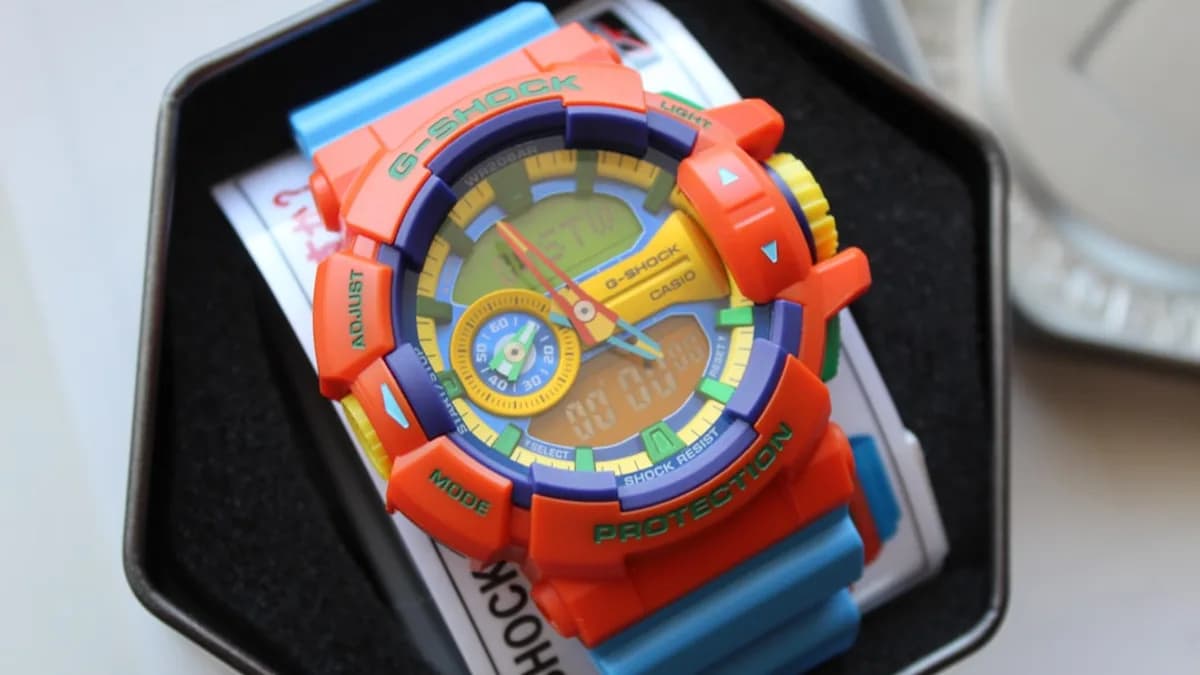
The safer read is that Casio is using color, artist alignment, and familiar case shapes to make these G-Shock models stand out visually without changing the basic formula. The GMAS110XG-4A does that loudly: bright pink resin casing and strap, plus a glittering round hybrid-style dial. The GMS5600XG-1 takes the opposite route, using a pared-back dark case-and-strap look around rainbow vapor deposition glass.
That contrast matters. One model broadcasts the collaboration from across the room. The other keeps most of its drama in the glass treatment around a dark digital display. Casio is effectively offering two versions of the same design idea: a more obvious collaboration watch and a more restrained square model that leans on the recognizable G-Shock silhouette.
The XG logo appears as part of the collaboration treatment. That is the hinge point. These are not just pink and rainbow variants; they are branded objects connected to a specific music act. MLXIO analysis: if the U.S. release gains traction, it may suggest that Casio can use existing case families as flexible canvases for design-led collaborations.
The numbers behind the GMAS110XG-4A and GMS5600XG-1 U.S. release
The two-watch structure gives Casio clean segmentation. The GMAS110XG-4A is the louder option. The GMS5600XG-1 is the more restrained square model with the more unusual glass treatment.
| Model | U.S. status | Overall style | Main reported design cue |
|---|---|---|---|
| GMAS110XG-4A | Coming to the U.S.; exact timing not confirmed | Round G-Shock collaboration model | Bright pink resin case and strap; glittering dial treatment |
| GMS5600XG-1 | Coming to the U.S.; exact timing not confirmed | Square G-Shock collaboration model | Rainbow vapor deposition glass with a darker case-and-strap look |
The supplied source material does not establish full U.S. pricing, battery-life estimates, dimensions, weights, or complete feature lists. That matters because buyers comparing comfort, wrist presence, or long-term ownership costs will need Casio’s full product specifications before making a fully informed choice.
It also means the technical comparison should stay limited for now. The public reporting confirms the U.S.-bound collaboration models, but not enough verified specification detail to support a full side-by-side breakdown of water resistance, display architecture, stopwatch precision, alarm counts, or bezel materials.
Casio has not said exactly when the U.S. release will land. For now, the clearest confirmed point is that the GMAS110XG-4A and GMS5600XG-1 are expected to come to the U.S., with the final launch timing still to be clarified.
The XG models show Casio refreshing familiar hardware through design, not reinvention
The evidence here points to a product strategy built on recognizable G-Shock architecture. Casio is not presenting the GMAS110XG-4A or GMS5600XG-1 as technical breakouts in the available source material. The emphasis is on the collaboration, the color treatment, and the visual contrast between the two models.
The change is visual and cultural. The GMAS110XG-4A pushes color. The GMS5600XG-1 pushes material effect through rainbow vapor deposition glass. Both sit within established G-Shock design language rather than replacing it with an entirely new platform.
That is not a weakness. It may be the entire point. The 5600-style rectangular silhouette is one of the most recognizable shapes in the G-Shock family, so a rainbow-glass frame around a dark display reads immediately as a deliberate variation. A more radical case redesign might dilute that recognition.
For readers tracking Casio’s broader design direction, MLXIO has also covered visual and material updates in models such as Two Textured Dials Make Casio Edifice Look Pricier and Casio Mudman Leak Reveals First MIP Display Gamble. The XG watches sit on the more style-driven side of that spectrum.
Collectors, XG fans, and retailers will read the same launch differently
Collectors will likely focus on specificity: the XG branding, the model codes, the color treatments, and the eventual U.S. release timing. Collaboration watches can become more interesting when they are clearly tied to a particular design moment, but the source material does not confirm whether these U.S. models will be limited, how many units Casio will allocate, or whether restocks are planned.
XG fans may approach the watches differently. For them, the dial branding and group-linked design could matter more than technical comparisons. MLXIO analysis: that may expand the buyer pool beyond traditional G-Shock enthusiasts, but it also makes demand harder to read from watch-spec logic alone.
Retailers and resellers will be watching the missing variables. The U.S. release date is not confirmed. Distribution is not detailed. Pricing has not been established in the supplied source material. A quick sellout would say something different if supply is narrow than if Casio pushes broad availability through multiple channels.
The strongest counterpoint is simple: these are still G-Shocks built around familiar design language. The collaboration does not automatically create sustained demand. What would weaken the thesis is a quiet launch with easy availability, little restock pressure, and no visible pull from XG-linked interest.
The U.S. buyer decision comes down to timing, availability, and taste
For practical buyers, the decision is not complicated. Choose the GMAS110XG-4A if the appeal is the bright pink, hybrid-style look. Choose the GMS5600XG-1 if the square profile and rainbow glass are the draw. Without confirmed U.S. pricing in the supplied material, the final value comparison has to wait.
The design tension is the interesting part. G-Shock’s core value remains durability, but these watches emphasize emotional appeal through color, collaboration branding, and visual distinctiveness. That is especially clear in the GMS5600XG-1, where the darker case keeps the base conservative while the glass does the attention-grabbing work.
Buyers should watch for:
- Release timing: Casio has not confirmed the U.S. launch date.
- Availability: The source does not say whether the models are limited.
- Pricing: The supplied material does not establish confirmed U.S. prices.
- Restock behavior: Early sellouts would only be meaningful if followed by unclear or constrained replenishment.
- Retail spread: Distribution beyond the confirmed U.S.-bound release has not been detailed.
Related Casio coverage, including $540 G-Shock Frogman Turns Whale Charity Into Hype and Japan Keeps Casio’s $186 G-LIDE Surf Watch to Itself, shows how specific themes and regional timing can shape the way new releases are perceived. The XG drop now gives U.S. buyers a collaboration to judge directly once launch details are clearer.
Casio’s next signal will come from how hard it pushes the XG watches in the U.S.
MLXIO analysis: one possible reading is that Casio will keep using music, fashion, and youth-culture partnerships to refresh proven G-Shock cases alongside its technical releases. The GMAS110XG-4A and GMS5600XG-1 fit that idea cleanly: familiar forms, louder identity.
The GMS5600XG-1 may have the broader runway if the rainbow vapor deposition glass photographs well and availability is tight. The GMAS110XG-4A is more direct and more polarizing, which could help it with buyers seeking a louder fashion piece but narrow its appeal among those who prefer subtler G-Shocks.
The evidence to watch is concrete: a confirmed U.S. release date, how long each model remains available after launch, whether Casio labels the watches as limited, and whether additional retailers receive inventory. If both models linger with no urgency, the XG collaboration will look like a stylish niche release. If the square rainbow-glass model moves quickly, Casio will have a stronger case for bringing more collaboration-focused G-Shock releases to American buyers.
Key Takeaways
- Casio is bringing two XG-branded G-Shock models to the U.S. market.
- The release emphasizes color, glass treatment, and music collaboration rather than major technical changes.
- The launch shows how Casio can reuse familiar G-Shock forms as design-led collaboration platforms.