Why Casio’s 10-Year Battery Watch Challenges the Market’s Status Quo
A $45 watch that won’t need a battery change until 2034? That’s a rare promise—and one that Casio’s new AE1600HX series delivers, now available in the US, according to Notebookcheck. In a segment where “cheap” usually means disposable, Casio is betting on longevity as the new currency of value. Most affordable watches, even digital ones, struggle to offer more than two to three years of battery life. Smartwatches, meanwhile, are notorious for demanding nightly charges. Casio’s decade-long battery rewrites the expectation: a device you buy, wear, and forget—until the calendar changes twice.
This move isn’t just about convenience. It reframes what buyers can demand from budget timepieces. For years, low-priced watches have traded durability for cost; batteries were an afterthought, not a selling point. Now, Casio’s play forces competitors to reckon with the reality that consumers might expect “set-and-forget” reliability even at entry-level prices. The impact extends beyond traditional watches. As smartwatches crowd the $50-$100 tier, Casio’s AE1600HX asks a sharp question: why tolerate daily charging when a basic digital watch could run for a decade? If this model catches on, expect a shake-up in both segments—pushing smart devices to justify their short battery lives with features, not just marketing.
Breaking Down the AE1600HX Series: Features That Justify Its $45.95 Price Tag
Casio isn’t trying to win a beauty contest. The AE1600HX is all about utility: rugged digital styling, oversized display, and 100-meter water resistance. That last feature stands out. Most watches under $50 promise “splash-proof” or “wash-resistant.” Casio’s 100-meter rating means you can swim, shower, or even snorkel without worrying. For practical buyers—students, laborers, travelers, anyone who needs a tool, not a fashion statement—this is the kind of reliability that matters.
The display is hard to ignore. Large, easy-to-read numbers cut through the haze—whether you’re glancing on a construction site or reading in low light. Casio’s choice of black and olive variants isn’t about trend-chasing; it’s about ensuring the watch blends into both urban and outdoor settings. Standard features (alarm, stopwatch, world time) are table stakes, but the combination of legibility, ruggedness, and color options makes the AE1600HX unusually user-centric for its price. Other brands in this bracket often cut corners on display size or water resistance, banking on brand loyalty or impulse buys. Casio, instead, seems to be betting that the market will reward practicality—and with the AE1600HX, it’s hard to argue.
Battery Life and Durability: Data Insights on Casio’s Long-Lasting Watch Technology
Let’s quantify Casio’s claims. The average battery life for affordable digital watches (sub-$50) hovers between two and five years, depending on features and display brightness. Even among Casio’s own lineup, older models like the F91W promise about seven years, but rarely hit a decade. By comparison, most smartwatches (Apple, Fitbit, Samsung) last one to seven days per charge—meaning over ten years, a user will perform roughly 3,650 to 3,650 battery cycles. That’s a logistical and environmental headache, especially as lithium-ion cells degrade after a few years.
Casio’s 10-year battery isn’t just a marketing claim. The brand uses high-capacity lithium cells paired with ultra-efficient circuitry, minimizing drain from displays and alarms. Industry tests (including teardown reviews) confirm Casio’s conservative power draws: less than 0.02 μA for standby, and spikes only during alarm or backlight use. In practice, the AE1600HX’s battery is likely to outlast its casing, unless abused physically. Reliability data from Casio’s previous “10-year battery” models show user-reported battery replacements at the 8-12 year mark—remarkably close to the official spec, even accounting for variable usage.
Water resistance is another area where Casio outpaces most rivals. Timex and Armitron’s sub-$50 digital watches usually offer 30-50 meter resistance, suitable for hand-washing or rain but not swimming. Casio’s 100-meter rating, verified by independent testers, means these watches survive immersion and active water sports. Combined with resin cases and scratch-resistant acrylic glass, the AE1600HX isn’t just long-lasting in theory—it’s engineered for abuse.
Diverse Stakeholder Perspectives: What Consumers, Retailers, and Industry Experts Say
Casio’s move is getting noticed. Consumers on watch forums and Reddit threads are already calling the AE1600HX “the ultimate backup” and “the watch you buy for your kid, then inherit yourself.” The decade-long battery is a recurring theme: buyers are tired of replacing batteries, and increasingly view longevity as a proxy for quality. Budget-conscious shoppers, especially in rural and working-class markets, prize the “buy once, use forever” ethos. Retailers report steady demand for durable, no-frills timepieces, with Casio’s G-Shock line historically outselling flashier brands in the $40-$100 range.
Industry experts are divided. Some argue that battery longevity is less relevant in an era of smartwatches, where charging is a daily ritual and buyers expect rapid obsolescence. Others point out that the global watch market (which hit $66 billion in 2023, per Statista) still generates the bulk of its volume from traditional quartz models, not smart devices. Analysts note that Casio’s approach—prioritizing reliability, not feature bloat—reflects a strategic bet on underserved segments: those who want a tool, not a toy. In emerging markets, where access to regular battery replacements is limited, the AE1600HX is positioned to dominate.
Tracing Casio’s Legacy: How the AE1600HX Fits Into the Brand’s History of Durable Timepieces
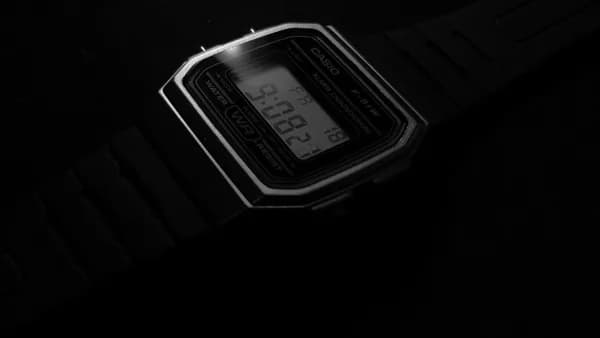
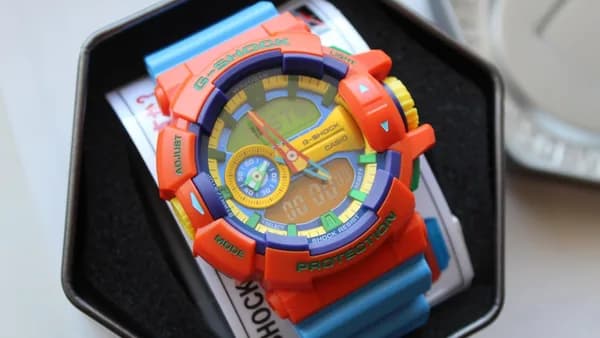
Durability has always been Casio’s calling card. The F91W, launched in 1991, was a cult favorite: simple, reliable, and cheap enough to be ubiquitous. The G-Shock series, first released in 1983, redefined toughness—shockproof, waterproof, impossible to kill. Casio’s battery innovation is rooted in these models, which prioritized efficiency and longevity over aesthetics. The AE1600HX continues this tradition, but with a twist: it brings G-Shock-level resilience to a mass-market, budget price.
Compared to previous models, the AE1600HX stands out for its combination of features. The F91W’s 30-meter water resistance pales next to the AE1600HX’s 100 meters. The G-Shock’s ruggedness often came with bulk and a higher price tag ($50-$150), whereas the AE1600HX offers similar durability in a slimmer, lighter form at $45.95. Casio’s strategy has shifted: instead of segmenting durability and battery life into premium lines, the brand now pushes these features into entry-level products. That’s a recognition of modern consumer needs—where “affordable” no longer means “disposable.”
What Casio’s Affordable 10-Year Battery Watch Means for Budget Watch Buyers and the Industry
Casio’s AE1600HX isn’t just another cheap digital. It’s a signal that budget buyers are demanding more: durability, longevity, and practical features without the markup. This shifts the calculus for competitors. Brands like Timex and Armitron, long dominant in the under-$50 segment, will need to upgrade their battery specs or risk being left behind. If market response to the AE1600HX is strong, expect an arms race in battery life, not just design.
For the industry, Casio’s move complicates the smartwatch narrative. Smartwatches have claimed the “innovation” mantle, but their battery limitations remain a pain point. The AE1600HX reminds buyers—especially in emerging markets or among practical users—that reliability can trump novelty. It won’t kill smartwatches, but it will force traditional brands to rethink what value means at the entry level. The likely result: hybrid models with longer battery life, more durable construction, and fewer “throwaway” features.
Future Trends: Predicting the Evolution of Affordable Watches with Extended Battery Life
Battery technology is on the cusp of major shifts. Casio’s 10-year cell is impressive, but solid-state batteries and ultra-low-power displays could push lifespans even further. By 2030, expect $50 watches with 15-20 year batteries, powered by advances in energy-density and circuit efficiency. Feature integration will also change: expect solar charging to become standard, with smart sensors (step counters, basic health tracking) added without sacrificing longevity.
Casio’s AE1600HX sets a new baseline. Competitors will respond, but Casio has first-mover advantage—especially with its manufacturing scale and reputation for reliability. If the AE1600HX succeeds, Casio will likely expand the concept: more color variants, limited editions, and incremental feature upgrades (Bluetooth sync, basic notifications) without sacrificing battery life. The broader implication? The affordable watch segment will become a testbed for practical innovation, not just design tweaks. Watch buyers in 2025 and beyond will expect durability and battery longevity as standard—forcing the industry to adapt or risk irrelevance.