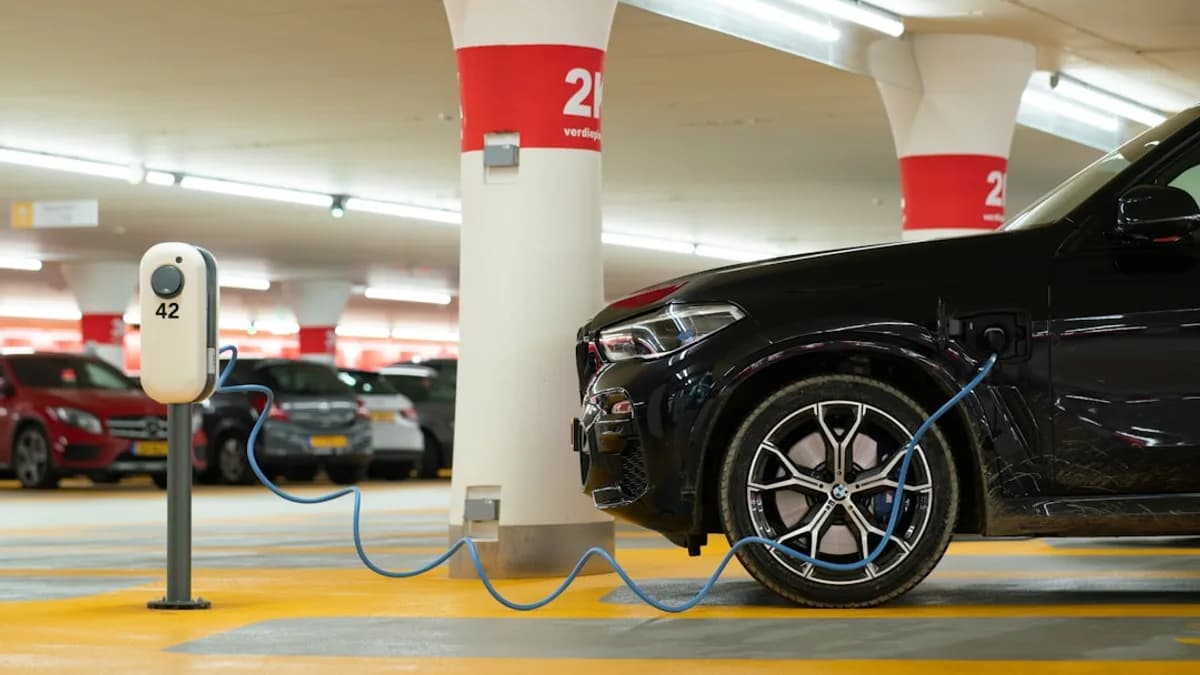
BYD is turning the three-row electric SUV into a stress test for range, charging infrastructure, and low-speed maneuverability all at once.
The Great Tang is not just another large family EV with a long spec sheet. It is BYD’s attempt to collapse three common objections to big electric SUVs: too much charging time, too much bulk, and too much compromise versus combustion-era family haulers. The model starts at the equivalent of $35,500, with the longest-range rear-wheel-drive trim priced at $39,870, according to Notebookcheck.
BYD’s Great Tang Turns the Family SUV Into a Charging-Speed Arms Race
The core signal is clear: BYD is using a mainstream family format to show off technology usually reserved for halo models. The Great Tang is a full-size, three-row SUV with up to 950 km of range on China’s CLTC cycle, a 130 kWh battery in the long-range version, and charging from 10% to nearly full in about nine minutes under the right conditions.
That combination matters more than any single number. A huge battery addresses distance. Ultra-fast charging attacks downtime. Rear-wheel steering attacks the daily annoyance of moving a long SUV through tight streets and parking garages.
The vehicle’s size makes that last point more than a gimmick. At 5,263 mm long with a 3,130 mm wheelbase, the Great Tang is not pretending to be compact. BYD is instead trying to make a large EV behave smaller where it counts.
That is the strategic layer beneath the launch. BYD is not only selling range. It is selling fewer excuses.
The Great Tang’s Battery, Range, and 10-Minute Charging Claims Put Pressure on Every Large Electric SUV
The headline version is simple: big pack, long range, very fast charging. The more important reading is that BYD is trying to shift the debate from “Can a large EV go far enough?” to “Can it recover range quickly enough to feel normal?”
According to CnEVPost, the Da Tang EV comes in four versions:
| Version | Price | Claimed range |
|---|---|---|
| Entry rear-wheel drive | 239,900 yuan ($35,500) | 800 km |
| Long-range rear-wheel drive | 269,900 yuan | 950 km |
| All-wheel drive | 289,900 yuan | 850 km |
| Top-tier version | 309,900 yuan | Not specified in source |
The battery setup is equally aggressive. The entry model uses a 105.7 kWh pack, while the other versions use 130.1 kWh. BYD pairs that with a 1,000-volt high-voltage architecture and flash-charging technology that can take the battery from 10% to 97% in 9 minutes, according to CnEVPost.
That claim comes with a major caveat. Notebookcheck says this depends on BYD’s 1 MW T-shaped chargers, and CnEVPost reports 6,682 flash charging stations across 321 cities in China. The charging number is not just a vehicle claim. It is a vehicle-plus-network claim.
MLXIO analysis: The charging speed may matter more than the 950 km range figure. Range ratings vary by test cycle, and Notebookcheck notes that 950 km CLTC could translate to roughly 400 miles on the stricter EPA cycle. But if BYD can make repeated short charging stops predictable, it changes how owners plan long trips. The risk is that peak charging numbers become marketing shorthand while charger access, battery temperature, and charging curves decide the actual experience.
Crabwalk Parking Makes the BYD Great Tang More Than a Range Showcase
The Great Tang’s 7-degree rear-wheel steering is not just a parking-party trick. For a vehicle this long, rear-wheel steering can cut the friction of ownership by reducing the turning burden at low speeds.
CnEVPost says the system gives the SUV a 5.2-meter turning radius and enables crab-walk mode. Notebookcheck frames the feature around tight parking spaces, where the rear wheels help the vehicle move in ways a conventional long-wheelbase SUV cannot.
That matters because large EVs carry a physical penalty. Bigger batteries add weight and packaging demands. Three rows add length. Premium cabins add complexity. BYD’s answer is not to shrink the product, but to add chassis tech that masks some of the bulk.
MLXIO analysis: The symbolic value is also important. Crabwalk-style parking signals that the Great Tang is not merely an affordable large EV. It is a technology showcase aimed at buyers who want space without feeling punished in daily driving.
This is where BYD’s assisted-driving and software story also fits. The Great Tang uses God’s Eye 5.0, with a roof-mounted LiDAR unit to support assisted driving on urban roads and highways. For readers tracking how AI is moving from devices into transport interfaces, MLXIO’s coverage of AI-driven Apple Maps changes offers a useful parallel on software becoming part of the mobility experience.
From Early Tang SUVs to the Great Tang: BYD’s Shift From Value EV Maker to Technology Challenger
The Great Tang lands at a sensitive point for BYD’s Tang nameplate. CnEVPost reports that the Tang series sold 6,996 units in May, down 63.20% year-on-year, marking its eighth straight month of year-on-year decline. From January through May, Tang series sales reached 32,121 units, down 50.23% year-on-year.
That gives the Great Tang a job beyond technical bragging rights. It has to refresh a weakening model line while filling what CnEVPost describes as a gap in BYD’s 300,000-yuan segment.
BYD is also positioning the Great Tang above simple value messaging. The SUV includes DiSus-A dual-chamber air suspension, up to 100 mm of lift, rear-wheel steering, a 2+2+3 seven-seat layout, and second-row aviation-style seats. The all-wheel-drive version produces 585 kW and accelerates from 0 to 100 km/h in 3.9 seconds.
The contrast with more design-led large EVs is hard to miss. Notebookcheck mentions the battery as larger than the Tesla Cybertruck’s, but BYD’s pitch is not spectacle first. It is family utility wrapped around battery scale, charging speed, and maneuverability.
Families, Operators, Rivals, and Infrastructure Owners Will Read the Great Tang Differently
For families, the appeal is direct: seven seats, long claimed range, short charging stops, and easier parking. The cabin uses a 2+2+3 layout, with captain seats in the second row and a three-seat rear bench. Notebookcheck says the setup is spacious enough for seven tall adults.
For commercial or ride-hailing operators, the source material does not provide fleet plans. Still, MLXIO analysis: if the nine-minute charging claim proves repeatable in daily use, downtime becomes the key variable to monitor. Large electric people-movers live or die on availability, not just range.
For rivals, the pressure is more specific. CnEVPost names the Leapmotor D19, Onvo L90, Li Auto, and Huawei-backed Aito as relevant competitive references in China. Notebookcheck also compares the range claim with the Lucid Gravity, which already offers 450 miles on a charge in the U.S.
Infrastructure is the harder test. BYD can publish charging claims, but owners need high-power chargers in the right places. Battery durability and cold-weather behavior will also matter over time; MLXIO has covered related battery durability questions in CATL’s 15,000-Cycle Sodium-Ion Battery Defies Winter, though that is a separate technology track from BYD’s Blade Battery.
BYD’s Great Tang Sets Up the Next EV Battle: Faster Charging, Smarter Steering, and Fewer Range Excuses
The Great Tang’s real test will not be whether 950 km CLTC looks impressive on a launch slide. It already does. The test is whether BYD can make the ownership loop hold together: fast charging, consistent range, battery safety, cabin comfort, and daily drivability in a vehicle weighing around 3 tons, as Notebookcheck describes it.
Evidence that would strengthen BYD’s case includes repeatable high-power charging sessions, reliable access to compatible chargers, and real-world range results that stay competitive once tested outside CLTC conditions. Evidence that would weaken it would be slower sustained charging, limited charger access, or a gap between the Great Tang’s maneuverability features and actual urban usability.
If BYD delivers, the large electric SUV debate shifts. The question stops being whether a three-row EV can be practical. It becomes which automakers can scale long range, fast charging, and big-vehicle agility at prices that do not reserve the best technology for the most expensive badge.
The Bottom Line
- BYD is pushing long-range electric SUVs toward mainstream pricing.
- A claimed 10% to nearly full charge in about nine minutes could reduce one of the biggest EV ownership concerns.
- Rear-wheel steering and crabwalk-style maneuverability address the practical challenges of driving a 5,263 mm three-row SUV.