Why the Integration of E-Paper Displays and Sensors on a Single Board Matters for Developers
A single board now packs an e-paper display, touch controls, and integrated sensors—shrinking the hardware stack for prototyping IoT devices. That’s not just convenient; it’s a shift in how developers approach embedded systems. The days of juggling multiple breakout boards and tangled jumper wires are getting shorter.
Demand for compact, all-in-one development boards is surging. The global IoT market is projected to hit $1.7 trillion by 2025, according to IDC. Developers need tools that speed up iteration and lower complexity, especially as products move from proof-of-concept to field testing. Integrating display and sensors eliminates a major pain point: hardware compatibility. Instead of troubleshooting mismatched voltages or conflicting pins, engineers can focus on software logic and user experience.
E-paper displays drive the appeal even further. Their ultra-low power draw—often below 1 mW during static display—means battery-powered devices can run for months, not days. For projects like environmental monitors, portable medical devices, or smart badges, this power profile is critical. Battery life isn’t just a spec; it’s the difference between a device that’s practical and one that’s shelved. As Notebookcheck reports, this new board’s design directly targets that challenge, combining display, touch, and sensors in a compact, developer-friendly package.
What Makes the Raspberry Pi Chipset a Popular Choice for Development Boards
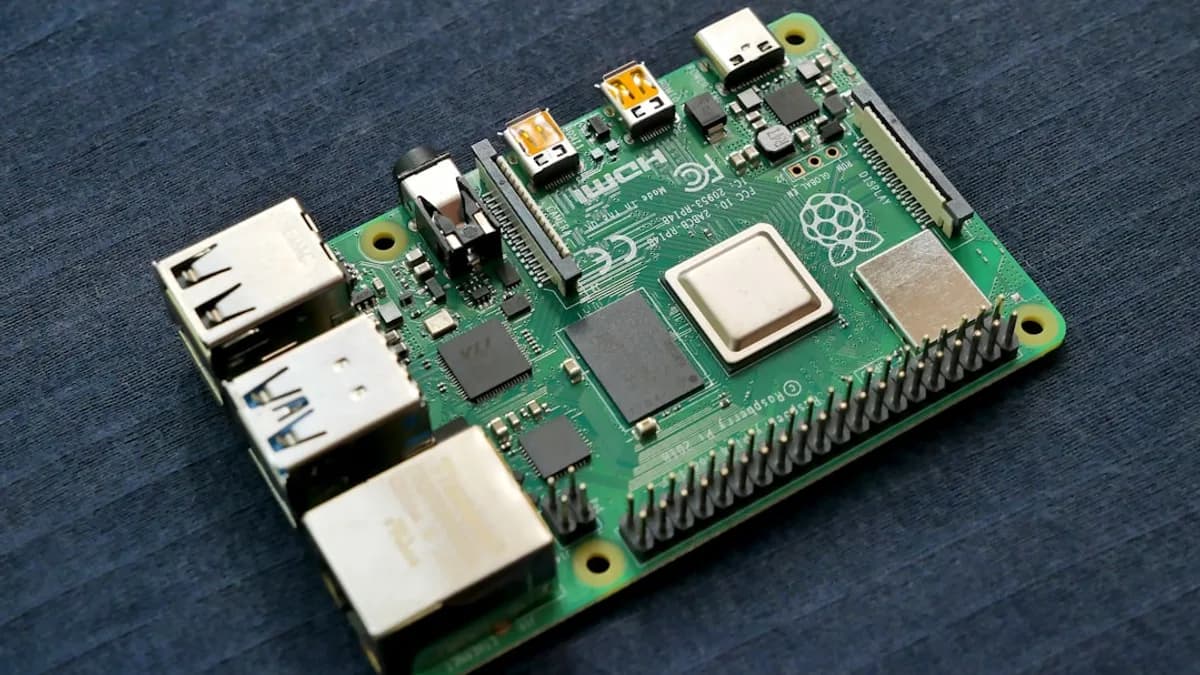
The Raspberry Pi chipset at the heart of this board isn’t just a nod to nostalgia—it’s a deliberate choice. Raspberry Pi’s BCM2837 (or similar) SOCs pack quad-core ARM Cortex-A53 processors, clocking up to 1.4 GHz. That’s enough grunt to run Linux, manage sensor arrays, and drive a display, all without breaking a sweat. The chipset’s integrated GPU makes UI rendering on e-paper smooth and responsive.
Why does this matter? Raspberry Pi’s architecture guarantees compatibility with a massive library of libraries, frameworks, and peripherals. Over 40 million Raspberry Pi units have been sold worldwide, and the official forums see millions of monthly visits. That means developers aren’t fighting obscure errors alone; fixes, tutorials, and community mods are a search away.
The Pi’s GPIO pins (typically 26-40 depending on the board variant) are flexible, supporting protocols like I2C, SPI, and UART. That makes the integration of external sensors and actuators trivial. Whether you’re connecting a relay, a humidity sensor, or a camera module, the chipset’s open standards and rich documentation remove friction. The new board’s design taps into this—developers can use onboard sensors for quick tests, then scale up to complex sensor networks, all on the same platform.
How the Integrated Touch-Controlled E-Paper Display Enhances User Interaction
E-paper isn’t just about mimicking paper. The technology relies on microcapsules that change color with an electrical charge, letting displays hold an image without constant power. Unlike LCDs or OLEDs, e-paper only draws energy when updating the screen—idle images cost nothing. That’s why Amazon’s Kindle can last weeks on a single charge.
But this board doesn’t stop at low-power visuals. The touch layer turns the e-paper display into a real interface. Capacitive touch sensors detect finger movement, enabling gestures, taps, and swipes. That means developers can build dashboards, controls, or notification systems that work without external screens or keyboards.
Consider a smart thermostat built on this platform. The user could swipe to change settings or tap to view temperature history. No need for a companion app or complex installation—interaction happens directly on the device. In industrial settings, field techs could log data or trigger actions with a touch, even in battery-only deployments.
The combination of e-paper and touch input also enables autonomous devices. For example, a portable air quality monitor could display readings and let users set alerts, all without a smartphone. The display remains readable under direct sunlight, critical for outdoor projects. With typical e-paper refresh times around 0.5–1 second, usability is strong enough for most information-driven applications.
In What Ways the Board’s Integrated Sensors Expand Its Application Possibilities
Sensor integration isn’t just a feature—it’s a force multiplier. This board includes environmental sensors (likely temperature, humidity, maybe air pressure), motion sensors (accelerometer, gyroscope), and light sensors. Each unlocks a different category of device.
Environmental sensors turn the board into a weather station, indoor air quality tracker, or agricultural monitoring node. Motion sensors enable wearables, asset trackers, and gesture-based controls. Light sensors can drive smart lighting or adapt display brightness. Since these sensors are onboard, developers skip the headache of sourcing, soldering, and configuring third-party modules.
Reducing external wiring cuts failure points and simplifies debugging. A typical prototype with separate sensor boards can have half a dozen connections—each one a potential loose wire or misconfigured pin. With everything integrated, hardware bugs drop, and build times shrink.
Industries stand to benefit. In logistics, companies can deploy portable asset trackers that log location and environmental data without relying on bulky equipment. Healthcare startups can build patient monitoring devices that record motion and environmental factors, all on a single board. Educational projects—like science fair kits or coding workshops—get easier for students when setup is plug-and-play.
How Battery-Powered Operation and External Connectivity Make This Board Versatile
Cutting the cord changes the equation. Battery operation means this board can run in remote locations, on buses, or clipped to a backpack. Power consumption is low enough that a standard 18650 lithium-ion cell (roughly $5 retail) could run a simple sensor application for weeks.
External connectivity isn’t boxed in, either. The board’s GPIOs and communication protocols let developers hook up actuators—motors, relays, solenoids—or add specialized sensors like CO₂ monitors or cameras. This modularity means the device can start as a standalone prototype, then scale up to a networked node or interactive controller.
Take a field deployment example: a researcher needs to monitor soil moisture and temperature in a remote plot. The board, powered by a rechargeable battery, logs data from integrated sensors, displays readings via e-paper, and lets the user set thresholds with touch input. Later, she adds an external relay to trigger irrigation pumps—no redesign needed.
In industrial automation, the board could serve as a portable diagnostic tool. Technicians use it to measure environmental conditions, trigger alarms, and interact with machinery, all from a device that fits in a pocket. The ability to connect external actuators means the board isn’t locked into one function; it adapts as projects evolve.
What Developers Should Watch For Next
This board’s approach—integrating display, sensors, touch, and Pi-based compute—signals where prototyping is headed. As hardware platforms converge, time-to-market for IoT devices shrinks. Developers should watch for boards with even more specialized sensors (like gas, vibration, or biometric) and expansion slots for wireless modules.
Power management will become a differentiator. Boards that combine low-power operation with solar charging or advanced battery diagnostics will dominate off-grid applications. Open-source firmware and community-driven libraries will drive flexibility and adoption; platforms that lock down hardware will lose mindshare.
For now, this board gives developers a shortcut: rapid prototyping, simplified hardware, and portable operation. Whether you’re building a commercial product, a field research tool, or an educational device, the era of “all-in-one” boards is here—cutting complexity, boosting reliability, and making innovation easier to ship.
Why It Matters
- Integrated boards simplify IoT prototyping by reducing hardware complexity for developers.
- E-paper displays enable ultra-low power consumption, extending battery life for portable devices.
- Raspberry Pi chipsets provide sufficient processing power, making development boards more versatile and accessible.