Introduction: Overview of Blue Origin’s New Glenn Third Flight
Blue Origin, founded by Jeff Bezos, has long been seen as a major contender in the commercial space launch industry. Its New Glenn rocket program, named after astronaut John Glenn, aims to provide heavy-lift capabilities to serve both government and private sector clients. After years of development delays, the third flight of New Glenn was highly anticipated, marking the rocket’s first commercial mission. The primary objective was to deliver the AST SpaceMobile satellite payload into its designated orbit, a critical step for the customer’s plans to deploy broadband connectivity from space [Source: Source]. This launch was also significant as it featured the first attempt to reuse New Glenn’s booster, showcasing Blue Origin’s commitment to sustainable and cost-effective spaceflight. The industry watched closely, hoping for a smooth mission that would cement Blue Origin’s role as a reliable launch provider.
Mission Outcome: Satellite Payload Placed in Incorrect Orbit
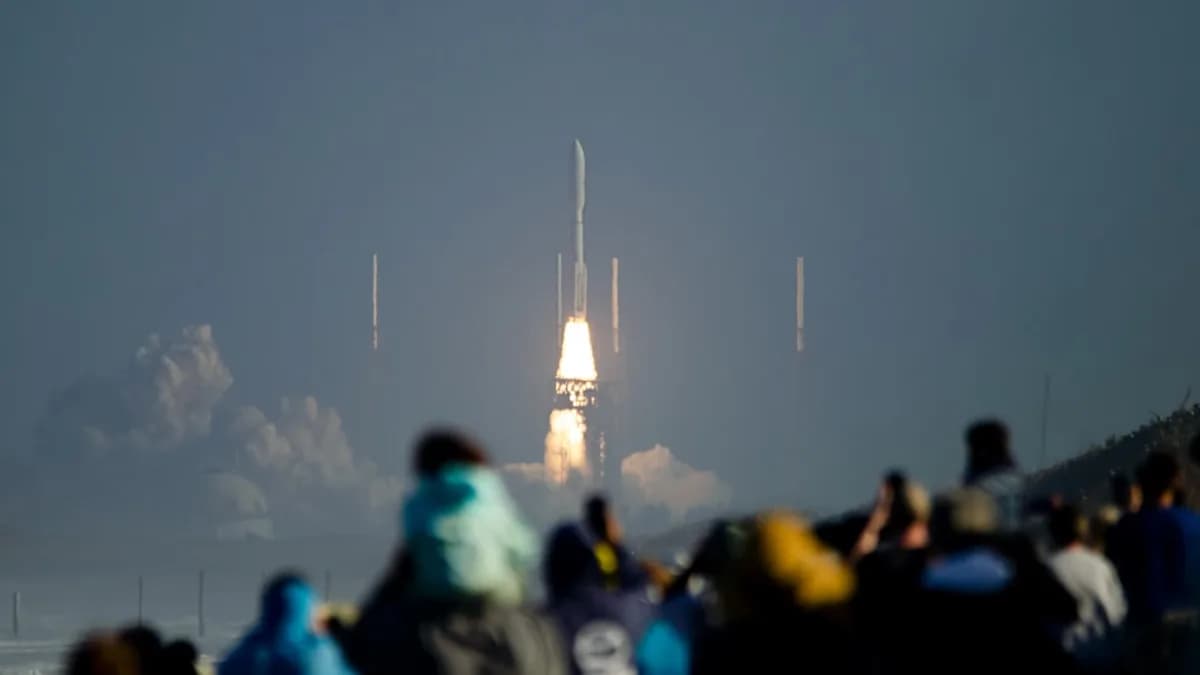
Despite high expectations, the third flight of New Glenn encountered a major setback. The rocket successfully lifted off from Cape Canaveral, but the satellite payload was ultimately placed in an incorrect orbit, falling short of its intended destination [Source: Source]. This deviation poses immediate challenges for AST SpaceMobile, whose satellite may now face limitations in its operational capabilities or require additional maneuvers to reach its planned orbit—maneuvers that could drain onboard resources and shorten mission lifespan.
For Blue Origin, the outcome is a stark contrast to the prior two New Glenn flights. The earlier launches were primarily test missions, with the second flight achieving a textbook orbital insertion. This third mission, however, was the first to carry a commercial satellite—a milestone that now comes with disappointment for both the company and its customer. The incident has triggered scrutiny from industry observers, who are now questioning the reliability of New Glenn as a platform for high-value payloads. Immediate responses from Blue Origin and AST SpaceMobile suggest ongoing assessments of the cause and potential mitigation strategies, but the operational impact is clear: the satellite is not where it was supposed to be, and the ripple effects will be felt across future planning.
Technical Analysis: What Went Wrong?
The incorrect orbital insertion raises questions about the technical factors behind the failure. While Blue Origin has yet to release a full incident report, early statements indicate that the issue may have occurred during the upper stage burn—an essential phase for precision orbital placement [Source: Source]. Potential causes range from propulsion anomalies, guidance system errors, to timing miscalculations. Each step in the orbital insertion process is tightly choreographed, and even minor deviations can result in significant trajectory errors.
One of the mission’s unique aspects was its attempt at booster reuse. New Glenn’s booster, designed for multiple flights, was utilized for the first time in a commercial launch. Industry experts have noted that while booster reuse is a proven concept—most notably by SpaceX—it introduces new variables into mission performance. Reused hardware can behave differently under stress, and while Blue Origin has conducted extensive ground testing, actual flight conditions are less predictable. It is still unclear whether the booster’s reuse contributed to the orbital insertion failure, but it remains a focus of the investigation.
Blue Origin’s preliminary comments have emphasized their commitment to transparency and ongoing review, promising a thorough analysis and corrective measures. External observers, including engineers and spaceflight analysts, are urging caution in drawing conclusions until more data is available. However, this incident underscores the complexity of orbital mechanics and the challenges inherent in transitioning from test flights to operational missions. The company’s response will be crucial in restoring confidence, both internally and among its customer base.
Implications for Blue Origin and the Commercial Space Industry
The failed orbital insertion is a blow to Blue Origin’s reputation, especially as the company seeks to attract more commercial customers and government contracts. In a market dominated by SpaceX, whose Falcon 9 rockets have achieved a high success rate in recent years, Blue Origin must demonstrate reliability to remain competitive [Source: Source]. This incident may prompt satellite operators to reconsider their launch providers, particularly for critical or high-value missions.
The timing is challenging, as the commercial space launch industry is at a pivotal moment. SpaceX continues to set records for launch cadence and booster reuse, while new entrants like Rocket Lab and established players such as United Launch Alliance are expanding their offerings. Recent failures by competitors, such as Astra and Firefly, highlight that launch reliability is a universal challenge, but Blue Origin’s setback is especially notable given the company’s profile and resources.
Future New Glenn launches may now face increased scrutiny, with customers demanding more robust assurances and risk mitigation strategies. The company could see delays in its commercial contract pipeline as it works to resolve the technical issues and restore confidence. While failures are not uncommon in early launch programs, the stakes are higher for Blue Origin, which must balance innovation, reliability, and customer trust in a fast-evolving industry.
Lessons Learned and Future Outlook
The third flight’s outcome offers important lessons for Blue Origin. First, it underscores the need for rigorous testing and validation, particularly when introducing new operational elements like booster reuse. While sustainable practices are vital for the future of spaceflight, the challenges in ensuring consistent performance across reused hardware must not be underestimated. The company will likely intensify its review processes, focusing on both hardware and software reliability in upper stage operations.
Second, the incident highlights the importance of transparent communication and rapid response. Blue Origin’s willingness to engage with customers and the broader industry will be essential in managing the fallout and charting a path forward. The company may need to invest further in redundancy and fault-tolerant systems, as well as in simulation and modeling to anticipate potential failure modes.
Despite the setback, New Glenn’s development timeline remains ambitious. Blue Origin has announced plans for additional flights, including government payloads and commercial satellites. The company’s ability to learn from this incident, implement corrective actions, and demonstrate successful missions will be critical in regaining momentum. Booster reuse remains a cornerstone of Blue Origin’s vision, but this episode is a reminder that reliability must always take precedence in commercial spaceflight.
Conclusion: Assessing Blue Origin’s Path Forward After the Third Flight
The third flight of Blue Origin’s New Glenn rocket offers a mixed picture: significant progress in launch operations, tempered by a high-profile failure to deliver its payload to the correct orbit [Source: Source]. While setbacks are part of the space industry’s learning curve, the incident raises questions about the readiness of New Glenn for routine commercial service. Blue Origin’s response—through transparent investigation, technical improvements, and customer engagement—will determine its trajectory in the months ahead.
As the commercial space launch landscape grows more competitive and demanding, reliability and innovation must go hand in hand. Blue Origin has the resources and ambition to recover from this setback, but it must address both technical and reputational challenges. The evolving industry will watch closely as New Glenn prepares for its next flight, knowing that every launch is a test of trust and capability.