Baseus is selling a 10,000mAh battery, 67W USB-C charger, built-in wall plug, and two USB-C cables in one China launch product for CNY 345, or about $51.
That is the real signal behind the Baseus SuperCharge Pro 3-in-1, also known as the PicoGo AT31: portable chargers are no longer just backup batteries. They are being redesigned as replacements for the charging pouch itself, according to Notebookcheck.
Baseus Is Turning the 10,000mAh Power Bank Into a Travel Charger Replacement
The product combines three functions that usually live as separate items: a 10,000mAh power bank, a built-in retractable wall plug, and an integrated USB-C cable. That changes the buying question. Instead of asking whether the battery has enough capacity, buyers have to ask whether it can replace a wall charger, a cable, and a daily top-up pack at the same time.
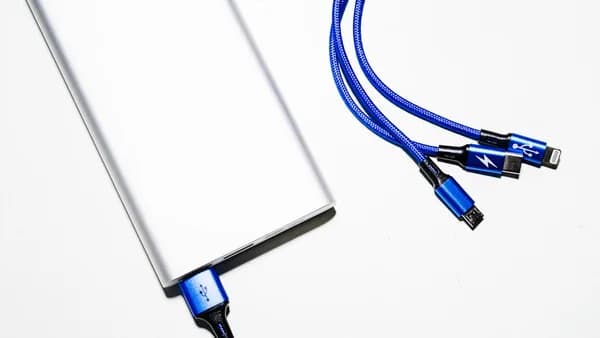
Baseus calls the design “dual-cable.” One cable is a non-detachable retractable USB-C line that measures 72cm, or about 28.3 inches. The second is a detachable 20cm Type-C cable that doubles as a lanyard loop and can be removed for normal cable use.
The pricing makes the product more interesting than the spec sheet alone. At CNY 345, the SuperCharge Pro 3-in-1 lands near the price of some single-purpose charging accessories, while bundling the adapter, battery, and cables into one device. That does not automatically make it the best option for everyone. It does make it a sharper test of how much buyers value fewer loose parts.
The Specs That Matter: 67W Charging, 10,000mAh Capacity, and a 72cm USB-C Cable
The headline number is 67W, but the fine print matters. The power bank has a maximum output rating of 67W, so that ceiling applies to the device as a whole rather than promising full-speed charging to every connected device at once.
| Feature | Baseus SuperCharge Pro 3-in-1 | Practical read |
|---|---|---|
| Battery capacity | 10,000mAh | Enough for most smartphone users to get more than one recharge, per Baseus’ positioning |
| Max output | 67W | Useful for phones, tablets, and some USB-C laptops, depending on power draw |
| Integrated cable | 72cm USB-C, retractable | More usable than a short fixed cable when outlets or tables are awkward |
| Second cable | 20cm Type-C, detachable | Works as a lanyard loop or a short standalone cable |
| Ports | Integrated USB-C cable, one USB-C port, one USB-A port | Can power up to three devices at the same time |
| Protocols | PD, PPS, QC, AFC | Broad compatibility across modern fast-charging devices |
The long retractable cable is the product’s most practical design choice. Short built-in cable tabs are convenient only when the device sits right next to the phone. A 72cm cable gives enough reach for a desk, train tray, café table, or hotel outlet without forcing users to pack a separate cord.
The built-in wall plug is the other half of the pitch. Plug it into the wall, and it behaves like a charger. Leave the outlet, and it becomes a battery pack. That hybrid behavior is why this product is closer to an all-in-one power hub than a conventional brick battery.
The $51 China Price Makes the Ugreen Comparison Hard to Ignore
Notebookcheck notes that the Ugreen 3-in-1 65W is already available outside China at $54.99 on Amazon. That gives Baseus a visible comparison point, even before the SuperCharge Pro 3-in-1 receives wider availability.
MLXIO analysis: the CNY 345 launch price pressures rivals because Baseus is not selling only wattage. It is packaging cable management, wall charging, multi-device output, and app-linked status features into one low-cost product. A buyer comparing separate accessories would need to consider a wall charger, a USB-C cable, and a 10,000mAh battery pack. Baseus is collapsing that list.
The unknown is how much of the China launch price survives a global rollout. International pricing can change once distribution, certification, retailer margins, and regional plug designs enter the picture. The source material says a global debut is expected soon, but it does not give a date, regions, or final pricing.
For readers tracking the wider accessory beat, MLXIO has covered how pricing pressure shows up in compact chargers with Ugreen's $18 X740 Charger Undercuts Anker's $40 Bet, and how China-first hardware launches can build early buzz in adjacent categories like JBL Sparks Buzz with Exclusive Emerald Green Soundgear Clips.
The Trade-Off: Fewer Loose Parts, More Dependence on Built-In Parts
All-in-one designs solve one problem by creating another. If the retractable cable, wall plug, or internal battery becomes the weak point, the whole product loses more utility than a modular setup would.
That risk is especially relevant here because the main retractable cable is not detachable. The secondary 20cm Type-C cable can be removed and used separately, but the 72cm cable is part of the device. Convenience goes up. Repairability and flexibility may go down.
Baseus has added some monitoring features. The PowerSense NFC function lets users check the power bank’s overall status through a companion smartphone app. The unit does not have a full smart display, but it includes an LED screen that shows internal battery percentage and current status.
Baseus also says protection features are designed to support stable charging under different circumstances. The available source material does not spell out the exact protection list, so buyers should wait for full product pages or regional certification details before treating that as more than a general safety claim.
Everyday USB-C Buyers Should Judge More Than Capacity
For a modern portable charger, 10,000mAh is only one part of the decision. The better test is whether the device fits the way someone actually charges.
Buyers should check:
- Cable design: A built-in cable saves space, but a non-detachable one is also a dependency.
- Wall-plug integration: Useful if the plug matches the buyer’s region and travel needs.
- Output ceiling: 67W is strong for phones and tablets, but heavy laptop users may need more.
- Port mix: The Baseus unit offers integrated USB-C, one USB-C port, and one USB-A port.
- Protocol support: PD, PPS, QC, and AFC help with broad device compatibility.
- Display and app features: The LED screen gives basic status; PowerSense NFC adds app-based checks.
MLXIO analysis: 10,000mAh remains the sensible size for a daily-carry hybrid because it keeps the device smaller than larger travel batteries while still offering meaningful phone top-ups. But it is not a full substitute for higher-capacity packs on longer trips or for users who need sustained laptop charging.
The Next Fight Is Over the Charging Pouch, Not Just the Battery Cell
The Baseus SuperCharge Pro 3-in-1 points to a clear watch item: whether global versions keep the same value equation. If the international model arrives near the China price, with the same 67W output, 72cm retractable USB-C cable, wall plug, and 10,000mAh capacity, it will be a serious alternative to buying separate charging parts.
If the price rises sharply, plug options are limited, or the global model drops features, the product becomes less disruptive and more like another clever niche charger.
The evidence to watch is specific: global launch timing, regional plug variants, final pricing, detailed safety specifications, and real multi-device charging behavior when all three outputs are active. That will decide whether Baseus has built a convenient travel charger replacement — or just a dense power bank with a very useful cable.
Key Takeaways
- Baseus is positioning the 10,000mAh power bank as an all-in-one travel charging kit rather than just a backup battery.
- The CNY 345, about $51, launch price makes the bundled charger, battery, and cables more competitive against single-purpose accessories.
- The 67W maximum output and integrated USB-C cables could appeal to users who want fewer loose parts in a daily carry setup.