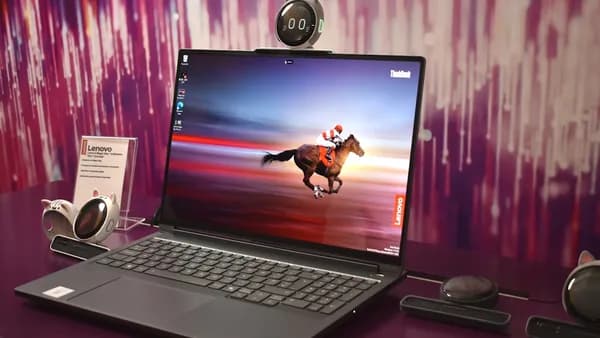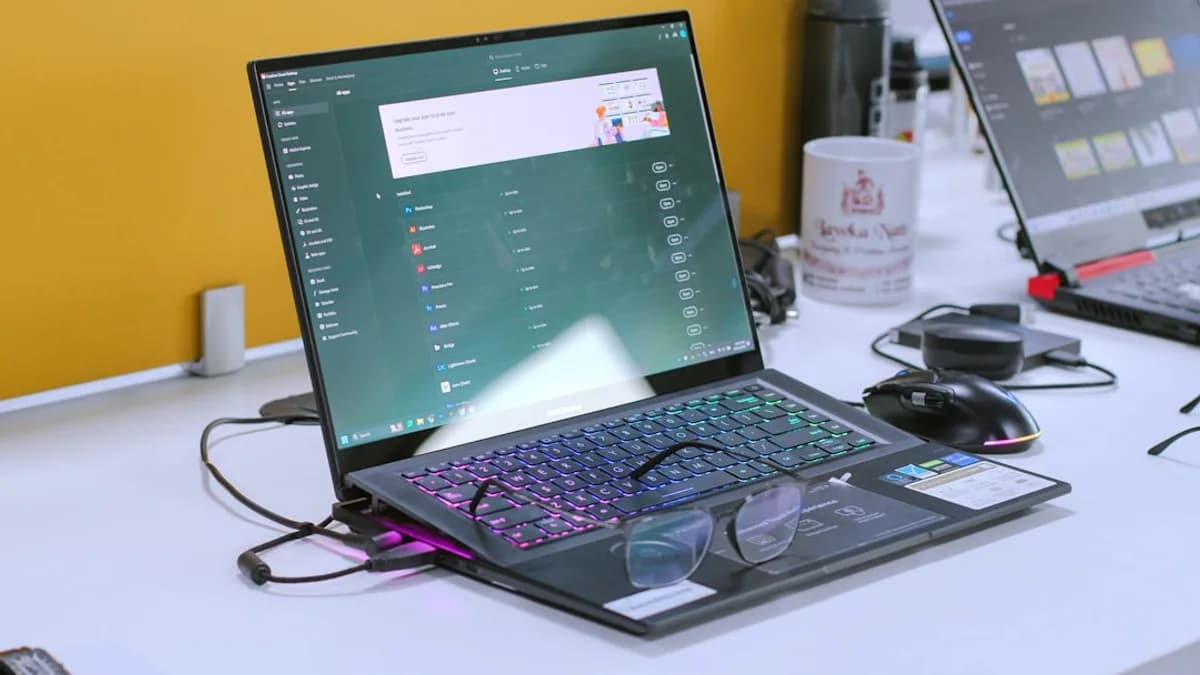
Asus’ discounted ROG Zephyrus G16 is now a sharper value argument than the newer, far pricier 2026 model — at least for buyers who can live with 16 GB of soldered RAM and weaker HDR. The Asus ROG Zephyrus G16 GU605 with an RTX 5070 laptop GPU, Intel Core Ultra 9 285H, and 240 Hz OLED display is selling for $1,574.99 at Best Buy, a discount of more than $500 versus list price, according to Notebookcheck.
The deal matters because the discounted 2025 configuration sits far below Asus’ refreshed 2026 ROG Zephyrus G16 pricing. Notebookcheck says the newer US model with an RTX 5070 Ti, 32 GB of RAM, and Core Ultra 9 386H costs $3,699 — a huge jump for buyers comparing portable premium gaming laptops rather than chasing the newest badge.
Asus ROG Zephyrus G16 RTX 5070 drops below $1,600 in major gaming laptop deal
The clearest thesis here is price compression: a premium OLED gaming laptop has moved into a much more aggressive bracket without losing the parts that define the Zephyrus G16 pitch. The discounted model includes a 16-inch 2.5K OLED panel, 240 Hz refresh rate, Nvidia GeForce RTX 5070 laptop GPU, 16 GB RAM, and Intel Core Ultra 9 285H processor. Notebookcheck lists the Best Buy sale price at $1,574.99.
That is not a minor coupon on an entry-level chassis. Notebookcheck gave the ROG Zephyrus G16 (2025) a 90% rating and a “Top Rated” badge, citing its metallic chassis, portability, speakers, RGB keyboard, large trackpad, and port selection. The machine also includes a 90 Wh battery, Type-A and Type-C ports, an SD card slot, HDMI out, and a 3.5 mm audio jack.
The strongest counterpoint is that deal prices can disappear fast. Notebookcheck’s own disclaimer says the price was available at the time of writing and may be subject to time restrictions or limited unit availability. That matters with laptop deals because the headline number can vanish before a buyer finishes comparing configurations.
Still, the value case holds if the listed Best Buy configuration is the one shoppers actually receive. The discount puts the 2025 G16 hundreds of dollars below list while keeping the headline combination of RTX 5070 graphics, Core Ultra 9 silicon, and a high-refresh OLED display intact.
RTX 5070, Core Ultra 9, and 240 Hz OLED carry the premium-spec argument
The G16 deal works because the discounted parts list still reads like a high-end portable gaming laptop, not a clearance-bin compromise. Notebookcheck says the laptop should handle AAA games at QHD resolution with DLSS, while also offering enough performance for content creation workloads. Tom’s Hardware also lists the Best Buy deal at $1,574.99, describing the panel as a 2560 x 1600 OLED with a 240 Hz refresh rate and 500 nits of brightness.
The Core Ultra 9 285H is the CPU at the center of this configuration. Tom’s Hardware describes it as a 16-core chip with 6P, 8E, and 2 LP cores, 16 threads, a 2.5 GHz base clock, and boost up to 5.4 GHz. That gives the machine a strong spec foundation for gaming, multitasking, and creator workloads, though buyers should still judge the laptop as a full system rather than a CPU line item.
The OLED panel is the other anchor. A 240 Hz 1600p OLED screen gives the Zephyrus G16 a cleaner premium identity than many gaming laptops that lead with GPU specs alone. For readers tracking OLED gaming hardware more broadly, MLXIO’s related coverage includes 680Hz Bet Turns MSI OLED Gaming Monitor Into 3 Screens and 1,020-Nit OLED Finally Fixes Razer Blade 16's HDR Flaw.
The counterpoint is equally clear: Notebookcheck says the G16 is held back by soldered RAM and a dim HDR picture. That means the 16 GB memory configuration is not just a starting point a buyer can easily expand later. It is a real constraint for anyone expecting the laptop to age like a thicker workstation-class machine.
The 2026 Zephyrus comparison makes the sale look more rational
The most useful comparison is not list price versus sale price — it is the discounted 2025 model against Asus’ much more expensive 2026 refresh. Notebookcheck says the 2026 ROG Zephyrus G16 version with an RTX 5070 Ti, 32 GB RAM, and Core Ultra 9 386H costs $3,699 in the US. It also says buyers are paying 234% more for the same CPU performance, double the RAM, a brighter 240 Hz display with 1,100 nits of Peak HDR brightness, and 23% faster performance than the RTX 5070 laptop GPU.
That comparison does not make the 2026 model pointless. More RAM, a brighter HDR panel, and faster graphics are meaningful upgrades, especially for buyers who keep laptops for years or push GPU-heavy workloads. The 1,100-nit Peak HDR figure alone addresses one of the 2025 model’s cited weaknesses.
But the math still favors the discounted 2025 G16 for many buyers because the price gap is severe. The sale model keeps the same broad Zephyrus formula: portable metallic chassis, high-refresh OLED, strong CPU, modern Nvidia laptop graphics, and a full port mix. It gives up upgrade headroom and HDR punch, not the core identity of the machine.
A simple contrast shows the trade-off:
| Model | GPU | RAM | CPU | Display note | Price cited |
|---|---|---|---|---|---|
| ROG Zephyrus G16 (2025) | RTX 5070 | 16 GB | Core Ultra 9 285H | 240 Hz 1600p OLED, 500 nits | $1,574.99 |
| ROG Zephyrus G16 (2026) | RTX 5070 Ti | 32 GB | Core Ultra 9 386H | 240 Hz, 1,100 nits Peak HDR | $3,699 |
Soldered RAM and HDR brightness are the real buying risks
The deal is strongest for buyers who prize portability, OLED motion clarity, and current Nvidia graphics more than long-term upgradeability. Notebookcheck’s review praise is substantial: superb metallic chassis, portable design, great speakers, excellent RGB keyboard, large trackpad, good operating temperatures during intense gaming, and 9-hour battery life. Those points make the G16 more than a spec sheet.
The weakest part is not performance, based on the supplied review summary. It is flexibility. Soldered RAM means buyers should treat 16 GB as a hard specification, not a temporary limitation. The dim HDR picture also matters because OLED buyers may expect the display to excel everywhere, and Notebookcheck says the laptop would have scored higher without those issues.
PC Gamer’s related assessment of a Zephyrus G16 configuration also flags noise as a concern in its testing of an RTX 5080-equipped version, while still calling the G16 slim, sleek, and portable. That does not prove the discounted RTX 5070 unit behaves identically, but it reinforces the practical point: shoppers should read configuration-specific reviews before assuming every G16 variant lands the same acoustics and thermals.
For readers weighing portable gaming hardware rather than only laptops, MLXIO has also tracked adjacent Asus gaming hardware in OLED ROG Ally X20 Bets Asus Can Own Gaming Handhelds. The common thread is display quality as a purchase driver — but in this Zephyrus deal, the discount is what makes the OLED pitch harder to ignore.
Best Buy checkout details will decide whether this remains a standout deal
The next step is verification, not hype. Buyers should confirm the exact ROG Zephyrus G16 GU605 configuration at checkout: RTX 5070, Core Ultra 9 285H, 16 GB RAM, 1 TB SSD if listed by the retailer, and the 16-inch 2.5K / 2560 x 1600 240 Hz OLED panel. Zephyrus G16 variants can differ, and the wrong configuration can erase the value case.
The price also needs a final check. Notebookcheck says retailer pricing may change and availability may be limited. That means the relevant number is the final cart price, including any retailer terms, return window, and warranty details.
This deal is best read as a narrowing window: if the $1,574.99 price holds, the 2025 Zephyrus G16 offers a premium OLED, RTX 5070 gaming laptop package at a steep discount to both its own list price and Asus’ cited 2026 refresh. If stock dries up, the price rises, or a buyer needs 32 GB RAM and stronger HDR, the argument weakens quickly.
The Bottom Line
- The discounted 2025 Zephyrus G16 brings a premium OLED gaming laptop below $1,600.
- The 2026 model costs more than twice as much, making the older configuration a stronger value for many buyers.
- Buyers should weigh the savings against trade-offs like 16 GB soldered RAM and weaker HDR.