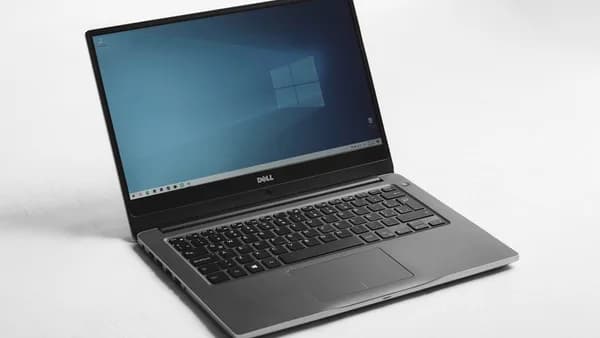
Asus Unveils ExpertBook Ultra 14 Featuring Core Ultra X7 at Premium $3599 Launch
Asus just dropped the ExpertBook Ultra 14, pairing Intel’s new Core Ultra X7 with a tandem OLED touchscreen—and slapping on a $3,599 sticker that outpaces even most MacBook Pros. The device hits shelves today, targeting buyers willing to pay a premium for the latest silicon and an experimental display design, according to Notebookcheck.
First unveiled at CES 2026, the Ultra 14 wowed with its impossibly thin chassis and dual-layered OLED touchscreen. At just 1.29kg and 14.3mm thick, it’s lighter and slimmer than Dell’s XPS 13 Plus or Apple’s M3 MacBook Air. The real showstopper: a 14-inch primary OLED display with a secondary “tandem” panel seamlessly embedded for app switching, drawing, and contextual multitasking—a feature still missing from most rivals.
Intel’s Core Ultra X7 promises a jump in AI and graphics performance over last year’s Meteor Lake chips, positioning the Ultra 14 as a bleeding-edge workstation for designers, execs, and power users. Early hands-on at CES flagged strong build quality, rapid wake-from-sleep, and near-invisible bezels. But even for a flagship, $3,599 is a jolt in a market where $2,000 still buys a top-tier ultraportable.
High-End Design and Features Justify the ExpertBook Ultra 14’s Steep Price Tag
Asus is betting buyers will see value in materials and innovation that push the envelope beyond mere processor bumps. The ExpertBook Ultra 14’s magnesium-lithium chassis shaves grams without feeling flimsy, echoing the build priorities of Lenovo’s ThinkPad X1 Carbon but with a more modern, minimalist aesthetic.
What sets this laptop apart is the tandem OLED touchscreen. Unlike Lenovo’s Yoga Book’s e-ink secondary panel or Apple’s short-lived Touch Bar, Asus integrates a second OLED layer directly under the main display, letting users run widgets, take handwritten notes, or control media without interrupting their main workflow. That’s a clear productivity play—particularly for creative professionals, coders, or anyone juggling multiple apps. It’s also a risky bet: tandem OLED tech is new, prone to higher energy draw and potential panel burn-in, so long-term durability remains unproven.
Stacked against the HP Spectre x360 and Dell XPS 14, the Ultra 14’s price still stands out. HP’s flagship 14-inch OLED convertible maxes out at $2,199, while the highest-spec Dell XPS 14 ticks in under $2,800 with a discrete GPU. Apple’s 14-inch M3 MacBook Pro, which leads in battery life and ecosystem lock-in, starts at $1,999 and rarely climbs above $3,000 fully loaded.
Asus isn’t chasing the mass market here. This is a CEO flex, a developer’s reward, or a mobile creative’s dream—buyers who value innovation over raw price-to-performance. The Ultra 14’s unique display and next-gen silicon might nudge the premium segment forward, but mainstream adoption will hinge on how well those features hold up in daily use.
What to Expect Next: Availability, Competitors, and Future Asus Innovations
Asus says the ExpertBook Ultra 14 will roll out first in North America and Europe, with Asian markets expected by mid-summer 2026. Early adopters will be watching for firmware updates and real-world battery benchmarks, especially as the tandem OLED’s power demands get stress-tested outside the controlled chaos of CES demo halls.
Competitors are already circling. Rumors suggest Dell is prototyping a dual-LCD XPS for late 2026, while Lenovo continues to push foldable and dual-screen designs. If Asus nails the user experience, rivals will scramble to match that tandem panel innovation—or find cheaper ways to mimic its multitasking chops.
For buyers with the cash and the craving for the latest tech, the Ultra 14 is a statement piece. But with next-gen Intel Lunar Lake chips and OLED advances expected by early 2027, patient shoppers may want to see if Asus refines the concept—or if the price drops as this tech trickles down.
Early verdict: The Ultra 14 could redefine what "premium" means for ultraportables, but its real test starts now—with real users, real workloads, and a market less forgiving than a CES showroom.
The Bottom Line
- Asus is pushing the boundaries with tandem OLED tech and advanced AI hardware, setting a new bar for premium laptops.
- The $3,599 price tag far exceeds most current high-end ultraportables, signaling a bold strategy and targeting a niche market.
- This launch could influence future laptop designs and pricing, especially among competitors seeking to match innovation.