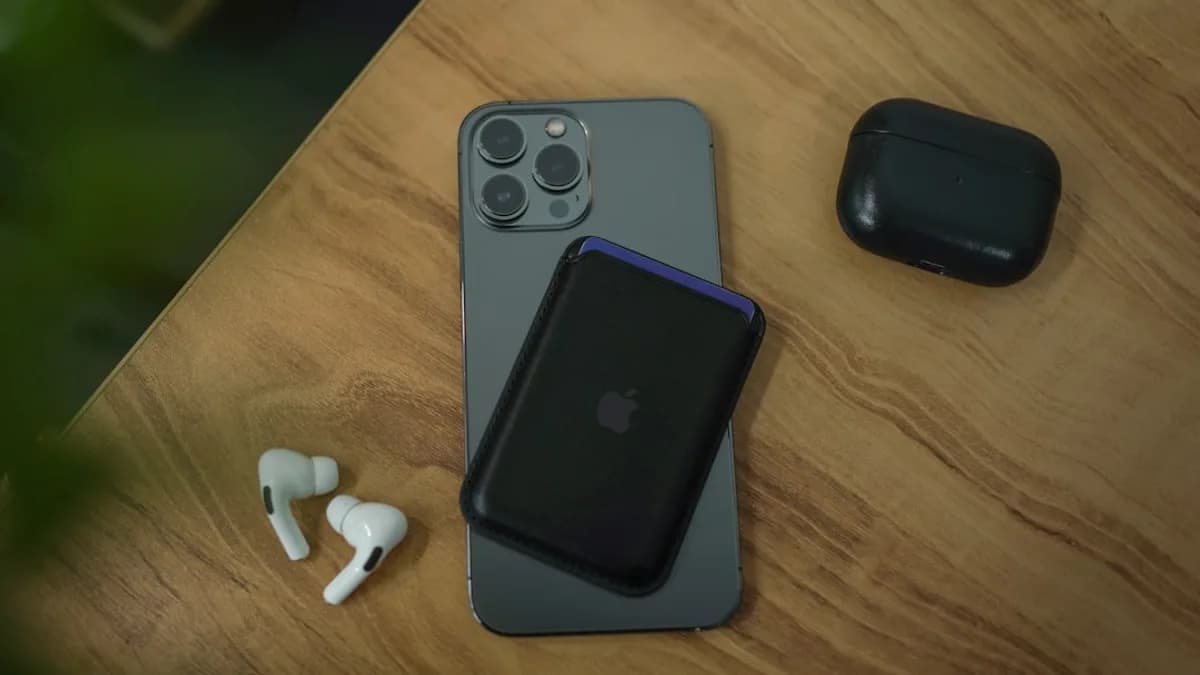
Why the Thickness of a Power Bank Matters for Mobile Users
8.6mm. That’s thinner than most smartphone cases—and now, it’s the new benchmark for portable charging. Anker’s latest launch isn’t just a flex on engineering; it’s a direct response to what mobile users demand: maximum power, minimum bulk. Anyone who’s ever jammed a chunky power bank into their jeans pocket or struggled to slip it into a slim bag knows the value of a sleeker form factor.
Portability has become the battleground for mobile accessories. The average user isn’t carrying a separate backpack for tech gear anymore—charging solutions need to fit seamlessly into daily routines. IDC’s 2023 accessory market report highlighted a 15% YoY increase in sales for compact charging products, underscoring a shift away from high-capacity bricks toward slimmer, smarter devices.
Thinner power banks don’t just save space; they redefine how and where people charge. A device that’s nearly invisible in a pocket means users can snap it onto their phone during a commute, a meeting, or a workout without juggling extra weight. For frequent travelers and urban professionals, the difference isn’t cosmetic—it’s practical efficiency. The industry’s move toward ultra-thin charging solutions is as much about user experience as it is about aesthetics. Consumers want accessories that disappear until needed, not gadgets that dominate their carry.
What Makes Anker’s Air Ultra-Thin Magnetic Power Bank Stand Out at 8.6mm Thickness
Anker’s Air Ultra-Thin magnetic power bank, just launched in China, matches the svelte profile of its Nano Power Bank (5K, MagGo, Slim) at 8.6mm thick, but it doesn’t stop there. According to Notebookcheck, the new model retains a 5,000mAh capacity—enough to fully charge most modern smartphones once, or give smaller devices a couple of hits—while shaving off every possible millimeter.
To put this in perspective, the iPhone 15 clocks in at about 7.8mm thick. Anker’s power bank, at just 8.6mm, sits flush with the phone, making it virtually indistinguishable from a slightly oversized case. Compare this to legacy power banks: Xiaomi’s Mi Power Bank 3 (10,000mAh) measures a chunky 15mm, while even Anker’s own PowerCore series rarely dips below 13mm. That’s nearly double the thickness.
Maintaining capacity while compressing size is a technical balancing act. Energy density improvements in lithium polymer cells, coupled with more efficient circuit design, make this possible. Anker’s engineers have squeezed the same battery power into half the thickness, without throttling output or risking overheating—a feat that’s only becoming possible as materials and manufacturing improve. The result isn’t just a slimmer device; it’s a statement about where portable charging tech is headed: smaller, smarter, just as powerful.
How the Magnetic Feature Enhances Charging Convenience and Compatibility
Magnetic attachment isn’t just marketing gloss. It’s the secret sauce that makes charging less of a ritual and more of a seamless experience. Anker’s Air Ultra-Thin power bank uses a MagSafe-style magnetic ring, snapping securely onto compatible iPhone models (iPhone 12 and above) and selected Android phones with magnetic cases or adapters.
This isn’t just about a satisfying click. It means users can charge one-handed, even while texting, without cables flapping or power banks sliding off. The magnetic connection positions coils perfectly for wireless charging, reducing energy loss—a subtle but real efficiency gain. Qi wireless charging typically loses 10-15% energy in imperfect alignment; magnetic guidance cuts that waste.
Secure attachment also eliminates the “pocket drop” problem, where power banks or wireless pads slip off during movement. For commuters, runners, and anyone multitasking, that's a functional upgrade. The magnetic trend is accelerating: Counterpoint Research found that MagSafe and similar magnetic charging accessories grew 22% in unit shipments in 2023, signaling a clear shift in user preference.
As wireless charging expands, magnetic power banks are becoming the bridge—enabling quick, cable-free top-ups for phones, earbuds, and other devices. They’re already nudging USB-C-only solutions aside for premium users, and the ultra-thin form factor is likely to make them the default for everyday charging.
Why Compliance with the 2026 China Mobile Power Bank Safety Technical Standard Is a Key Upgrade
Safety certifications aren’t just regulatory hurdles—they’re confidence builders in a market plagued by recalls and battery fires. Anker’s Air Ultra-Thin power bank is one of the first to support the 2026 China Mobile Power Bank Safety Technical Standard, a move that signals both technical and reputational ambition.
The new standard, set to take effect in 2026, introduces stricter benchmarks for battery quality, thermal management, overcharge protection, and electromagnetic shielding. It requires manufacturers to test for sustained high-temperature operation, cycle durability, and safe failure modes. For context, the 2024 standard flagged over 30% of imported power banks for unsafe thermal behavior; the 2026 revision raises the bar further, targeting both consumer safety and device reliability.
Compliance isn’t just a box-ticking exercise. It means every unit must survive extended stress tests, including hundreds of charge/discharge cycles and temperature spikes. This directly addresses one of the industry’s biggest pain points: unpredictable battery swelling or explosion, which has led to bans on some brands in Chinese airports and public transit.
Anker’s early adoption of the 2026 standard positions it ahead of most competitors, who typically wait until enforcement deadlines loom. For Chinese buyers, it’s a signal that Anker is betting on longevity and reliability, not just specs. For global markets, it offers a preview of where standards are heading—especially as similar rules are expected to roll out in the EU and US over the next three years. In a market where trust is fragile and user safety is paramount, this compliance gives Anker a meaningful edge.
What This Launch Means for Consumers and the Future of Portable Charging
Picture a student heading out for a day of classes. She snaps Anker’s Air Ultra-Thin power bank onto her iPhone, slips both into her pocket, and forgets about them—until her battery dips below 20%. One-handed, she keeps texting and streaming, the bank feeding her phone a full charge without cables, bulk, or fuss. By day’s end, she’s used up the 5,000mAh capacity, but never once had to dig for a charger or find a wall outlet.
This is the practical impact: less hassle, more freedom. The new launch isn’t just thinner or safer—it’s an enabler for real-world mobility. For frequent travelers, the slim profile means one less item to squeeze into a carry-on. For professionals, it’s a charger that doesn’t interrupt meetings or take up desk space.
Competitors now face a sharper benchmark. Brands like Xiaomi, Baseus, and UGREEN have pushed slimmer designs, but none have matched Anker’s combination of minimal thickness, magnetic efficiency, and advanced safety compliance. Expect a new wave of ultra-thin, magnetically-attached power banks—likely with increased focus on battery safety, wireless efficiency, and integration with mobile operating systems.
Looking forward, the industry will chase even slimmer form factors, higher energy densities, and smarter wireless protocols. As regulatory standards tighten and user demand for convenience rises, power banks are likely to evolve into near-invisible accessories: always attached, always safe, and capable of supporting not just phones, but wearables, AR glasses, and IoT devices.
For buyers, the practical takeaway is clear: don’t settle for thick, outdated charging bricks. The next generation will be thinner, safer, and smarter—and Anker’s new launch is the first real proof that this future is already here. Watch for more brands scrambling to catch up, and expect rapid upgrades in both form factor and safety features over the next 12 months.
Key Takeaways
- Ultra-thin power banks make portable charging more convenient for daily use.
- Growing demand for compact accessories reflects changing consumer habits and expectations.
- Anker’s new launch sets a new standard for slimness without sacrificing charging capacity.